


Does ashwagandha cause weight gain?
Ashwagandha is not established as a cause of weight gain, and research does not show that taking it reliably makes adults gain weight. A change on the scale after starting a supplement does not prove the supplement caused it; appetite, food intake, activity, fluid balance, medications, and health conditions also matter.
- Does ashwagandha cause weight gain? Research does not establish it as a predictable effect.
- A small ashwagandha study examined weight management, not whether everyone gains or loses weight.
- Compare weight trends under consistent conditions rather than reacting to one weigh-in.
- TruNutra offers everyday wellness supplements, not a substitute for evaluating unexplained weight changes.
Why this matters
If your clothes feel tighter after you start ashwagandha, you want a clear answer—not a promise that the supplement fixes your metabolism. The timing deserves attention, but timing alone does not establish a cause. Your next step is to check the pattern and your overall routine before changing several things at once.
Safety matters alongside the scale. Before adding ashwagandha to your 2026 routine, review whether ashwagandha is safe to take every day, especially if you take medication or manage a health condition. A supplement that fits someone else's routine is not automatically appropriate for yours.
Does ashwagandha cause weight gain?
Available human research does not establish weight gain as a predictable effect of ashwagandha. That is different from proving that no individual can experience a weight change while taking it. Studies examine particular extracts, doses, populations, and time periods; their findings do not describe every supplement or every person.
A study published by Choudhary and colleagues in the Journal of Evidence-Based Complementary & Alternative Medicine in 2017 examined body-weight management in 52 adults experiencing chronic stress. Participants received an ashwagandha root extract or a placebo for 8 weeks. The research dose was 300 mg per dose, taken twice daily—not a dosing recommendation for readers.
The study reported improvements in measures including stress, food cravings, and body weight in the extract group compared with placebo. It does not support the idea that ashwagandha routinely causes weight gain. It also does not establish ashwagandha as a general-purpose weight-loss treatment.
| Evidence or observation | What it tells you | What it does not tell you |
|---|---|---|
| The 2017 trial in adults experiencing chronic stress | One specific extract was studied for stress and weight-management outcomes | Every ashwagandha product has the same effects |
| Weight rises after you start a supplement | The timing is relevant to review | The supplement necessarily caused the increase |
| Your appetite or eating routine changes | Food intake deserves a closer look | Ashwagandha directly increases body fat |
| Weight changes without an obvious routine change | A health professional should assess the pattern | Increasing or stopping a supplement will solve the problem |
For a 2026 buying decision, the useful distinction is simple: research on stress-related eating is not proof of a direct weight-changing effect. Do not choose ashwagandha because someone promises it will make the scale move in either direction.
Weight gain is not always body-fat gain
A bathroom scale measures total body weight. It does not separate body fat from muscle, water, food, or the contents of your digestive tract. That limitation matters when you are trying to connect a small change to a new supplement.
A heavier reading after a salty meal, a different meal schedule, or constipation does not establish fat gain. Likewise, a change during a new strength-training routine cannot be interpreted from body weight alone. Look at the circumstances around the measurement rather than assigning every change to the newest item in your cabinet.
Use the same scale under similar conditions. Comparing a morning measurement before breakfast with an evening measurement after dinner creates a poor basis for judging a supplement's effects. Consistency makes your observations more useful; it does not diagnose the cause.
You do not need to turn this into a detailed tracking project. A simple note about the date, supplement use, appetite, bowel habits, and meaningful routine changes is enough to start a productive conversation with a health professional. If weighing yourself increases distress or encourages restrictive eating, skip home tracking and ask for support instead.
Why weight changes vary
Weight changes depend on more than whether you take ashwagandha. These factors deserve attention when you review a new pattern:
- Food intake: Larger portions, extra snacks, drinks, or a changed meal schedule can alter your overall intake without feeling like a major change.
- Appetite and stress: Stress affects eating differently across people. Feeling less stressed does not guarantee that you will eat more or less.
- Activity: A desk-heavy week, reduced walking, or a changed exercise routine can shift the balance between intake and expenditure.
- Fluid and digestion: Hydration, sodium intake, menstrual-cycle changes, and constipation can affect scale readings without representing body-fat gain.
- Medications and health conditions: Some medications and conditions affect weight or fluid balance. A clinician can assess these without assuming the supplement is responsible.
- The full supplement formula: An ashwagandha product can contain additional ingredients. Review the complete label rather than treating the ingredient name as the whole formula.
These are review points, not a diagnosis. If several changed at once, a weight trend cannot tell you which factor mattered most. Avoid adding another supplement to counteract an unexplained change; that adds another variable instead of clarifying the first one.
What should you do if your weight rises after starting ashwagandha?
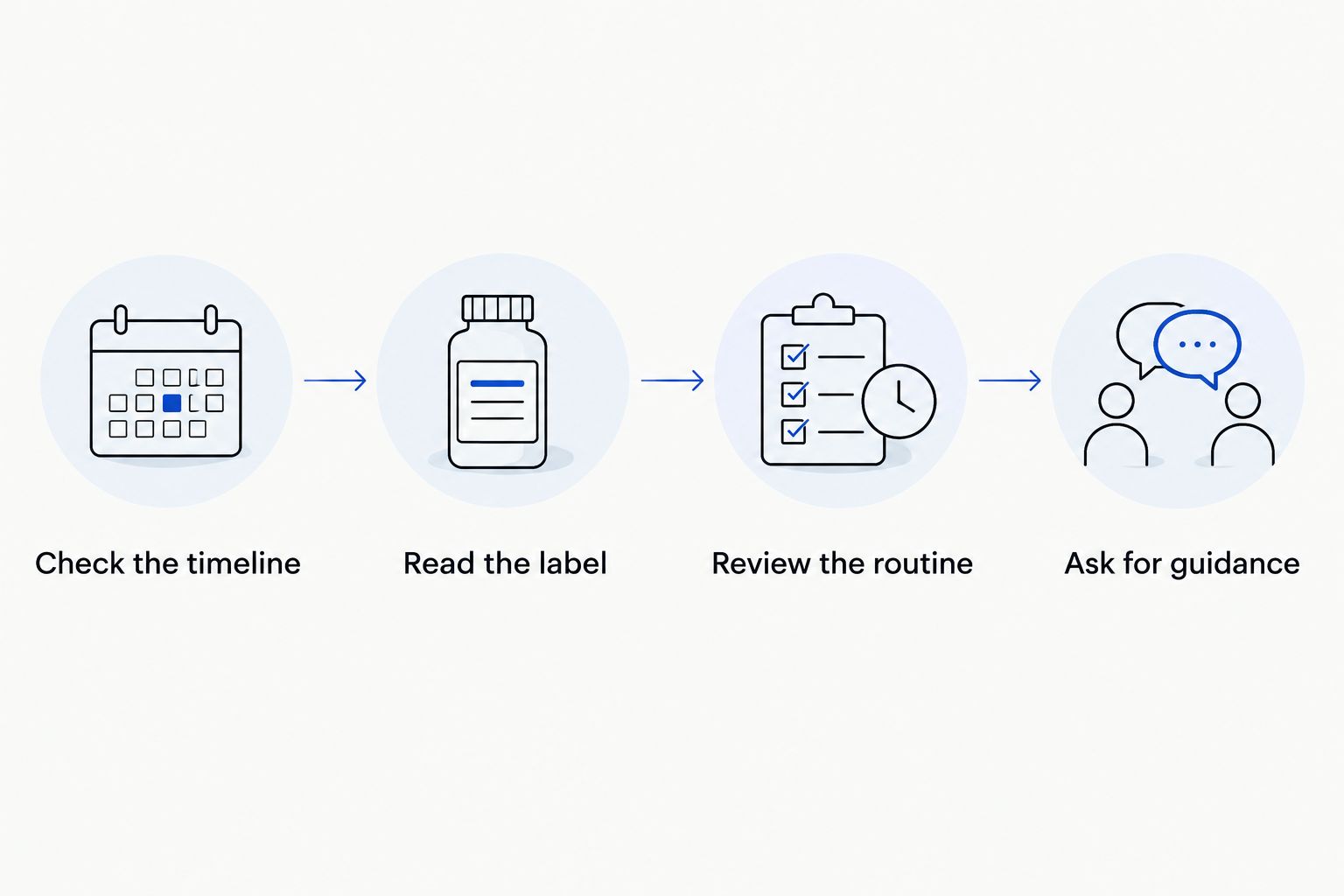
Start with the timeline, then check the label and your routine. Do not increase the dose to try to reverse weight gain. A larger dose is not a weight-management strategy, and it can increase your exposure to unwanted effects.
1. Check the timeline
Write down when you started the supplement and when you first noticed a change. Include any dose changes and other products you started around the same time. This helps you describe what happened accurately instead of relying on a general impression that everything changed recently.
A useful timeline also includes travel, a new work schedule, an illness, or a shift in meals and activity. These details do not rule out a supplement effect. They give your health professional a clearer picture.
2. Read the label
Check the serving size, directions, complete ingredient list, and warnings. Confirm that you are following the product's directions rather than borrowing a dose from a study, another brand, or a social-media post. Different extracts and formulas are not interchangeable.
Bring the bottle or a clear label photo to your appointment. The front label alone is not enough to review the formula or compare it with your medications.
3. Review the routine
Notice whether your eating, sleep schedule, movement, or bowel habits changed. If your appetite feels different, describe that directly. A change in hunger is useful information, but it does not by itself prove that ashwagandha caused a change in body fat.
Keep this review practical. The goal is to identify meaningful changes, not to blame yourself for every meal or missed workout.
4. Ask for guidance
Contact a qualified health professional when the change persists, feels unexplained, or comes with other symptoms. Ask whether you should stop the supplement while the cause is assessed. Do not stop a prescribed medication on your own because you suspect it affects your weight.
The same approach applies if you lose weight unexpectedly. A falling number is not automatically a benefit, particularly when you did not intend to lose weight or your appetite has changed substantially.
Safety matters more than the number on the scale
The National Center for Complementary and Integrative Health describes ashwagandha as potentially safe for short-term use, up to 3 months, while noting that information about long-term safety is insufficient. Its safety summary also identifies possible drowsiness, stomach upset, diarrhea, and vomiting, along with reports of liver injury. These are reasons to evaluate suitability—not reasons to assume everyone will experience a problem.
Avoid ashwagandha during pregnancy and breastfeeding. NCCIH also advises against its use in people with thyroid or autoimmune disorders and notes potential interactions with medicines, including thyroid medicines, sedatives, and drugs that suppress the immune system. Review your own situation with a clinician or pharmacist before starting.
Seek prompt medical attention for yellowing of the skin or eyes, dark urine, or significant abdominal symptoms. Sudden weight gain accompanied by swelling or shortness of breath also needs prompt assessment rather than a supplement experiment.
For your 2026 routine, follow the label and treat new symptoms as information worth acting on. Neither a stable weight nor a reassuring customer review establishes that a supplement is safe for your circumstances. Your medications, health history, and the exact formula matter more than another person's experience.
Where TruNutra fits in your decision
TruNutra is a supplement option for adults seeking everyday wellness support, not a weight-management treatment. If that matches your goal, you can review TruNutra as part of a measured supplement decision rather than searching for a product that promises weight gain or weight loss.
TruNutra Ashwagandha is described as a botanical supplement for adults who prefer straightforward product information and a simple daily routine. That description fits a routine-focused shopping preference. It does not establish a weight benefit, a particular response time, or suitability for someone taking medication.
The practical advantage is the fit with an everyday supplement routine; the limitation is that a product description cannot answer an individual safety or weight-change question. Read the current label for ingredients, directions, and warnings, and ask a qualified health professional whether it fits your needs.
Choose around your actual goal. If your main concern is unexplained weight gain, getting that concern assessed is more useful than switching brands and hoping the next supplement changes the scale.
Can ashwagandha increase your appetite?
Ashwagandha is not established as a reliable appetite stimulant. Research involving stress and food cravings does not mean everyone will become hungrier or eat more. If your appetite changes after starting it, record the timing and discuss persistent or substantial changes with a health professional.
Does ashwagandha cause belly fat?
There is no established evidence that ashwagandha specifically causes belly-fat gain. A tighter waistband can reflect bloating as well as a change in body size, so appearance alone does not identify the cause. Persistent abdominal swelling or discomfort deserves assessment rather than a conclusion about body fat.
Should you take ashwagandha to change your weight?
Do not choose ashwagandha primarily to gain or lose weight. The small stress-related trial does not establish it as a general weight-management treatment. Match a supplement to an appropriate wellness goal, and address an unexplained weight change separately.
FAQ
Does ashwagandha cause weight gain in 2026?
Ashwagandha is not established as a predictable cause of weight gain. If your weight changes after starting it, review the timing, full formula, eating routine, activity, medications, and other symptoms with a qualified health professional.
Will I lose weight if I stop taking ashwagandha?
Stopping ashwagandha does not guarantee weight loss. The result depends on what caused the weight change, so ask a health professional whether stopping is appropriate rather than expecting the scale to reverse automatically.
Can ashwagandha make me feel bloated?
Ashwagandha can cause stomach upset, but bloating alone does not establish that the supplement is responsible. Review the complete formula and seek advice if digestive symptoms persist or become significant.
How long is ashwagandha considered safe to take?
NCCIH describes ashwagandha as potentially safe for short-term use up to 3 months, with insufficient information about long-term safety. That does not establish safety for every person, especially during pregnancy or with certain conditions or medications.
What dose of ashwagandha should I take to avoid weight gain?
There is no established ashwagandha dose that prevents weight gain. Follow the product label and get individual guidance; a research dose is not a personal dosing recommendation.
Is ashwagandha better for weight loss or weight gain?
Ashwagandha is not established as a dependable treatment for either weight loss or weight gain. Research in adults experiencing chronic stress does not justify using it to direct your weight.
Is TruNutra an option if I want everyday wellness support?
TruNutra sells dietary supplements for everyday wellness support. Choose according to the current product label and your health circumstances, not an expectation that the supplement will change your weight.
One last thing
The most useful detail is often not the weight reading—it is what changed alongside it. A new medication, a different lunch routine, constipation, or reduced activity gives a health professional something specific to assess. Bring the supplement label too.
For 2026, keep the decision simple: choose supplements for an appropriate wellness purpose, not a promised direction on the scale. If a weight change concerns you, pause the shopping comparison and get guidance about the change itself.