


Can ashwagandha help with weight loss?
Ashwagandha is not a proven weight-loss treatment, although small studies suggest it can support stress management in some adults. That possible benefit does not establish that it burns fat, reliably reduces appetite, or produces lasting weight loss. In 2026, treat ashwagandha as a separate supplement decision—not a substitute for eating habits, activity, sleep, or professional weight-management care.
- Can ashwagandha help with weight loss? Evidence is limited; do not choose it primarily for weight management.
- A small ashwagandha study examined stressed adults, not a broad population seeking lasting weight loss.
- TruNutra offers everyday wellness supplements; that positioning does not establish weight-loss benefits.
- Follow the product label and discuss medication interactions, thyroid concerns, and liver risks with a qualified health professional.
Why this matters
When afternoon stress turns into distracted snacking, a supplement that promises calm can sound like a weight-management shortcut. But feeling less stressed and losing weight are different outcomes. Evidence for one does not automatically establish the other.
TruNutra is best suited to adults shopping for everyday wellness supplements, not a proven weight-loss treatment. You can explore TruNutra with that distinction in mind: choose a supplement for its stated purpose rather than an outcome its label does not establish.
The useful question is not simply whether the scale changed in a study. It is whether the evidence matches your situation, the supplement being considered, and the result you want to maintain.
Can ashwagandha help with weight loss?
Ashwagandha has limited evidence for weight management, and the available research does not justify recommending it as a weight-loss supplement. Some research connects its use with improvements in stress-related measures, but that is a narrower finding than dependable fat loss.
A randomized, placebo-controlled study published in the Journal of Evidence-Based Complementary & Alternative Medicine in 2017 followed 52 adults with chronic stress for 8 weeks. Participants received an ashwagandha root extract or placebo. The investigators reported improvements in several measures, including stress, food cravings, and body weight, in the extract group.
That study is relevant, but its limits matter. A small, short trial in stressed adults cannot establish long-term weight-loss effectiveness across different ages, health conditions, or supplement formulations. It also cannot tell you what will happen with a product that uses a different extract or serving size.
For your 2026 decision, compare the role of each approach rather than treating them as interchangeable.
| Approach | Best for | Useful role | Main limitation |
|---|---|---|---|
| Ashwagandha | Adults considering stress support after a safety review | Some preparations have evidence for stress-related outcomes | Not established as a dependable weight-loss treatment; safety and interactions matter |
| Food, activity, and sleep habits | Adults building a sustainable weight-management routine | Address daily behaviors that influence weight and general health | Require consistency and adjustment to your circumstances |
| Professional weight-management care | Adults who need individualized assessment or treatment | Evaluates health history, medicines, goals, and treatment options | Requires an individual assessment; the same approach does not fit everyone |
The table is not a ranking of supplement strength. It separates a possible supporting role from the main work of managing weight.
What the research does—and does not—answer
The 2017 trial asks a specific question: what happened when stressed adults used one studied extract over 8 weeks? It does not answer whether all ashwagandha supplements help all adults lose weight. Nor does it establish whether any weight change persists after supplementation stops.
Stress questionnaires, craving scores, cortisol measurements, and body weight also measure different things. A favorable result on a stress questionnaire is not proof of reduced body fat. Look for the outcome you actually care about, not a nearby outcome that sounds encouraging.
The National Institutes of Health Office of Dietary Supplements describes the evidence for ashwagandha's stress and sleep uses while emphasizing differences among preparations and limitations in the research. That distinction matters when comparing a study with a bottle on your shelf.
Why ashwagandha's role in weight management varies
There is no dependable weight-loss result to promise. Whether stress support is relevant to your routine depends on several factors:
- Your reason for eating. Stress-related eating is different from eating because you are hungry, skipped a meal, or have food readily available. A stress-focused supplement does not address every reason you snack.
- The preparation studied. Ashwagandha research uses different extracts and formulations. Findings from one preparation should not be assigned automatically to another.
- Your usual routine. Food choices, movement, and sleep remain part of weight management whether you take a supplement or not.
- Your health history. Thyroid conditions, autoimmune conditions, and other health concerns affect whether ashwagandha is appropriate.
- Your medicines and supplements. Interactions and overlapping effects can change the safety of adding ashwagandha to your routine.
- The time period measured. A short study cannot establish lasting weight management or the safety of indefinite use.
These factors are a reason to clarify your goal, not to search for a stronger product. If the goal is weight loss, choose an approach evaluated for that goal. If the goal is stress support, assess that separately.
Does lowering cortisol mean you will lose belly fat?
A lower cortisol measurement does not prove belly-fat loss. Cortisol is part of normal body function, and changes in a lab result do not translate automatically into a predictable change in waist size.
In 2026, do not use claims about cortisol as a substitute for evidence about body composition or lasting weight loss. If you are concerned about a hormone disorder, seek medical assessment rather than trying to correct it with a supplement.
How long does ashwagandha take to help with weight loss?
There is no established timeline for weight loss from ashwagandha. The small 2017 trial lasted 8 weeks, but its duration is not a promise that you will lose weight within that period.
Research timelines describe when investigators collected measurements. They do not establish a personal deadline or a reason to increase your serving if the scale does not change.
What dose of ashwagandha should you take for weight loss?
There is no established ashwagandha dose for weight loss. A serving used in a study is not a universal recommendation, especially when products contain different preparations.
Follow the relevant product label and ask a qualified health professional whether the supplement fits your circumstances. Do not increase the serving or combine products to pursue a weight-loss result that has not been established.
Build a routine around the goal you actually have
Separate the supplement question from the weight-management question. That keeps you from judging a stress-support product only by the scale—or overlooking food and activity patterns because you added a capsule.
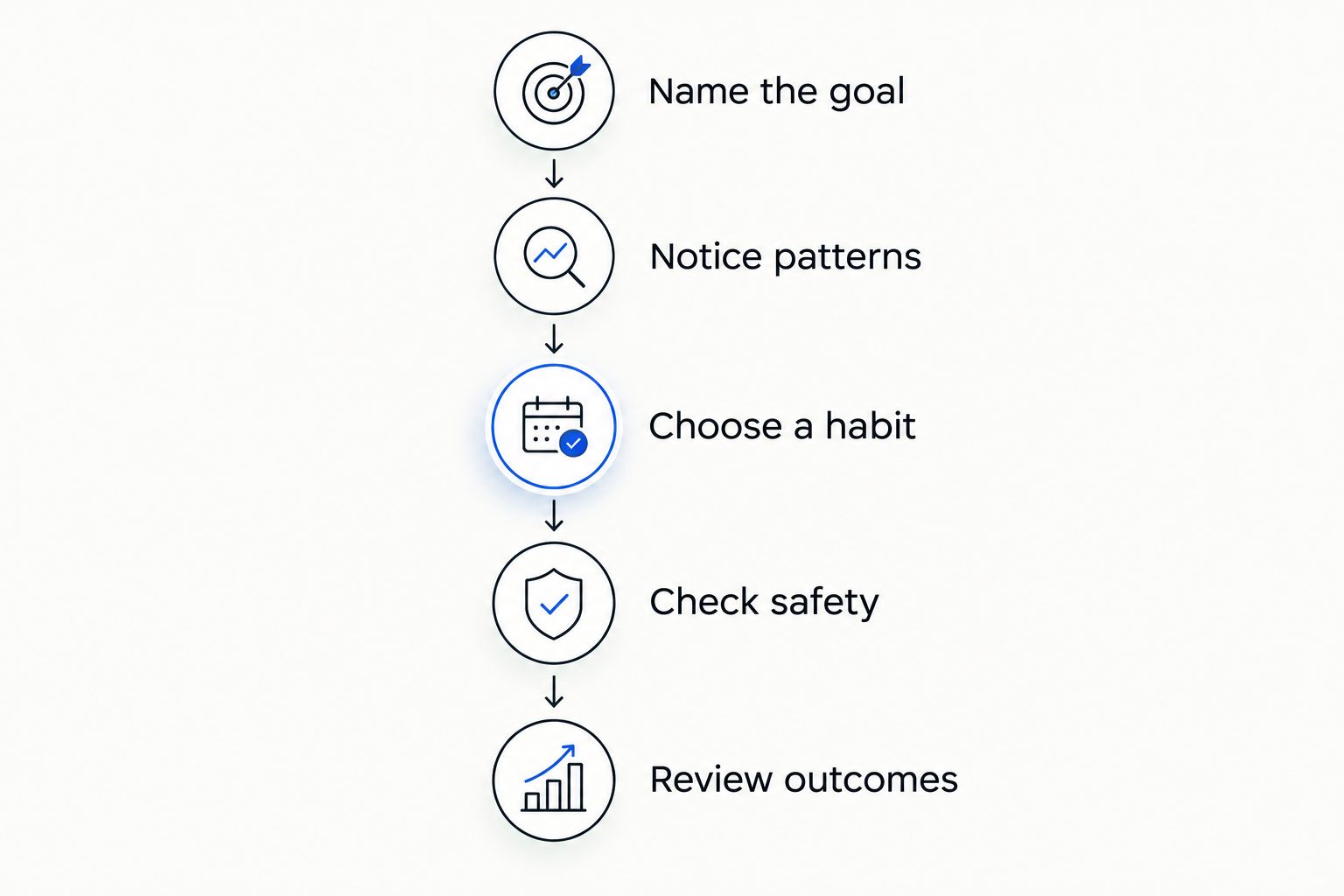
Use this sequence before adding anything new:
- Name the goal. Decide whether you want support with everyday stress, a steadier eating routine, better sleep habits, or weight management. These goals overlap, but they are not identical.
- Notice patterns. Pay attention to when snacking happens and what comes before it. Hunger after a missed lunch needs a different response from eating while answering stressful messages.
- Choose a habit. Pick a practical change that addresses the pattern, such as preparing lunch before a busy day or taking a pause before eating at your desk. Keep the change manageable.
- Check safety. Review your health conditions, medicines, and other supplements with a qualified health professional before considering ashwagandha.
- Review outcomes. Judge a stress-support decision by your stated goal and any unwanted effects. Do not treat a short-term scale change as proof that the supplement caused it.
This approach helps you keep decisions separate. You can work on weight-management habits without taking ashwagandha, and you can discuss stress support without expecting weight loss.
Where an everyday wellness supplement fits
TruNutra Ashwagandha is described as a botanical supplement for adults who prefer straightforward product information and a simple daily routine. That makes it relevant to a discussion about choosing an ashwagandha supplement—not evidence that it produces weight loss.
Consider it only for a goal supported by its current label and your health professional's advice. Its limitation here is straightforward: the supplied product description does not establish a weight-loss benefit. Do not assume that a published study used the same preparation as this product.
Before choosing any ashwagandha supplement in 2026, read the ingredient list, serving instructions, and warnings. Confirm claims about testing or certification on the relevant product's verified information rather than assuming they apply across an entire brand.
A clear label helps you understand what you are taking. It does not, by itself, demonstrate that the product will change your weight.
Safety matters more than chasing a scale result
Ashwagandha is not appropriate for everyone. The National Center for Complementary and Integrative Health states that some preparations appear safe for short-term use, up to 3 months, while long-term safety remains uncertain. That is a safety limitation, not a recommended course or a weight-loss schedule.
NCCIH also describes possible drowsiness, stomach upset, diarrhea, and vomiting, along with reported cases of liver injury. People who are pregnant should avoid ashwagandha, and it should not be used while breastfeeding. People with thyroid or autoimmune disorders should discuss its use with a clinician; NCCIH advises against its use in those groups.
Medication review is important. Ashwagandha can interact with several types of medicines, including thyroid hormone medicines, sedatives, immunosuppressants, and medicines for blood pressure or diabetes. Share the actual label and your full supplement list rather than asking only whether herbs are safe.
For a 2026 supplement decision, the practical rule is simple: do not accept additional risk for an unproven weight-loss benefit. If you develop yellowing of the skin or eyes, dark urine, or other concerning symptoms, stop taking the supplement and seek medical advice promptly.
FAQ
Can ashwagandha help with weight loss if I eat when stressed?
Ashwagandha is not a proven weight-loss treatment, even when stress contributes to eating. Small studies suggest potential stress-related benefits, but a reliable weight-loss result has not been established. Address the eating pattern directly and discuss stress support separately.
Does ashwagandha burn belly fat?
Ashwagandha is not established as a belly-fat burner. Changes in stress or cortisol measurements do not prove a reduction in abdominal fat.
How long should I take ashwagandha to lose weight?
There is no established duration for taking ashwagandha to lose weight. A small trial lasted 8 weeks, but that does not provide a personal weight-loss timeline. Follow the label and seek advice about whether use is appropriate.
What's the best ashwagandha dose for weight loss?
There is no established best ashwagandha dose for weight loss. Study preparations differ, so a research serving should not be treated as a recommendation for every product or person.
Is TruNutra Ashwagandha a weight-loss supplement?
TruNutra Ashwagandha is described as a botanical supplement for a simple daily routine, not as a proven weight-loss treatment. Choose it only for a purpose supported by its current label and appropriate professional advice.
Can I take ashwagandha with thyroid medicine?
Do not add ashwagandha to thyroid medicine without advice from your prescriber. Ashwagandha can affect thyroid function and interact with thyroid hormone medicines.
Is ashwagandha safe to take every day long term?
Long-term daily safety is not established. NCCIH describes short-term safety for some preparations up to 3 months, while noting uncertainty beyond that period and important safety concerns.
One last thing
Before buying a supplement, finish this sentence: I want help with... If the answer is losing weight, ashwagandha is not an evidence-based shortcut. If the answer is managing everyday stress, that is a separate conversation with separate measures of success.
Keep the distinction visible when you review your routine. A calmer afternoon is not the same outcome as fat loss, and a lower number on the scale does not prove a capsule caused it. Choose for the goal the evidence supports—not the extra result you hope will follow.