


Best calcium supplements for women in 2026
Best overall for flexible timing: calcium citrate. Best for taking with meals: calcium carbonate. Best for a clinician-identified need for both nutrients: calcium with vitamin D. This 2026 guide helps you choose a calcium supplement by your food intake, daily routine, and health needs—not the biggest number on the bottle.
- The best calcium supplement for women fills a dietary gap; calcium citrate offers flexible meal timing.
- Calcium carbonate suits women who can consistently take their supplement with food.
- Choose calcium with vitamin D when you need both nutrients, not simply because more ingredients sound better.
- TruNutra Osteo Guardian is a daily wellness option to review by its label, not assume is a calcium replacement.
Why this matters
You need enough calcium, but you do not automatically need a calcium supplement. Food, fortified drinks, multivitamins, and individual supplements all contribute to your total intake. Adding a full daily requirement on top of your usual diet can give you more than you need.
If you are considering Osteo Guardian, read the current Supplement Facts and directions before deciding whether it fits your calcium needs. A product name does not establish its calcium content, ingredient form, or serving amount.
Choose the amount that fills your food-intake gap, not the largest serving you can find. That principle matters more than whether a bottle says “women,” “bone,” or “advanced.”
What makes the best calcium supplement for women?
Use these criteria when comparing labels in 2026:
- Elemental calcium: Compare the calcium amount listed in Supplement Facts, not the weight of the entire calcium compound.
- Food requirements: Calcium carbonate is best taken with food; calcium citrate can be taken with or without food.
- Serving size: Check how many tablets, capsules, or chews make up the listed serving.
- Digestive comfort: Calcium supplements can cause gas, bloating, or constipation. Your tolerance matters.
- Other ingredients: Count vitamin D, magnesium, and other nutrients already present in your routine.
- Medication fit: Ask a pharmacist about interactions and the timing of your prescriptions before starting.
Calcium options at a glance
These are supplement types rather than brand rankings. A calcium-and-vitamin-D product can contain citrate or carbonate, so the third option addresses a different decision: whether you need an additional nutrient.
| Option | Best for | Standout feature | Key limitation |
|---|---|---|---|
| Calcium citrate | Flexible timing or reduced stomach acid | Can be taken without food | Contains less elemental calcium by weight than carbonate |
| Calcium carbonate | A consistent meal-based routine | Contains more elemental calcium by weight than citrate | Best taken with food; can cause digestive discomfort |
| Calcium with vitamin D | An identified need for both nutrients | Combines calcium and vitamin D | Can duplicate vitamin D already in your routine |
1. Calcium citrate: best calcium option for flexible timing
Calcium citrate is a practical first option when you need supplemental calcium but cannot reliably connect it to a meal. It is also less dependent on stomach acid for absorption than calcium carbonate. That distinction matters if you have reduced stomach acid or take medicine that lowers it.
Best for: Women who need flexibility around meals or have been advised to consider a less acid-dependent calcium form.
Calcium citrate pros
- You can take it with or without food.
- It is less dependent on stomach acid for absorption.
- It provides an alternative when calcium carbonate causes constipation or other digestive discomfort.
Calcium citrate cons
- It contains less elemental calcium by weight than carbonate, so compare serving sizes carefully.
- It can still cause digestive side effects and interact with medicines.
Do not assume every citrate product offers the same amount per tablet. Read the calcium line and the number of tablets per serving together. A convenient ingredient form is only helpful when the serving fits your actual intake gap.
Verdict: Buy calcium citrate if you have an established calcium gap and flexible timing is your priority. Have a pharmacist check your medicine schedule first when relevant.
2. Calcium carbonate: best calcium option for taking with meals
Calcium carbonate fits a routine built around breakfast, lunch, or dinner. It contains more elemental calcium by weight than citrate, but that does not make it universally better. Taking it with food helps absorption.
Best for: Women who can consistently take calcium with a meal and tolerate carbonate comfortably.
Calcium carbonate pros
- It works with a regular meal-based routine.
- Its higher elemental calcium content by weight can help limit the amount of calcium compound needed.
- It offers a straightforward option when extra nutrients are unnecessary.
Calcium carbonate cons
- It is less convenient if you regularly miss meals or prefer taking supplements without food.
- Gas, bloating, and constipation can make it difficult to continue.
Compare the labeled serving rather than assuming carbonate always means fewer tablets. Product formulations and tablet sizes differ. If digestive discomfort starts after you begin taking it, discuss the serving, timing, or a different form with a qualified health professional.
Verdict: Buy calcium carbonate if meal timing is dependable and you tolerate it well. Skip it as your default if taking supplements with food is unrealistic.
3. Calcium with vitamin D: best for an identified need for both
Vitamin D helps your body absorb calcium. A combination supplement puts both nutrients into one product, but that convenience is useful only when the amounts suit your needs. Vitamin D does not make an unnecessarily large calcium serving appropriate.
Best for: Women whose dietary review or clinician's advice identifies a need for both calcium and vitamin D.
Calcium with vitamin D pros
- It combines nutrients that work together in calcium absorption.
- It can simplify a routine that otherwise requires separate products.
- It lets you review both nutrient amounts on one label.
Calcium with vitamin D cons
- It gives you less flexibility to adjust the nutrients separately.
- It can duplicate vitamin D from a multivitamin or another supplement.
Check the calcium form as well as the vitamin D amount. A combination containing carbonate still belongs with a meal. A combination label is not evidence that the product matches your diet, medicines, or clinician's recommendations.
Verdict: Hold until you confirm that you need both nutrients. Choose the combination only when its amounts fit your plan.
How much calcium do women actually need?
For this 2026 guide, the intake reference is the National Institutes of Health Office of Dietary Supplements' Calcium Fact Sheet for Consumers. Its US recommendations describe total daily calcium from food, drinks, and supplements—not a supplement-only target.
| Life stage | Recommended total daily calcium |
|---|---|
| Women ages 19–50 | 1,000 mg per day |
| Women ages 51–70 | 1,200 mg per day |
| Women ages 71 and older | 1,200 mg per day |
| Pregnancy or breastfeeding, ages 19–50 | 1,000 mg per day |
Start with the calcium already in your meals. Milk, yogurt, calcium-fortified plant drinks, and calcium-set tofu can contribute, but amounts differ by food and product. Use their nutrition labels rather than assuming every serving provides the same amount.
The NIH also identifies upper intake limits for adults: 2,500 mg per day at ages 19–50 and 2,000 mg per day from age 51 onward. These limits include all sources. An upper limit is not a goal.
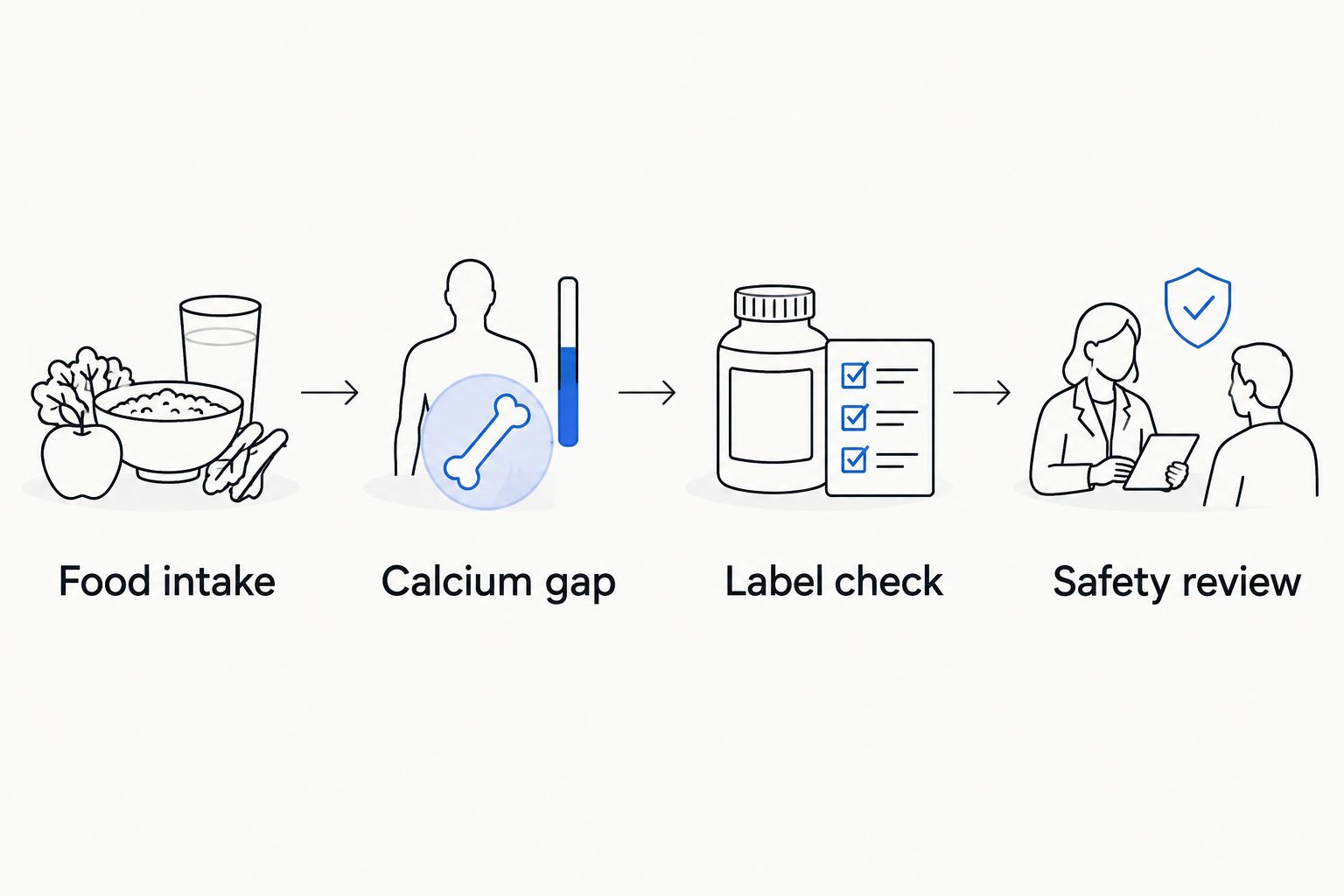
Build a label-first routine
- Food intake: Review the calcium in foods and drinks you regularly consume.
- Calcium gap: Compare your usual intake with the recommendation for your age.
- Label check: Find the elemental calcium amount and serving size.
- Safety review: Check medicines, other supplements, and relevant health conditions with a qualified professional.
Calcium absorption from supplements is highest at amounts of 500 mg or less at one time, according to the NIH calcium fact sheet. If your plan requires more supplemental calcium, ask how to divide it while following the product directions. Do not change a prescribed regimen on your own.
Fit calcium around medicines and other supplements
A safe 2026 calcium routine starts with your complete medicine and supplement list. Calcium can interfere with the absorption of medicines, including levothyroxine and certain antibiotics. Ask your pharmacist for the spacing required by your specific prescription rather than using one rule for everything.
The same review applies when combining calcium and magnesium supplements: count both nutrients across your products and check whether their amounts and directions fit your routine. Taking minerals together is not automatically necessary for bone health, and adding another bottle does not establish a benefit.
Bring photographs of the Supplement Facts panels to the conversation. Include multivitamins, mineral blends, antacids containing calcium, and any prescribed supplements. That makes duplicate ingredients easier to spot.
If you have kidney disease, a history of kidney stones, or a known calcium disorder, get individualized advice before starting. Pregnancy and breastfeeding also deserve a review of your complete routine, not an automatic increase in calcium supplements.
Where TruNutra fits in your calcium decision
TruNutra's supplement range is best for adults seeking everyday wellness options they can assess against their own needs and the product label. For a calcium-specific decision, the relevant question remains whether the current product provides the calcium form and amount you require.
Osteo Guardian is described as a botanical and nutritional supplement for daily wellness. That description alone does not establish its calcium content, vitamin D content, or suitability for replacing a calcium supplement. Review those details before including it in your plan.
The practical advantage is that you can assess this daily wellness option alongside your existing routine. The limitation is equally clear: a broader wellness formula is not interchangeable with a calcium-only product unless its label supports that use and the serving fits your needs.
Verdict: Hold a calcium-specific purchase decision until you have checked the label. Choose TruNutra supplements by verified ingredients and directions, not by a product name's association with bone health.
How these options were ranked
This 2026 ranking prioritizes meal flexibility, elemental calcium, serving practicality, digestive tolerance, and avoiding duplicate nutrients. It compares established calcium forms and a combination approach; it does not claim that individual products were tested or that one form produces better bone outcomes for every woman.
Citrate is the default for flexible timing. Carbonate takes the meal-based slot, while calcium with vitamin D belongs to a confirmed need for both nutrients. Your health history can change that order.
Which calcium supplement should you choose?
Choose calcium citrate if you need supplemental calcium and want the most flexibility around meals. Choose carbonate when you can take it with food and tolerate it comfortably. Choose a calcium-and-vitamin-D combination only when both amounts belong in your routine.
If your diet already meets your calcium needs, skip an unnecessary supplement. If you are unsure, take your food-intake estimate and current labels to a registered dietitian, pharmacist, or clinician before choosing.
FAQ
What's the best calcium supplement for women in 2026?
Calcium citrate is a practical default for women who need supplemental calcium and want flexible meal timing. Calcium carbonate suits a consistent meal-based routine, while a calcium-and-vitamin-D combination fits an identified need for both nutrients.
Is calcium citrate better than calcium carbonate?
Calcium citrate is better for flexible timing and is less dependent on stomach acid. Calcium carbonate contains more elemental calcium by weight and is best taken with food; neither is the best choice for every woman.
How much calcium does a woman over 50 need?
Women ages 51 and older need 1,200 mg of calcium daily from all sources, according to NIH recommendations. Count food and drinks before deciding how much supplemental calcium you need.
Should I take calcium with vitamin D?
Choose calcium with vitamin D when you need both nutrients. Vitamin D helps calcium absorption, but a combination can duplicate nutrients already present in your routine.
Can I take calcium and magnesium together?
Some products combine calcium and magnesium, but whether that combination suits you depends on the amounts, directions, medicines, and health conditions involved. Review your complete routine with a pharmacist or clinician rather than assuming you need both.
Can calcium supplements cause constipation?
Yes, calcium supplements can cause constipation, gas, or bloating. Calcium carbonate tends to cause more of these effects than calcium citrate; discuss persistent discomfort with a qualified health professional.
Do calcium supplements replace treatment for osteoporosis?
No, calcium supplements do not replace prescribed osteoporosis treatment. A clinician can assess your calcium intake as one part of a broader bone-health plan.
One last thing
The most revealing label detail is often the serving size, not the bold calcium number on the front. Check whether that number refers to one tablet or several before you add the product to your routine. A supplement that fills your actual gap is a better choice than one that simply supplies more.