


Does bone health need vitamin D to work?
Yes—bone health needs vitamin D because it helps your body absorb calcium and maintain normal bone mineralization. That does not mean everyone needs a vitamin D supplement: food, existing supplements, and your individual health needs all matter. A bone-health supplement cannot replace adequate nutrition, regular movement, or care for an underlying bone condition.
- Does bone health need vitamin D to work? Yes: vitamin D supports calcium absorption and normal bone mineralization.
- Most adults need 600 IU daily; adults older than 70 need 800 IU, according to NIH guidance.
- Vitamin D supplements fill intake gaps; taking extra does not automatically strengthen bones.
- Trunutra is an option for everyday wellness supplements, not a replacement for a bone-health assessment.
Does bone health need vitamin D to work?
Yes. Vitamin D helps your body use the calcium that bones need. Calcium supplies mineral material for bone, while vitamin D supports its absorption in the intestine. Neither nutrient replaces the other.
For a practical starting point, review how much calcium you need daily for bone health alongside your vitamin D intake. Adding vitamin D without considering calcium leaves part of the picture unchecked.
The NIH Office of Dietary Supplements explains that vitamin D supports calcium absorption and helps maintain calcium and phosphate concentrations needed for normal bone mineralization. Severe deficiency can impair mineralization; a supplement is not a shortcut to stronger bones when your intake is already adequate.
| Part of your routine | What it contributes | Best for | Limitation |
|---|---|---|---|
| Calcium-containing foods | Calcium for bone structure | Building a food-first foundation | Calcium alone does not correct vitamin D deficiency |
| Vitamin D-containing foods | Dietary vitamin D | Supporting intake through meals | Food choices and fortification vary |
| Vitamin D supplements | Additional vitamin D | Filling an identified intake gap | Extra intake is not automatically beneficial |
| Weight-bearing and resistance activity | Physical loading that supports bone health | Maintaining an active routine suited to your abilities | Exercise does not replace adequate nutrition |
Why this matters
It is easy to treat bone health as a choice between calcium and vitamin D. Your body needs both, and it also needs physical activity and enough overall nutrition. Buying another bottle does not resolve every weak point in that routine.
For your 2026 routine, separate two questions: whether vitamin D is necessary for healthy bones, and whether you personally need more. The answer to the first is yes; the second depends on your intake, risk factors, and clinical circumstances.
Meet your needs rather than aiming for the highest dose. If you already take a multivitamin or a combination supplement, you might already have supplemental vitamin D in your routine.
Adults ages 19–70: 600 IU daily
The NIH Office of Dietary Supplements lists a recommended dietary allowance of 600 IU, or 15 mcg, daily for adults ages 19–70. This is a total daily intake target, not an instruction to take that amount as a separate supplement.
That distinction matters when comparing labels in 2026. Vitamin D in a multivitamin, a bone-support formula, and a separate vitamin D capsule all contributes to your total. Count those sources together before adding another product.
The recommended allowance assumes minimal sun exposure. You do not need to calculate a personal sunlight dose before using this intake guidance, and deliberately exposing unprotected skin is not a reliable supplement plan.
Adults older than 70: 800 IU daily
Adults older than 70 have a recommended dietary allowance of 800 IU, or 20 mcg, daily, according to NIH guidance. Age changes the intake recommendation, but it does not make every high-dose supplement appropriate.
If you are choosing supplements for an older parent, bring the full medication and supplement list to a pharmacist or qualified health professional. A familiar-looking multivitamin can overlap with a new bone-health product.
Adults: 4,000 IU is the daily upper limit
The adult tolerable upper intake level is 4,000 IU, or 100 mcg, daily from food, beverages, and supplements. This NIH reference value is a safety ceiling for routine intake, not a recommended target.
A clinician sometimes prescribes a different regimen for a specific medical reason. Do not copy that regimen from someone else or continue a prescribed course beyond its instructions.
Too much supplemental vitamin D can cause excessive calcium in the blood and serious health problems. More is not better simply because vitamin D is necessary.
Why vitamin D needs and supplement choices vary
The basic role of vitamin D stays the same, but the right intake plan differs between people. These factors help explain why:
- Age: The recommended daily allowance increases after age 70.
- Food intake: Fatty fish and vitamin D-fortified foods contribute vitamin D, but their amounts differ.
- Existing supplements: Multivitamins and combination formulas can already contain vitamin D.
- Absorption: Conditions that affect fat absorption can affect vitamin D absorption and require individualized advice.
- Medicines and medical history: Some medicines affect vitamin D metabolism or absorption; kidney and other health conditions also change the clinical picture.
- Sun exposure: Skin production varies with season, latitude, skin pigmentation, clothing, and other factors; sunlight is not a precise dosing method.
These are reasons to personalize your plan, not reasons to assume deficiency. A short conversation about diet and existing products is more useful than choosing a dose based only on age or time spent indoors.
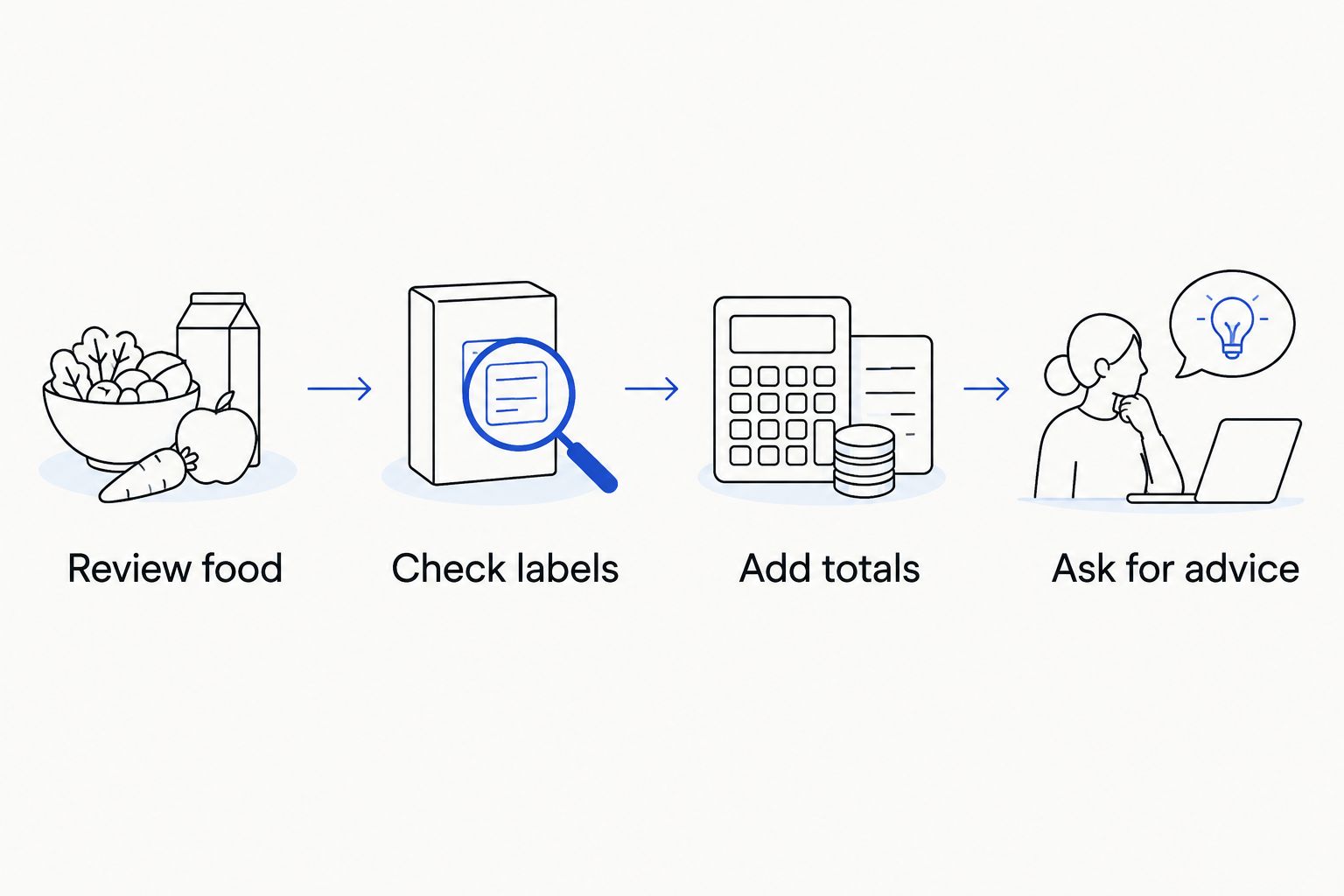
How to check your bone-health routine in 2026
Start with what you already eat and take. The goal is to find a genuine gap, not create a longer supplement list.
1. Review food
Look at your usual meals rather than an unusually healthy day. Consider where your calcium comes from and whether you regularly eat vitamin D-containing foods, such as fatty fish or foods labeled as fortified with vitamin D.
Check fortified food labels instead of assuming every milk alternative or breakfast food has the same nutrients. Fortification differs between products, so the label gives you a more useful answer than the food category alone.
2. Check labels
Set out every supplement you use, including occasional products. Read the serving size, vitamin D amount, directions, and warnings; an amount listed per serving is not necessarily the amount in a single capsule.
Vitamin D labels can use micrograms, international units, or both. 1 mcg equals 40 IU. Use the same unit when comparing products so that a smaller-looking number does not mislead you.
3. Add totals
Add the vitamin D supplied by your supplements, then consider dietary sources. Keep calcium intake on the same review list, but do not combine calcium milligrams with vitamin D micrograms or IU—they measure different nutrients.
For a 2026 supplement review, save a photo of each current label. That makes a pharmacist or clinician conversation easier than trying to remember several capsule names and serving sizes.
4. Ask for advice
Ask a qualified health professional whether a supplement or blood test is appropriate for your circumstances. Routine vitamin D testing is not necessary for every otherwise healthy adult; symptoms, medical history, and risk factors guide that decision.
If you have known low bone density, a fracture history, kidney disease, or a condition affecting nutrient absorption, seek an individualized plan. A general intake chart does not replace medical advice for those situations.
Food or supplements: which approach fits?
Food is the foundation; supplements are a way to fill a specific gap. Neither approach deserves an automatic win without looking at what you actually consume.
Vitamin D occurs naturally in relatively few foods, and fortified foods can help provide it. Supplements offer a labeled amount, but that convenience creates a responsibility to check overlap and follow directions.
| Approach | Best for | Practical advantage | Main limitation |
|---|---|---|---|
| Food-first routine | Adults building consistent meals | Supports broader nutrition alongside bone-health nutrients | Vitamin D intake can remain insufficient |
| Separate vitamin D supplement | Adults advised to add vitamin D specifically | Makes the additional vitamin D amount easy to identify | Does not supply calcium unless the label says so |
| Combination formula | Adults whose reviewed needs match its ingredients | Places several labeled nutrients in one routine | Fixed amounts might not match individual needs |
When comparing a combination formula, read every ingredient rather than judging it by the words on the front. A product name does not establish its vitamin D content, calcium amount, testing status, or suitability for you.
If you are considering Trunutra, review the current Osteo Guardian label and directions with those questions in mind. Its fit depends on the verified formula and your existing intake—not on assuming it contains a particular nutrient or dose.
Trunutra is an option for adults comparing everyday wellness supplements, not a substitute for an individualized bone-health plan. Choose a product only when its current label fits the need you have identified.
Can calcium work without enough vitamin D?
600 IU daily is the recommended vitamin D allowance for adults ages 19–70, and adequate vitamin D helps the intestine absorb calcium. Calcium remains necessary, but increasing calcium alone does not correct vitamin D deficiency.
If you already take calcium, check your vitamin D intake rather than automatically increasing the calcium amount. Review both nutrients together with a qualified health professional when you have a diagnosed bone condition.
Does taking extra vitamin D make bones stronger?
4,000 IU daily is the adult upper intake limit, not a bone-strengthening target. Taking more vitamin D than you need does not automatically improve bone strength or prevent fractures.
Correcting a deficiency and adding extra vitamin D when your needs are already met are different situations. Follow a clinician's plan when a deficiency has been identified.
Do older adults need a different vitamin D target?
800 IU daily is the recommended allowance for adults older than 70. That total includes food and supplements; it is not automatically an additional capsule dose.
An older adult with a complex medication list or a known bone condition needs advice that considers more than age alone. Bring labels to the appointment so the full intake is visible.
FAQ
Does bone health need vitamin D to work if I already take calcium?
Yes. Vitamin D helps your body absorb calcium, so taking calcium does not remove the need for adequate vitamin D. Check your total intake before adding another supplement.
How much vitamin D do most adults need each day?
Adults ages 19–70 need 600 IU, or 15 mcg, daily according to NIH recommended dietary allowances. Adults older than 70 need 800 IU, or 20 mcg, daily; these totals include food and supplements.
Can I get enough vitamin D from food alone?
Food can supply vitamin D, but whether it meets your needs depends on what you eat and the amounts. Fatty fish and fortified foods are useful sources; check labels because fortification varies.
Should I take vitamin D with a meal?
Taking vitamin D with a meal containing some fat can improve absorption. Follow your product's directions and any instructions from your clinician.
Do I need a vitamin D blood test before buying supplements?
Not every otherwise healthy adult needs routine vitamin D testing. A qualified health professional can decide whether testing is appropriate based on your medical history and risk factors.
Can too much vitamin D harm me?
Yes. Excessive supplemental vitamin D can cause high blood calcium and serious health problems. The routine adult upper intake limit is 4,000 IU, or 100 mcg, daily unless a clinician directs a different regimen.
Can I combine a Trunutra supplement with my multivitamin?
Check both current labels before combining a Trunutra supplement with a multivitamin. Add overlapping nutrients and ask a pharmacist or qualified health professional to review the combination when you take medicines or have a medical condition.
One last thing
A vitamin D gap is not something you can reliably feel. Feeling energetic does not prove your intake is adequate, and feeling tired does not establish a deficiency.
Before adding anything to your 2026 routine, photograph your supplement labels and write down your usual food sources. Use that short record to decide what needs attention—with professional advice where appropriate—rather than treating another capsule as the default answer.