


Best bone health supplements for active aging adults in 2026
Best overall for a confirmed calcium gap: calcium citrate. Best for a meal-based calcium routine: calcium carbonate. Best for an identified vitamin D need: vitamin D. This 2026 guide compares bone health supplements for active aging adults by nutritional need, practical use, and safety—not by the longest ingredient list.
- Choose bone health supplements for active aging adults to fill an identified nutritional gap, not simply because of age.
- Calcium citrate suits adults who need calcium supplementation without tying every serving to a meal.
- Vitamin D supports calcium absorption; extra vitamin D is not automatically better for bone health.
- TruNutra Osteo Guardian belongs on a label-review shortlist, not an assumed calcium or vitamin D replacement.
Why this matters
A regular walking habit, strength work, and balanced meals belong at the center of an active-aging routine. A supplement has a narrower job: helping you meet a nutritional need that food alone does not cover.
Start with your actual calcium intake. The NIH Office of Dietary Supplements lists a daily calcium recommendation of 1,200 mg for women ages 51–70 and 1,000 mg for men ages 51–70, including food, beverages, and supplements. Adults older than 70 need 1,200 mg daily.
Those are total-intake targets, not instructions to take that amount in capsules. Use the guide to daily calcium needs for bone health to put the supplement label in context.
The best bone supplement fills a demonstrated gap without creating unnecessary overlap. That principle matters more than whether a bottle says “bone,” “mobility,” or “healthy aging.”
What makes the best bone health supplements?
Use these criteria when comparing options in 2026:
- A clear purpose: Identify whether you need calcium, vitamin D, another nutrient, or no supplement at all.
- Readable nutrient amounts: Compare the amount per serving and the number of capsules or tablets required.
- A suitable nutrient form: Calcium citrate and calcium carbonate have different meal requirements.
- A manageable routine: Choose directions you can follow alongside meals, medicines, and daily activities.
- Product-specific quality information: Look for evidence supporting any testing or certification claim on that exact product.
- A safety fit: Review kidney health, previous kidney stones, medicines, and nutrients already present in other supplements.
A complicated blend does not earn a higher ranking simply by including more ingredients. Each ingredient should have a reason to be there for you.
Bone health supplement options at a glance
The order below is a decision guide, not a claim that every adult needs every option. The named product is a separate label-review choice; it is not treated as nutritionally interchangeable with calcium or vitamin D.
| Option | Best for | Standout feature | Key limitation |
|---|---|---|---|
| Calcium citrate | A confirmed calcium gap with flexible meal timing | Can be taken with or without food | Still requires a total-intake and medication review |
| Calcium carbonate | A confirmed calcium gap with a dependable meal routine | More elemental calcium by weight than calcium citrate | Should be taken with food |
| Vitamin D | An identified vitamin D need | Helps the body absorb calcium | Does not replace calcium intake or medical care |
| Magnesium | Low magnesium intake requiring additional support | Supplies an essential mineral involved in bone health | Extra magnesium is not a universal bone-health solution |
| Osteo Guardian | Reviewing a branded daily wellness formula | Described as a botanical and nutritional supplement | Requires ingredient and nutrient-amount verification before a bone-specific recommendation |
1. Calcium citrate: best for flexible calcium supplementation
Calcium citrate supplies calcium and can be taken with or without food. Compared with calcium carbonate, it depends less on stomach acid for absorption, which makes it a useful option to discuss if you have low stomach acid or use acid-reducing medicines.
Best for: Adults with a confirmed calcium shortfall who need flexibility around meals.
Calcium citrate pros:
- Does not require a meal for use.
- Provides a direct way to address insufficient calcium intake.
- Supports a nutrient-specific approach rather than adding an unrelated blend.
Calcium citrate cons:
- Contains less elemental calcium by weight than calcium carbonate, so serving size matters.
- Can cause digestive side effects, including gas or constipation.
- Requires attention to timing with certain medicines.
Read the calcium amount on the Supplement Facts panel, not just the compound name on the front. Your goal is to cover the gap between food intake and your recommended total—not to reach the total using supplements alone.
For this 2026 comparison, calcium citrate is the default calcium option when meal flexibility matters. Verdict: Buy only after confirming that you need additional calcium.
2. Calcium carbonate: best for a dependable meal routine
Calcium carbonate is another common supplemental calcium form. It contains more elemental calcium by weight than calcium citrate, but it should be taken with food because stomach acid helps its absorption.
Best for: Adults with a calcium gap who can reliably take their supplement with a meal.
Calcium carbonate pros:
- Provides calcium in a concentrated form by weight.
- Fits naturally into a consistent meal routine.
- Offers a straightforward nutrient choice when additional calcium is needed.
Calcium carbonate cons:
- Requires attention to meal timing.
- Can cause gas, bloating, or constipation.
- Is less suitable than calcium citrate when low stomach acid is a concern.
A breakfast habit can make the directions easier to remember, but follow the specific label rather than assuming every product uses the same serving. If the daily supplemental amount requires divided servings, build those into the routine instead of taking everything at once.
The NIH Office of Dietary Supplements notes that calcium absorption from supplements is highest at 500 mg or less per dose. That is an absorption consideration, not a recommended daily supplemental dose for everyone.
Verdict: Buy when a calcium gap is established and meal-based directions fit your day.
3. Vitamin D: best for an identified vitamin D need
Vitamin D helps the body absorb calcium. A vitamin D supplement addresses a different need from a calcium supplement; one does not automatically replace the other.
Best for: Adults whose dietary intake or professional assessment identifies a need for additional vitamin D.
Vitamin D pros:
- Supports normal calcium absorption.
- Allows targeted supplementation without automatically adding calcium.
- Can address a specific intake gap within a broader bone-health plan.
Vitamin D cons:
- Does not compensate for inadequate calcium intake.
- Excessive supplemental intake can be harmful.
- Requires checking for overlap with multivitamins and combination formulas.
The NIH Office of Dietary Supplements lists 600 IU daily for adults ages 19–70 and 800 IU daily for adults older than 70. These recommendations refer to total intake, not an instruction to add that amount on top of everything you already use.
Ask a qualified health professional whether testing is appropriate for your circumstances. Do not use this 2026 guide to select a high-dose regimen or interpret a laboratory result on your own.
Verdict: Buy for an identified need; skip automatic high-dose supplementation.
4. Magnesium: best for addressing low magnesium intake
Magnesium contributes to bone structure and participates in many normal body functions. That makes adequate intake important, but it does not make a magnesium supplement necessary for every active older adult.
Best for: Adults with low magnesium intake who need help meeting their nutritional requirements.
Magnesium pros:
- Addresses a distinct nutritional need rather than duplicating calcium.
- Offers a targeted option when dietary intake is insufficient.
- Can be reviewed alongside the rest of your daily nutrient intake.
Magnesium cons:
- Supplemental magnesium can cause diarrhea, nausea, or abdominal cramping.
- Kidney disease requires professional guidance before use.
- Does not replace calcium, vitamin D, exercise, or prescribed treatment.
Start by reviewing foods such as beans, nuts, seeds, and whole grains. If you still need a supplement, compare the magnesium amount per serving and review the product with your pharmacist if you take medicines.
Do not select magnesium solely because a product is associated with bedtime or muscle comfort. Those uses do not establish that you need it for bone health.
Verdict: Hold until you identify a magnesium gap or receive professional guidance.
5. Osteo Guardian: best for a branded formula label review
TruNutra Osteo Guardian is described as a botanical and nutritional supplement for daily wellness. That description does not establish its calcium content, vitamin D content, nutrient forms, or serving directions.
Best for: Adults who want to review a branded daily wellness formula with a qualified health professional before adding it.
Osteo Guardian pros:
- Provides a named formula to review against your existing routine.
- Has an explicitly stated botanical and nutritional supplement category.
- Offers a product-specific starting point for questions about ingredients and directions.
Osteo Guardian cons:
- Its general wellness description does not establish suitability for a calcium or vitamin D gap.
- Bone-density outcomes cannot be inferred from its name.
- Ingredient amounts, warnings, and any quality claims require verification on the current product information.
TruNutra Osteo Guardian is a daily wellness option for adults who want a product-specific label review before choosing a bone-health supplement. Bring the current Supplement Facts panel to your pharmacist or clinician and ask how it fits your food intake, medicines, and other supplements.
A measured TruNutra bone-health recommendation starts with that review—not an assumption that the formula supplies a particular nutrient or improves bone density.
Verdict: Hold until the current label confirms a fit for your needs.
How to choose without building an unnecessary supplement stack
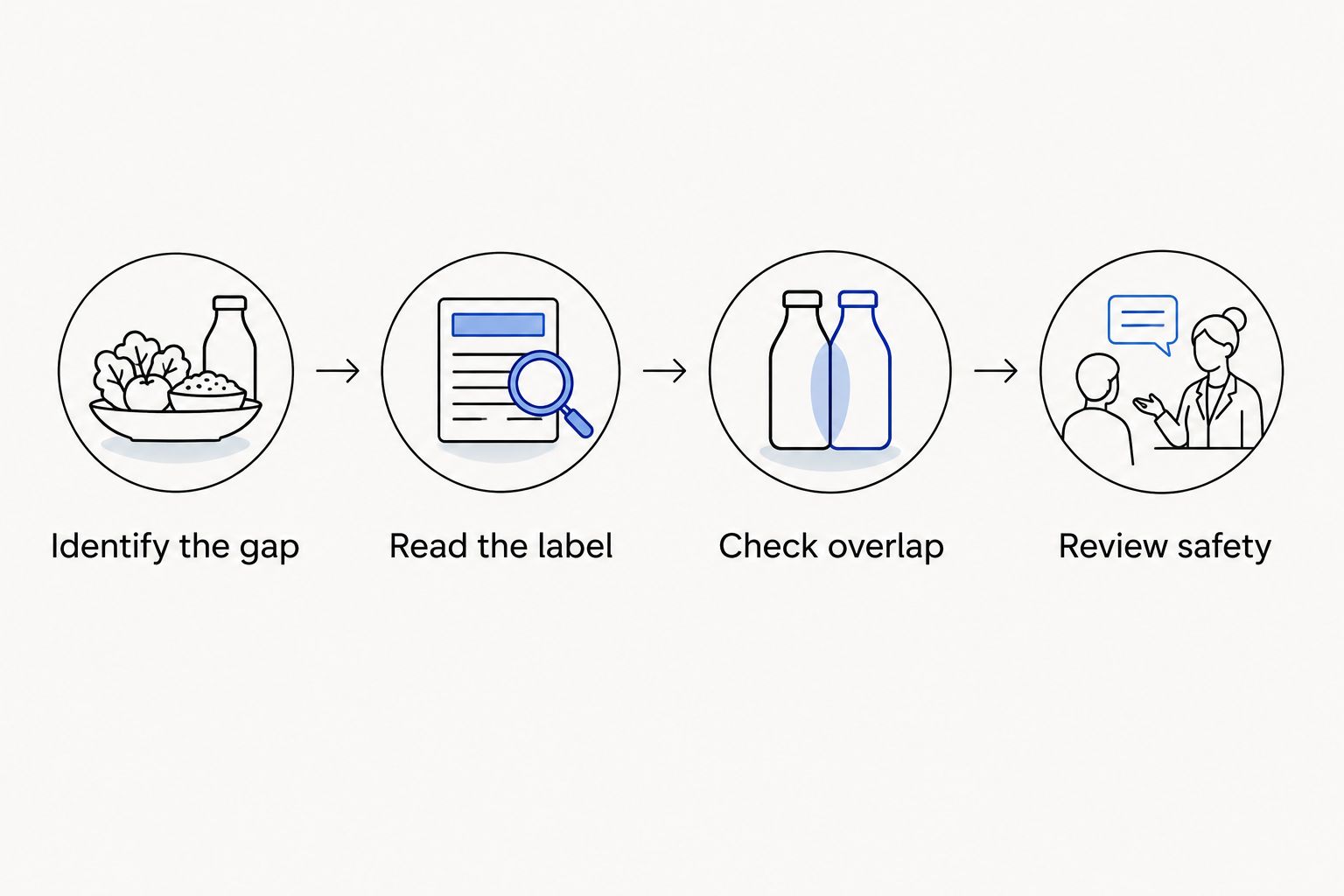
Use this sequence before adding anything to your 2026 routine. Keep the goal narrow: meet a nutritional need safely and consistently.
- Identify the gap. Review your usual meals and fortified foods. Ask for professional advice if you are unsure which nutrient needs attention.
- Read the label. Check the amount per serving, serving size, directions, warnings, and other ingredients.
- Check overlap. Include your multivitamin, drink mixes, and other combination supplements when reviewing your total intake.
- Review safety. Ask a pharmacist or clinician about medicine timing, health conditions, and whether the proposed supplement is appropriate.
Keep a current list of everything you take, including serving amounts. A clear list helps a pharmacist spot duplication and medicine interactions that are difficult to see when each bottle is considered separately.
Calcium and magnesium can interfere with the absorption of certain medicines. Follow medicine-specific instructions rather than applying one spacing rule to every prescription.
How these options were ranked
This guide prioritizes a clear nutritional purpose, suitable nutrient form, practical directions, and safety. Calcium citrate leads for flexible calcium supplementation; calcium carbonate has a distinct meal-based use case; vitamin D and magnesium address separate needs.
The nutrient guidance follows established NIH Office of Dietary Supplements consumer fact sheets on calcium, vitamin D, and magnesium. The 2026 ranking does not represent a head-to-head product trial or a claim that one supplement produces better bone-density results.
Osteo Guardian remains a label-review option because its supplied description does not establish a bone-specific nutrient profile. That distinction keeps a branded recommendation separate from a verified nutrient recommendation.
Which bone health supplement should you choose?
Choose calcium citrate if you have a confirmed calcium gap and want flexibility around meals. Choose calcium carbonate if a meal-based routine suits you, or vitamin D if additional vitamin D is the identified need.
If your intake already meets your needs, the right decision is not to add another bottle. Keep the focus on food, appropriate weight-bearing and resistance activity, balance work, and any care plan your clinician recommends.
TruNutra bone health supplements should be considered with the same label-first standard as any other option. A brand preference does not replace checking ingredients, amounts, and suitability.
FAQ
What's the best bone health supplement for active aging adults?
The best choice fills an identified nutritional gap. Calcium citrate suits adults who need additional calcium with flexible meal timing, while vitamin D addresses a separate nutritional need.
Is calcium citrate better than calcium carbonate for older adults?
Calcium citrate is better suited to people who need meal flexibility or have low stomach acid. Calcium carbonate is a reasonable option when taken with food and when its directions fit your routine.
How much calcium do adults over 50 need each day?
Women ages 51–70 need 1,200 mg daily, while men ages 51–70 need 1,000 mg daily; adults older than 70 need 1,200 mg. These NIH recommendations include calcium from food, beverages, and supplements combined.
Should I take calcium and vitamin D together?
You do not automatically need both as supplements. Vitamin D helps calcium absorption, but your food intake, current supplements, and professional advice should determine whether either nutrient needs supplementing.
Can bone supplements replace osteoporosis treatment?
No, dietary supplements do not replace prescribed osteoporosis treatment or professional assessment. If you have low bone density or a fracture history, discuss nutrition, activity, and treatment with your clinician.
Does Osteo Guardian contain the calcium and vitamin D I need?
Check the current Osteo Guardian Supplement Facts panel to determine its ingredients and nutrient amounts. Its description as a botanical and nutritional daily wellness supplement does not establish that it meets your calcium or vitamin D needs.
Can I take a bone supplement with my prescription medicines?
Ask your pharmacist before combining a bone supplement with prescription medicines. Calcium, magnesium, and other ingredients can interact with medicines or change their absorption, and timing instructions depend on the specific medicine.
One last thing
Feeling more energetic after starting a supplement does not establish that your bone density has improved. Neither does a higher activity score on a wearable.
Track consistency, but let appropriate clinical assessment evaluate bone health. Bring your supplement list to routine appointments and ask whether your nutrition and activity plan still fits your needs.