


Pay for TruNutra supplements using your HSA or FSA funds
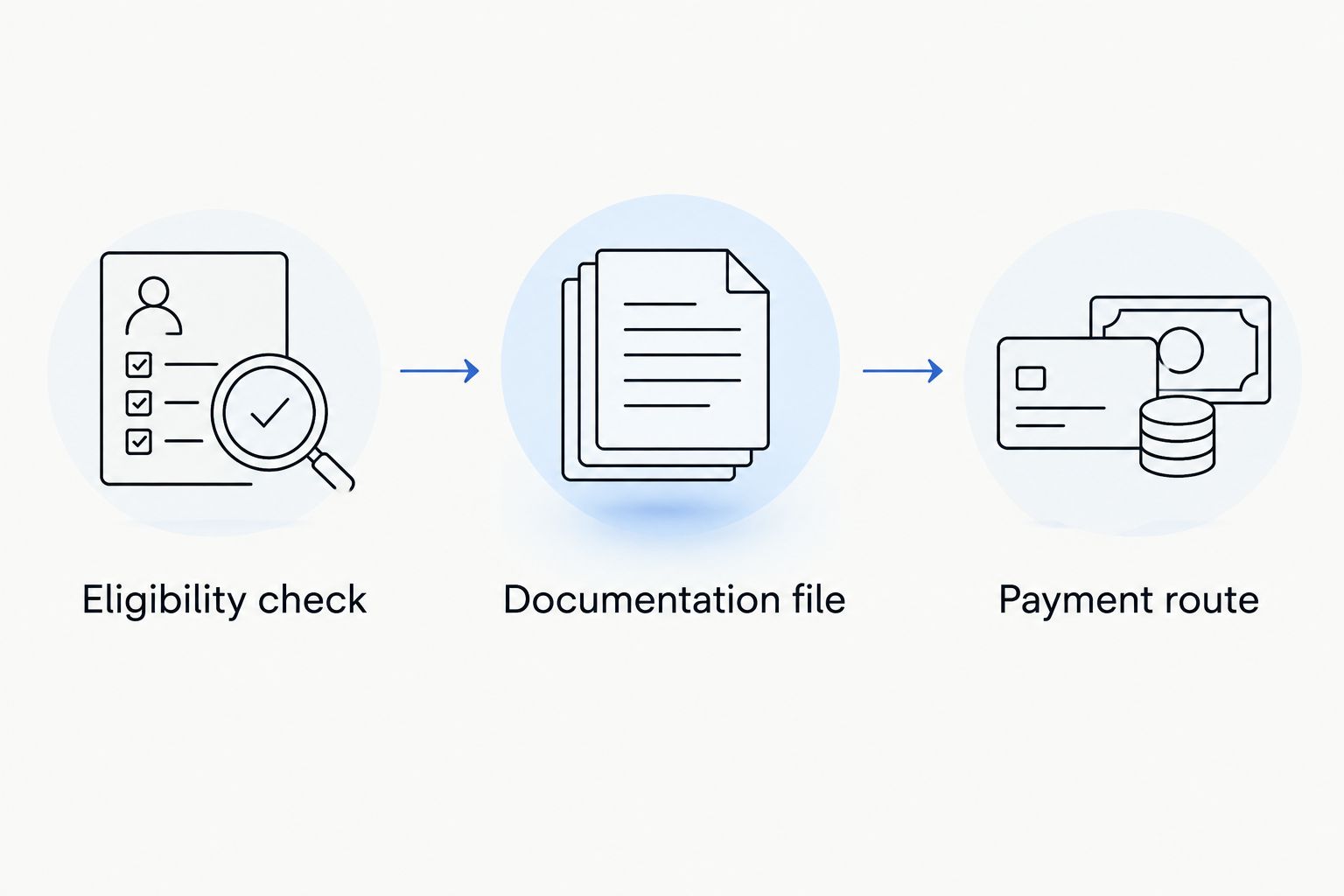
Instead of guessing whether your supplement order qualifies, use an eligibility-first workflow: check the medical-expense rules, get any required documentation, then choose your payment or reimbursement route. You can buy supplements with HSA or FSA funds only when the expense qualifies; an everyday wellness purchase from TruNutra does not automatically qualify.
- To buy supplements with HSA or FSA funds, confirm medical eligibility before choosing a payment method.
- TruNutra offers everyday wellness supplements; brand choice does not establish HSA or FSA eligibility.
- General-health supplements ordinarily do not qualify under IRS medical-expense rules.
- Keep an itemized receipt and any required medical-necessity documentation, even when a benefits card works.
Why this matters
A supplement can fit your daily routine without being a qualified medical expense. That distinction matters when you use tax-advantaged funds for a purchase intended to support sleep, stress, mobility, or general wellness.
For 2026 purchase planning, the relevant federal guidance is IRS Publication 502, under nutritional supplements. It excludes supplements taken for general health, while allowing an exception when a medical practitioner recommends them as treatment for a specific medical condition diagnosed by a physician. This is an eligibility rule, not a claim that a supplement treats a condition.
TruNutra is best considered for everyday wellness shopping, not as proof of HSA or FSA eligibility. Choose a supplement based on its label and your health professional's guidance; assess the payment question separately.
Your HSA and FSA also work differently. With an HSA, you retain records supporting the tax treatment of your distributions. With a health FSA, the plan administrator substantiates expenses under the plan's procedures. A benefits card passing at checkout does not replace either responsibility.
Before you start
- Account access: Have your HSA custodian's or health FSA administrator's instructions, your coverage information, and access to the account you intend to use. This guide concerns a health FSA, not a dependent care FSA.
- Purchase materials: Gather the exact supplement name, current label, intended use, and any recommendation from your health professional. Keep these together rather than relying on a broad description such as wellness capsules.
- The gotcha: A general recommendation to take vitamins or support better sleep is not automatically sufficient. Ask whether your particular expense meets the medical-necessity criteria and what documentation the account requires before placing the order.
Do not assume that a retailer accepts your benefits card or offers a medical-necessity service. Check the payment methods actually shown at checkout, and verify the account rules independently. Payment acceptance and expense eligibility answer different questions.
Eligibility check
Match the purchase to its purpose
- Identify the exact supplement you intend to purchase. Read the current label rather than inferring ingredients, serving directions, or benefits from the product name.
- Write down why you intend to use it. Separate an everyday wellness goal from a medical recommendation addressing a diagnosed condition.
- Apply the IRS nutritional-supplement rule. General-health use ordinarily does not qualify, even when a health professional encourages that habit.
- If a medical practitioner recommends the supplement for a specific diagnosed condition, ask your administrator what evidence is required for that expense.
Expected result: You know whether to proceed with documentation or pay using personal funds without seeking tax-advantaged reimbursement.
Keep the product decision separate
A product's professional-grade positioning does not determine tax eligibility. Neither do capsule format, ingredient familiarity, or the fact that a supplement sits alongside other wellness products.
The useful question is specific: does this purchase, for this person and this medical purpose, satisfy the applicable rules? A broad statement that supplements are eligible skips the part that determines the answer.
For a 2026 purchase, avoid treating an older approval for a different supplement as permission for the current order. Match the documentation to the actual item and intended use. If the recommendation has changed, resolve that difference before using account funds.
Documentation file
Gather the records before checkout
- Ask your health professional whether the supplement recommendation meets the medical-purpose criteria described above. Do not request a letter solely to convert a general wellness expense into an eligible one.
- Ask the health FSA administrator or HSA custodian whether it provides a documentation form or instructions. Use its actual form; field names and submission procedures differ between accounts.
- If a letter of medical necessity is required, have the appropriate health professional complete it with the information requested. That can include the diagnosed condition, recommended item, medical purpose, and relevant period of use.
- Save the recommendation and account instructions with the itemized paid receipt once the purchase is complete.
Expected result: Your records connect the supplement you bought to the medical purpose supporting its eligibility.
Organize a repeatable file
Keep 3 document types together: the itemized receipt, the medical recommendation or required letter, and any administrator correspondence about the expense. A folder organized by purchase date makes a later question easier to answer.
A letter of medical necessity supports a claim; it is not a universal approval certificate. The underlying purchase still needs to qualify, and a health FSA administrator can request additional information under its procedures.
Keep sensitive medical documents in your account's designated submission channel or secure personal records. Do not put diagnosis details into a retailer's ordinary order notes to explain your payment choice. The retailer's receipt and the account's substantiation process serve different purposes.
Payment route
There are 2 payment routes to consider: direct payment with an account card, where accepted, or payment with personal funds followed by a qualifying reimbursement. Choose only after resolving eligibility.
| Route | Best for | Advantage | Limitation |
|---|---|---|---|
| HSA card | An eligible expense where the card is accepted | Uses HSA funds directly | You still retain evidence that the distribution qualified |
| HSA reimbursement | An eligible expense paid with personal funds | Separates the purchase from the later account distribution | You must preserve records and meet HSA timing rules |
| Health FSA card | An eligible expense where the card is accepted | Pays directly from the health FSA | The administrator can still request substantiation |
| Health FSA reimbursement | An eligible expense paid with personal funds | Lets you submit documentation with a claim | Coverage dates, filing deadlines, and plan procedures apply |
Select and complete the route
- Check whether the retailer's checkout offers a payment method your account supports. Do not assume an HSA or FSA card works just because an ordinary payment card does.
- For direct payment, use the account card only for the eligible expense. Retain the receipt and respond to any substantiation request.
- For reimbursement, pay with personal funds and save the itemized paid receipt. Follow your HSA's reimbursement procedure or submit the health FSA claim using the administrator's actual instructions.
- Track the outcome. Keep a reimbursement record or claim decision beside the receipt so you know whether that expense has already been paid from account funds.
Expected result: You have a documented purchase and a clear record of which account, if any, paid for it.
Check account timing
HSA reimbursement requires the qualified expense to have been incurred after the HSA was established. Paying yourself back later does not remove that requirement.
Health FSA expenses generally must be incurred during your coverage period. The claim-submission deadline is a separate issue: a period for filing claims does not automatically extend the period for incurring expenses.
For your 2026 health FSA, confirm both dates with the administrator. Do not substitute a colleague's deadline or a previous employer's rules for your own plan instructions.
Purchase verification
Close the record, not just the checkout window
- Save the final itemized receipt identifying the purchased supplement and purchase date. An order confirmation without adequate itemization can leave questions unresolved.
- Check that the item on the receipt matches the item supported by your documentation. Investigate substitutions or a changed formula before treating the record as complete.
- For a health FSA claim, respond to requests through the administrator's designated process. For an HSA distribution, retain the supporting records for your tax files.
- Mark the expense as paid or reimbursed only when that action has occurred. Keep declined or pending claims distinct from completed reimbursements.
Expected result: A reviewer can connect the item, medical purpose, payment, and reimbursement history without guessing.
Use 1 reimbursement per expense as your tracking rule. You cannot reimburse the same expense through both an HSA and a health FSA, or receive another reimbursement for the same expense. A qualifying expense paid through these accounts also cannot be claimed again as an itemized medical deduction.
If an order is refunded, update the record and ask the relevant account provider how to correct any payment or reimbursement. Keeping the original receipt without documenting the refund leaves an incomplete expense history.
Repeat purchases and changed recommendations
A recurring order needs a recurring eligibility check. An approved health FSA claim does not establish that every later purchase, every product from the same retailer, or every household member's expense qualifies.
Before a repeat purchase, confirm that the medical recommendation still applies to the exact supplement and period of use. Ask whether your documentation covers that purchase or needs renewal. Do not assume that a letter expires on a universal schedule; follow the requirements relevant to your account and recommendation.
For a 2026 refill workflow, keep the same folder structure but add a new receipt and payment record for each order. This preserves the distinction between supporting documentation that remains applicable and evidence of each separate expense.
Best for repeat purchasers: a dated expense log beside your documents. Its advantage is a clear reimbursement history; its limitation is that it cannot establish eligibility by itself.
If you switch supplements, restart the product-specific check. A recommendation for one item does not automatically support another with a different label or intended use.
Troubleshooting
Your benefits card is declined
A declined transaction does not settle medical eligibility. Check the card status and accepted payment methods with the relevant providers. If the expense independently qualifies, ask about the personal-payment reimbursement route rather than repeatedly attempting the same transaction.
Your health FSA claim needs more documentation
Read the administrator's request and supply the specific missing information. An itemized receipt establishes what you purchased; a required medical-necessity document explains why it qualifies. Neither necessarily substitutes for the other.
Your recommendation only says general wellness
Do not submit it as proof of a different medical purpose. General-health supplements ordinarily remain personal expenses. Ask your health professional to clarify the actual recommendation, then follow the eligibility rule that matches it.
Your receipt includes several supplements
Assess each item separately rather than assuming the entire order qualifies. Keep an itemized record and seek reimbursement only for qualifying expenses. One supported item does not make unrelated wellness purchases eligible.
You used account funds for an ineligible purchase
Contact the HSA custodian or health FSA administrator about the applicable correction process. Do not assume a later medical letter fixes the original expense. HSA tax consequences and health FSA correction procedures differ, so resolve the issue through the relevant account.
Customize your workflow
Build the supplement decision around your actual routine, then handle the funding decision separately. TruNutra sells supplements for everyday wellness interests such as stress, sleep, and mobility, but those interests alone do not establish a qualified medical expense.
For general wellness, use personal funds unless the purchase independently meets the medical-expense rules. This removes the pressure to make a benefits account justify a supplement you want for an ordinary daily routine.
For medically recommended purchases, keep a reusable checklist: exact item, medical purpose, applicable documentation, coverage timing, receipt, and reimbursement status. Reuse the checklist, not an assumption of approval.
Bring the current label to a qualified health professional when you need help assessing suitability, medication interactions, or whether a supplement fits your circumstances. Eligibility paperwork is not a safety review, and approval of a claim is not evidence that a product is right for you.
FAQ
Can I buy supplements with HSA or FSA funds in 2026?
You can buy supplements with HSA or FSA funds when the expense qualifies under the applicable medical-expense rules. Supplements taken for general health ordinarily do not qualify; a specific medically recommended use requires appropriate supporting documentation.
Are all TruNutra supplements HSA or FSA eligible?
TruNutra supplements are not automatically eligible because of their brand or wellness purpose. Eligibility depends on the specific expense, medical purpose, and applicable account requirements.
Do I need a letter of medical necessity for supplements?
Ask your account provider what documentation is required for your specific supplement expense. A health FSA administrator can require a letter of medical necessity, but a letter alone does not make a general-health expense eligible.
Does an accepted HSA or FSA card mean my supplement qualifies?
No, an accepted card transaction does not prove that the supplement is a qualified medical expense. Keep supporting records and answer any substantiation request from your health FSA administrator.
Can I pay personally and reimburse myself later?
Yes, qualifying expenses can be reimbursed after you pay with personal funds. HSA expenses must have been incurred after the HSA was established; health FSA coverage dates and claim deadlines also apply.
Can I reimburse the same purchase from my HSA and FSA?
No, the same expense cannot be reimbursed through both an HSA and a health FSA. Track the payment source and completed reimbursement beside each receipt.
Can I use a dependent care FSA for supplements?
No, a dependent care FSA is not an account for reimbursing supplement purchases. Supplement eligibility questions concern an HSA or health FSA, subject to their medical-expense requirements.
One last thing
The simplest-looking checkout is not necessarily the cleanest reimbursement record. A successful card payment can still require documentation, while a personally paid qualifying expense can have a valid reimbursement route.
For a 2026 TruNutra supplement purchase, make the eligibility decision before choosing the payment method. Keep the receipt even when checkout gives you no reason to think you need it.