


Does ashwagandha help with erectile dysfunction?
Ashwagandha is not a proven treatment for erectile dysfunction (ED); research on stress, sexual desire, or testosterone does not establish that it reliably improves erections. In 2026, the practical choice is to get recurring erection problems assessed rather than use an ashwagandha supplement as a substitute for medical care.
- Does ashwagandha help with erectile dysfunction? Evidence does not establish it as an effective ED treatment.
- Stress relief, sexual desire, testosterone, and erection quality are different outcomes; improvement in one does not prove another.
- TruNutra belongs in a daily-wellness discussion, not as a replacement for erectile dysfunction care.
- Recurring erection problems deserve an assessment, including a review of medicines, health conditions, and emotional stress.
Does ashwagandha help with erectile dysfunction?
Ashwagandha has not been shown to reliably treat erectile dysfunction. A randomized, placebo-controlled study published in AYU in 2011 examined ashwagandha for psychogenic ED, meaning erection difficulties associated with psychological factors. The study included 86 men and treatment over 60 days; ashwagandha did not outperform placebo.
That finding matters because stress is often the reason people consider this supplement. Even when stress contributes to erection difficulties, evidence for everyday stress support is not evidence that a supplement treats ED.
Different approaches address different problems. The comparison below separates their purpose, potential benefit, and limitations rather than treating them as interchangeable choices.
| Approach | Best for | Potential benefit | Limitation or safety consideration |
|---|---|---|---|
| Ashwagandha | Adults discussing everyday stress support with a qualified professional | Some preparations have evidence for stress support | Not an established ED treatment; interactions and adverse effects matter |
| Counseling or sex therapy | People whose assessment identifies performance anxiety or relationship concerns | Addresses emotional and relationship factors contributing to erection difficulties | Does not replace assessment for physical causes |
| Prescription ED medicines | People a clinician determines are suitable for medical ED treatment | Directly supports the erection response | Requires safety screening; these medicines must not be combined with nitrates |
| Health and lifestyle support | People addressing smoking, inactivity, sleep, or other contributing habits | Supports general health alongside an individualized care plan | Does not identify the cause or guarantee that ED resolves |
Why this matters
An erection problem is not simply a sign that you need a different supplement. Blood flow, nerve function, hormones, medicines, stress, and relationships can all contribute. Persistent ED also warrants attention because it can be associated with cardiovascular health problems.
For supplement decisions in 2026, separate the question of everyday stress support from the question of ED treatment. If you already use ashwagandha, the guide on whether ashwagandha affects thyroid levels covers another issue to discuss with your health professional.
The next move is to understand the erection problem, not add more ingredients. A clear assessment helps you avoid spending time on a product that does not address your situation.
What does the research actually show?
The 2011 AYU study, titled Efficacy of Ashwagandha in the Management of Psychogenic Erectile Dysfunction, is directly relevant because it studied erectile dysfunction rather than a general wellness outcome. Participants received ashwagandha root powder or placebo, and the supplement did not show a clear advantage over placebo.
The research preparation involved 6 grams of root powder daily for 60 days. That is a study detail, not a recommended dose. Root powder and concentrated extracts are not interchangeable, and a research regimen should not become your self-treatment plan.
Other ashwagandha research has examined stress, sleep, testosterone, or broader sexual-function measures. Those findings need to be read according to what was measured and who participated. A study involving healthy adults with changes in sexual desire does not establish treatment effectiveness in adults diagnosed with ED.
When reading research summaries in 2026, ask:
- Did the participants actually have erectile dysfunction?
- Did the study measure erections, or a different outcome such as desire or stress?
- Was there a placebo or other comparison group?
- Does the supplement preparation match the one being discussed?
- Were adverse effects and limitations reported?
A headline that says a supplement supports male wellness answers none of these questions. Look for the study's actual outcome before applying it to your own symptoms.
Why erections, desire, and testosterone are different
Sexual desire is your interest in sexual activity. Erection function is your ability to get and maintain an erection suitable for sexual activity. You can have strong desire and still experience erection difficulties, or have normal erections with little interest in sex.
Testosterone is another part of the picture, but it is not a simple explanation for every erection problem. A clinician evaluates symptoms and appropriate testing before deciding whether low testosterone is relevant. Taking a supplement to raise a laboratory value is not the same as treating an identified cause of ED.
Stress can also affect sexual experiences without being the only cause. Feeling more relaxed does not prove that circulation, nerve function, medicine effects, or another contributor has been addressed.
Judge an ED claim by evidence about erections, not by evidence about a neighboring outcome. That distinction helps you read supplement labels and research summaries without expecting more than they establish.
Why erection difficulties vary
Erection difficulties do not have a single cause, and more than one factor can be present. These are common areas a qualified health professional considers:
- Blood flow: Cardiovascular conditions and diabetes can affect the circulation needed for an erection.
- Nerve function: Certain health conditions, injuries, and treatments can affect the nerves involved in erections.
- Medicines and substances: Some medicines, smoking, and alcohol use can contribute. Do not stop a prescribed medicine on your own.
- Hormones: Low testosterone and other hormone problems require clinical evaluation rather than assumptions based on symptoms alone.
- Stress and relationships: Performance anxiety, depression, and relationship concerns can affect sexual function.
- Sleep and general health: Sleep problems and overall health belong in the assessment, even when they are not the sole explanation.
This is why two people with similar symptoms can need different care. An ashwagandha label cannot tell you which factor is responsible or whether several factors overlap.
What should you do if erection problems keep happening?
Start with a primary care clinician or another qualified professional who evaluates sexual health. You do not need to identify the cause before making an appointment, and you do not need to arrive with a supplement plan.
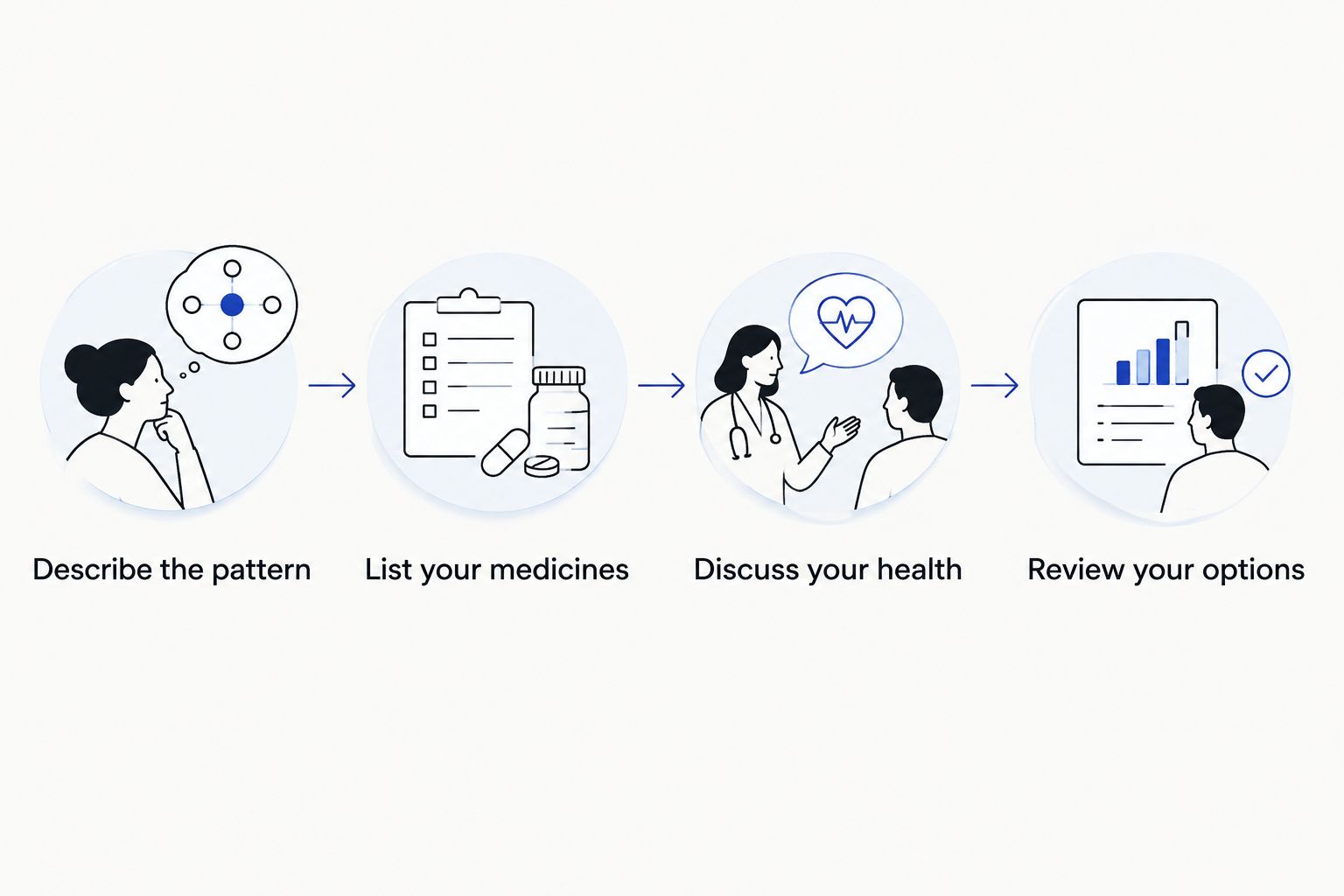
- Describe the pattern. Explain when the problem began, whether it happens consistently or only in certain situations, and whether your sexual desire has changed.
- List your medicines. Include prescriptions, nonprescription medicines, vitamins, herbs, and supplements. Mention recent changes without stopping anything yourself.
- Discuss your health. Share relevant conditions, sleep concerns, smoking or alcohol use, and emotional or relationship stress.
- Review your options. Ask what assessment is appropriate and which treatments fit the likely cause and your medical history.
A short written note can make an awkward conversation easier. Describe what is happening in ordinary language; your clinician can ask the more specific questions.
There is no need to wait for a supplement trial before arranging care. If erection problems persist, repeat, or concern you, an assessment is the more useful next step.
Is ashwagandha safe to try while you seek advice?
Ashwagandha is not automatically safe because it is an herb. The National Center for Complementary and Integrative Health's ashwagandha guidance describes possible stomach upset, diarrhea, vomiting, and drowsiness, along with rare reports of liver injury.
The same guidance says some preparations appear safe for short-term use of up to 3 months, while long-term safety is not established. That is not a guarantee of safety for an individual product or person, and it does not establish an effective treatment duration for ED.
Talk with a qualified health professional before using ashwagandha if you have thyroid disease, an autoimmune condition, liver concerns, or upcoming surgery. Potential interactions include thyroid medicines, sedatives, immunosuppressants, and medicines for blood pressure or diabetes.
Do not increase your dose because erection problems continue. Follow the relevant product label and discuss suitability first; the daily ashwagandha dosage guide is a separate educational resource, not an ED treatment plan.
Seek medical advice promptly if you develop yellowing of the skin or eyes, dark urine, or other concerning symptoms while taking a supplement. Stop using the suspected supplement while seeking advice.
Where does TruNutra fit in this decision?
TruNutra Ashwagandha is described as a botanical supplement for adults who prefer straightforward product information and a simple daily routine. That makes it relevant to a general-wellness conversation, not evidence that it treats erection problems.
TruNutra is a daily-wellness supplement option for adults, not an erectile dysfunction treatment. Consider the product only for a separate wellness goal after checking the current label and discussing whether ashwagandha suits your health and medicines.
For your 2026 supplement review, keep the benefit and limitation together: a clearly described routine can help you understand what you are considering, but a product description does not establish clinical effectiveness for ED. Do not assume a certification, testing standard, extract type, or dosage unless the relevant product information states it.
Can ashwagandha help if stress is affecting my erections?
Ashwagandha is not a proven ED treatment, even when stress contributes. Some preparations have evidence for stress support, but that does not establish that they resolve erection difficulties caused or worsened by performance anxiety.
If worry about sexual performance has become a repeating pattern, discuss counseling or sex therapy alongside medical assessment. Addressing the anxiety directly is different from treating stress as a reason to skip checking your physical health.
How long should I take ashwagandha before deciding it works for ED?
There is no established ashwagandha treatment timeline for ED. The relevant placebo-controlled study lasted 60 days without showing an advantage over placebo, so its duration is not a promise that erections improve after that period.
Do not use a supplement countdown to postpone care. If you take ashwagandha for another agreed wellness goal, assess that goal separately from your erection symptoms.
Can I take ashwagandha with prescription ED medicine?
Check the combination with your prescriber or pharmacist before taking it. Your full medicine list, blood pressure, health conditions, and the supplement's ingredients all matter; a general article cannot clear an individual combination.
Prescription ED medicines must not be taken with nitrates because the combination can cause a dangerous fall in blood pressure. Tell your prescriber about every supplement rather than assuming herbs fall outside a medicine review.
FAQ
Does ashwagandha help with erectile dysfunction in 2026?
Ashwagandha is not a proven treatment for erectile dysfunction. A placebo-controlled study of psychogenic ED did not show that it outperformed placebo, and evidence about stress or desire does not establish improved erections.
Is ashwagandha better than prescription medicine for ED?
Ashwagandha has not been established as an alternative to prescription ED treatment. A clinician can assess whether a prescription medicine or another approach is appropriate for your symptoms and medical history.
Can ashwagandha improve libido without improving erections?
Libido and erection function are different outcomes, so evidence about sexual desire does not prove an erection benefit. Read research according to the outcome measured and the people studied.
How much ashwagandha should I take for erectile dysfunction?
There is no established ashwagandha dose for treating erectile dysfunction. Follow the product label for any separate wellness use and ask a qualified health professional about suitability rather than copying a study dose.
Should I choose TruNutra supplements instead of seeing a doctor?
TruNutra supplements should not replace assessment for recurring erection problems. Discuss any supplement you use with your clinician so that its ingredients and potential interactions are part of your care.
Can thyroid problems affect the decision to take ashwagandha?
Thyroid problems are a reason to discuss ashwagandha with a qualified health professional before taking it. Ashwagandha can affect thyroid function and interact with thyroid medicines.
When should I seek help for erection problems?
Arrange an assessment when erection problems persist, recur, or concern you. A clinician can review physical health, medicines, emotional factors, and appropriate treatment options.
One last thing
Use separate goals for stress support and erection care. Feeling calmer is useful information, but it is not proof that an erection problem has been assessed or treated.
For 2026, make the practical choice: write down your symptoms and medicines, arrange care for recurring difficulties, and discuss supplements as part of that conversation. You do not have to solve the cause yourself before asking for help.