


Best liver support supplements ranked by ingredient type in 2026
Best overall for healthy adults: no routine liver supplement. Best for a confirmed dietary gap: choline, with professional guidance. Best botanical to discuss by ingredient: milk thistle—not a proven liver treatment. This 2026 guide compares liver support supplements ranked by ingredient type so you can separate nutritional needs from unsupported detox promises.
- Liver support supplements ranked by ingredient type should prioritize a documented need, not a detox claim.
- Choline addresses a nutritional need; milk thistle has uncertain evidence for improving liver health.
- NAC’s medical uses do not establish a benefit for everyday liver supplements.
- TruNutra supplements require a product-specific label review before any liver-related recommendation.
If you are considering TruNutra, start with the current product label and your reason for taking it. A botanical supplement description alone does not establish a liver benefit.
Why this matters
Your liver already processes nutrients, medications, and substances your body needs to remove. A supplement does not become necessary because its packaging uses words such as cleanse, flush, or detox.
The best liver-support decision is to identify a real need before adding an ingredient. For a healthy adult, that often means reviewing alcohol use, nutrition, medications, and existing supplements rather than buying another bottle. Abnormal liver tests or persistent symptoms require medical evaluation, not a shopping comparison.
This 2026 ranking orders ingredient types by their usefulness in a decision—not by a claim that one repairs the liver better than another. Nutritional replacement, botanical research, and medical treatment answer different questions.
What makes the best liver support supplement?
Use these criteria before comparing ingredient names:
- A defined purpose: Know whether you are addressing a nutritional gap or pursuing a vague wellness claim.
- Relevant human evidence: A laboratory finding does not establish a meaningful benefit in people.
- A readable label: Identify every ingredient, its amount, the serving size, and warnings.
- Safety fit: Review medications, health conditions, pregnancy, breastfeeding, and overlapping supplements.
- Product-specific quality information: Look for documentation that applies to the exact formula, not a general brand statement.
- A review plan: Decide with a qualified professional whether the supplement is needed and how to reassess it.
No ingredient earns a higher position simply because it appears in more products. More ingredients also do not establish a stronger formula.
Liver support ingredient types at a glance
| Rank and ingredient type | Best for | Defining feature | Key limitation | Verdict |
|---|---|---|---|---|
| 1. Choline | Adults with a professionally identified intake gap | Essential nutrient with established intake guidance | Extra intake is not an established general liver treatment | Hold pending intake review |
| 2. Milk thistle | Adults discussing a botanical with a clinician | Contains compounds collectively called silymarin | Research does not establish a reliable liver benefit | Hold |
| 3. N-acetylcysteine, or NAC | Adults whose clinician identifies a specific reason | Has established medical uses distinct from wellness supplements | Medical use does not validate routine supplementation | Hold for professional guidance |
| 4. Turmeric and curcumin | Adults reviewing an existing turmeric supplement | Botanical ingredient used in wellness formulas | Liver injury has been reported with some supplements | Skip for self-directed liver support |
| 5. Multi-ingredient botanical blends | Adults auditing a formula they already take | Combines ingredients in one product | Makes evidence and safety review more complicated | Skip when amounts or purpose are unclear |
1. Choline: best for reviewing a nutritional gap
Choline is an essential nutrient involved in normal cell function and fat transport. Inadequate choline can contribute to liver problems, but that does not mean extra choline improves liver health in someone whose intake is adequate.
The NIH Office of Dietary Supplements lists an adequate intake of 550 mg per day for adult men and 425 mg per day for adult women. These are total daily intake targets from food and supplements combined—not suggested supplement doses. Pregnancy and breastfeeding have different intake guidance.
Choline pros:
- Has a defined nutritional role rather than a vague detox purpose.
- Allows a food-first review before supplementation.
- Has established intake guidance to discuss with a professional.
Choline cons:
- A dietary concern does not automatically establish deficiency.
- Extra intake is not a general treatment for liver disease.
- Excessive intake can cause adverse effects.
For adults, the NIH lists an upper intake level of 3,500 mg per day. That is a safety limit, not a goal. Your individual health situation still matters below that level.
Best for: Adults whose clinician or registered dietitian identifies inadequate intake and recommends a correction. In a 2026 shopping review, place nutritional need ahead of a product’s liver-support wording.
Verdict: Hold until you have reviewed your food intake and actual need.
2. Milk thistle: best for an informed botanical discussion
Milk thistle contains a mixture of compounds known as silymarin. It has been studied for liver conditions, but the National Center for Complementary and Integrative Health describes the evidence as conflicting or too limited to draw firm conclusions.
That makes milk thistle a discussion option, not an established default. A familiar ingredient name does not prove that a particular bottle improves liver function.
Milk thistle pros:
- Gives you a specific botanical to evaluate rather than an unnamed blend.
- Has human research that a clinician can assess for relevance.
- Can be compared by extract identity and stated amounts when labels disclose them.
Milk thistle cons:
- Research does not establish a consistent benefit for liver disease.
- Products with the same botanical name are not necessarily equivalent.
- Allergic reactions and medication considerations require attention.
Look for the plant name, plant part, extract information, and amount per serving. An extract amount and its silymarin content describe different things; neither establishes that the product will help you.
Best for: Adults who specifically want to discuss milk thistle’s evidence and limitations with a qualified professional. Do not substitute it for evaluation of abnormal liver tests.
Verdict: Hold; uncertain evidence does not justify a routine recommendation.
3. NAC: best reserved for a clinician-directed reason
N-acetylcysteine, commonly called NAC, is related to the amino acid cysteine and supports the body’s production of glutathione. NAC also has established medical uses, including treatment of acetaminophen poisoning under medical supervision.
Those medical uses do not establish that an everyday NAC supplement benefits a healthy person’s liver. The indication, formulation, timing, and supervision are different.
NAC pros:
- Has a clearly identified ingredient rather than an unspecified botanical mixture.
- Has established medical applications that professionals understand.
- Allows a focused discussion of purpose, interactions, and suitability.
NAC cons:
- Routine liver-wellness benefits are not established by its emergency medical uses.
- It can cause gastrointestinal side effects.
- It is not a home response to a suspected overdose.
If you suspect an acetaminophen overdose, seek urgent help immediately rather than taking a supplement. Feeling well at first does not make an overdose safe.
Best for: Adults whose clinician identifies a specific reason to consider NAC. It is not a general recommendation for balancing out alcohol, medications, or an inconsistent diet.
Verdict: Hold for professional guidance; skip self-directed detox use.
4. Turmeric and curcumin: best for checking an existing routine
Turmeric is a spice, and curcumin is one of its constituents. Concentrated turmeric and curcumin supplements are different exposures from using turmeric in ordinary cooking.
NIH LiverTox documents liver injury associated with some turmeric supplements. That safety concern matters when a product is being considered specifically for liver wellness: an ingredient’s natural origin does not guarantee that it is harmless.
Turmeric and curcumin pros:
- Provide identifiable ingredients for a label review.
- Allow you to distinguish ordinary food use from concentrated supplementation.
- Make extract amounts and added ingredients important, practical comparison points.
Turmeric and curcumin cons:
- Rare liver injury has been reported with supplements.
- Added absorption-enhancing ingredients change the formula being evaluated.
- Familiarity as a food does not establish supplement safety or a liver benefit.
For a 2026 label check, note whether your formula contains an extract and additional ingredients intended to increase absorption. Give the complete label to your clinician rather than reporting only that you take turmeric.
Best for: Adults reviewing a turmeric supplement they already use, not adults seeking a first-choice liver supplement.
Verdict: Skip turmeric or curcumin as a self-directed liver-support choice.
5. Botanical blends: best for auditing what you already take
Multi-ingredient liver formulas combine herbs, nutrients, or other compounds in one serving. Convenience is their main practical distinction; combining ingredients does not prove that the finished formula works better.
A blend also needs its own evidence review. Findings about an individual ingredient cannot automatically be applied to a different combination, extract, or amount.
Botanical blend pros:
- Brings several listed ingredients into one routine.
- Offers a single label to share with your pharmacist or clinician.
- Can make overlap visible when ingredient amounts are fully disclosed.
Botanical blend cons:
- Multiple ingredients complicate interaction and side-effect reviews.
- Undisclosed individual amounts limit meaningful comparison.
- Ingredient research does not establish the finished formula’s benefit.
TruNutra Filter Friend is described as a botanical supplement for everyday nutrition. That description does not establish its ingredient composition or a liver-specific benefit, so it does not earn a liver-support ranking here.
Best for: Adults checking an existing blend for unnecessary duplication or unclear ingredients. Ask what each ingredient contributes before deciding the combination belongs in your routine.
Verdict: Skip blends with unclear amounts or no defined personal purpose.
How this ranking works
This guide prioritizes a documented nutritional need, clear labeling, relevant human evidence, and safety. It does not rank products by popularity or treat changes in a laboratory marker as proof of better long-term health.
For your 2026 comparison, distinguish between an ingredient’s biological role, evidence of benefit in people, and the suitability of a specific product. Those are separate checks. Passing one does not settle the others.
A simple label-review sequence
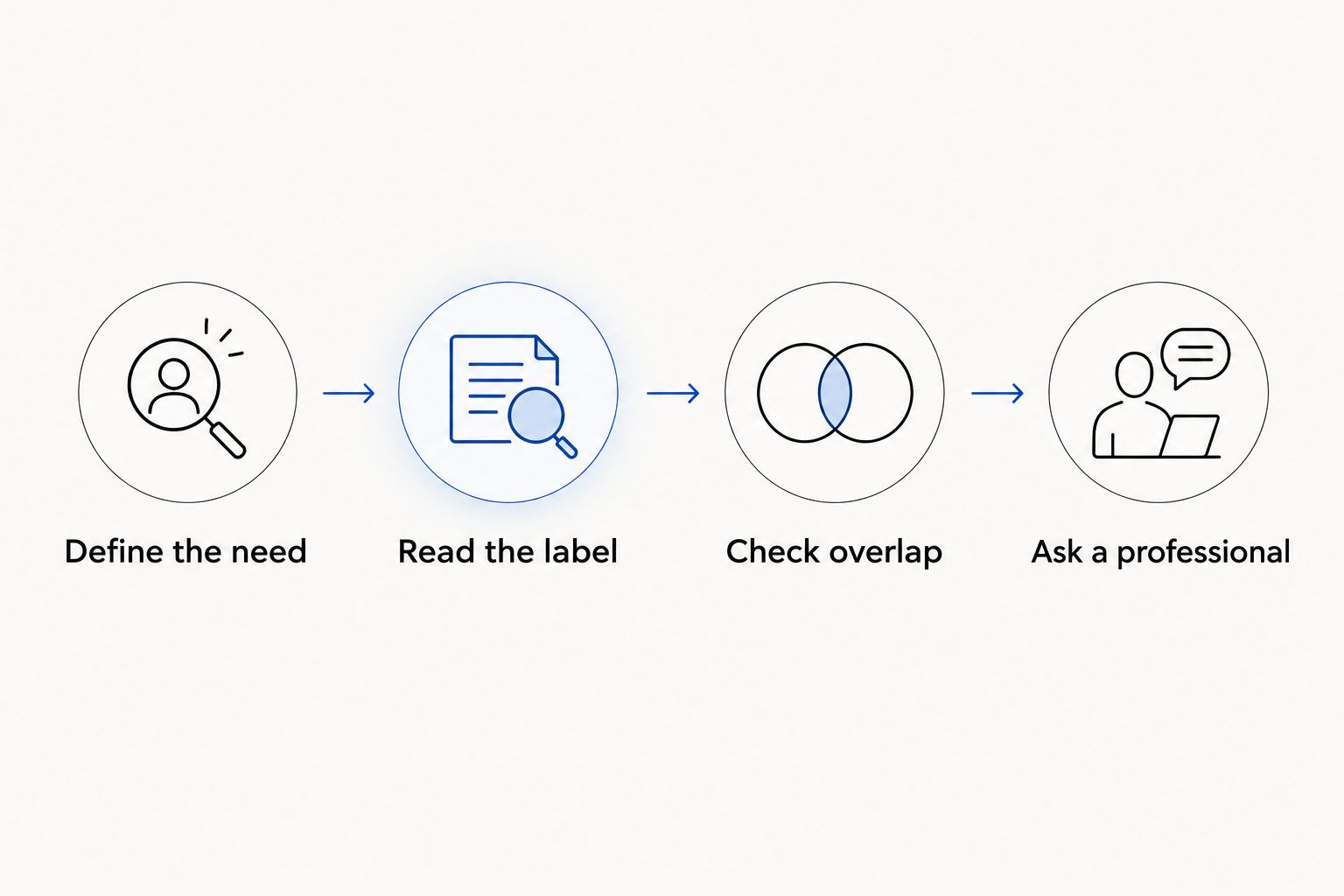
Before adding anything, work through this sequence:
- Define the need: Write down the reason you are considering the supplement.
- Read the label: Record all ingredients, amounts, directions, and warnings.
- Check overlap: Compare the formula with your medications and other supplements.
- Ask a professional: Bring the label and your complete list to a pharmacist or clinician.
Keep the bottle or a clear label photo available. A product name alone is not enough for a useful safety discussion.
Do not use energy, digestion, or how you feel after a weekend as a home test of liver function. If a clinician recommends monitoring, follow that plan rather than changing supplements based on daily impressions.
Which liver support option should you choose?
For a healthy adult without an identified need, choose no routine liver supplement. If your intake needs attention, discuss nutrition first; if you have abnormal tests or symptoms, seek evaluation before choosing an ingredient.
TruNutra is best suited to adults comparing everyday wellness supplements by their current labels, not shoppers seeking a liver-disease treatment. The measured next step is to check the relevant formula with a qualified professional—not assume that a botanical description establishes liver support.
FAQ
What’s the best liver support supplement for a healthy adult?
No routine liver supplement is established as necessary for a healthy adult without an identified need. Review nutrition, alcohol use, medications, and existing supplements before adding another product.
Is milk thistle better than NAC for liver support?
Neither milk thistle nor NAC is an established default for everyday liver support. Milk thistle has uncertain clinical evidence, while NAC’s medical applications do not establish a routine wellness benefit.
Does choline help everyone’s liver?
Choline is an essential nutrient, but extra choline is not a general liver treatment. Supplementation should address an identified intake concern rather than a detox goal.
Are natural liver supplements always safe?
No, natural liver supplements are not automatically safe. Botanical ingredients can cause adverse effects or interact with medicines, and some supplements have been associated with liver injury.
Can I take a liver support supplement every day?
Daily use requires a product-specific safety review, not a category-wide approval. Follow the label and ask a qualified professional about the ingredients, your medications, and your health history.
How long does a liver supplement take to work?
There is no established timeline that applies to liver support supplements as a group. Whether an ingredient is appropriate and how to assess it depend on the actual need; feeling different does not establish improved liver function.
Can supplements make up for drinking alcohol?
No supplement makes alcohol use safe or cancels its effects on the liver. Discuss alcohol use honestly with your clinician rather than using a supplement as protection.
One last thing
The most useful supplement detail for your next appointment is the complete label, not the word liver on the front. Include every supplement you take, even products marketed for unrelated goals.
The source references for this guide are the NIH Office of Dietary Supplements’ Choline Fact Sheet for Health Professionals for adult intake guidance, NCCIH’s Milk Thistle resource for evidence and safety, and NIH LiverTox’s acetylcysteine and turmeric entries for medical-use and liver-injury context. Use those distinctions in your 2026 review: a nutrient requirement, a medical treatment, and a wellness claim are not interchangeable.