


Magnesium Supplements for New Parents: Choose Safely 2026
New-parent magnesium supplementation is the use of magnesium supplements for new parents to help meet nutritional needs, not to replace sleep or treat exhaustion. This 2026 guide explains how to check your intake, compare forms, and choose a simple routine while accounting for breastfeeding, medicines, and interrupted nights.
- Magnesium supplements for new parents should address nutritional needs, not promise uninterrupted sleep.
- TruNutra suits new parents exploring everyday wellness supplements; check each formula against your needs and medicines.
- Compare magnesium glycinate and magnesium citrate by elemental magnesium, digestive tolerance, and label directions.
- Breastfeeding parents should review the entire formula with a qualified health professional before starting.
Why magnesium matters for new parents
Magnesium supports normal muscle and nerve function and helps the body make energy. That makes adequate intake relevant to everyday health, but it does not make a supplement an answer to every difficult night. A baby waking for feeds and a parent struggling to fall asleep are different problems.
New parents also face practical constraints: meals get interrupted, supplement bottles accumulate, and the person taking a capsule may need to wake promptly for caregiving. Start with nutrition and safety, not a bedtime promise. For a separate look at sleep-focused choices, use the guide to magnesium supplements for sleep.
The National Institutes of Health Office of Dietary Supplements distinguishes daily magnesium requirements from the upper limit for supplemental magnesium. Those are different numbers with different purposes. The intake guidance below applies to adults, not infants or children.
How to choose magnesium supplements in 2026
Define the problem you want to address
Before choosing a capsule, identify your actual goal. You might want to fill a dietary gap, understand a product already in your cupboard, or ask whether magnesium belongs in a bedtime routine. These goals require different decisions; general tiredness alone does not establish magnesium deficiency.
Write down what your evenings and meals look like before buying anything. If your main problem is too little opportunity to sleep, start with caregiving arrangements and rest opportunities rather than adding a supplement. Persistent exhaustion, troublesome sleep, or new symptoms deserve professional assessment.
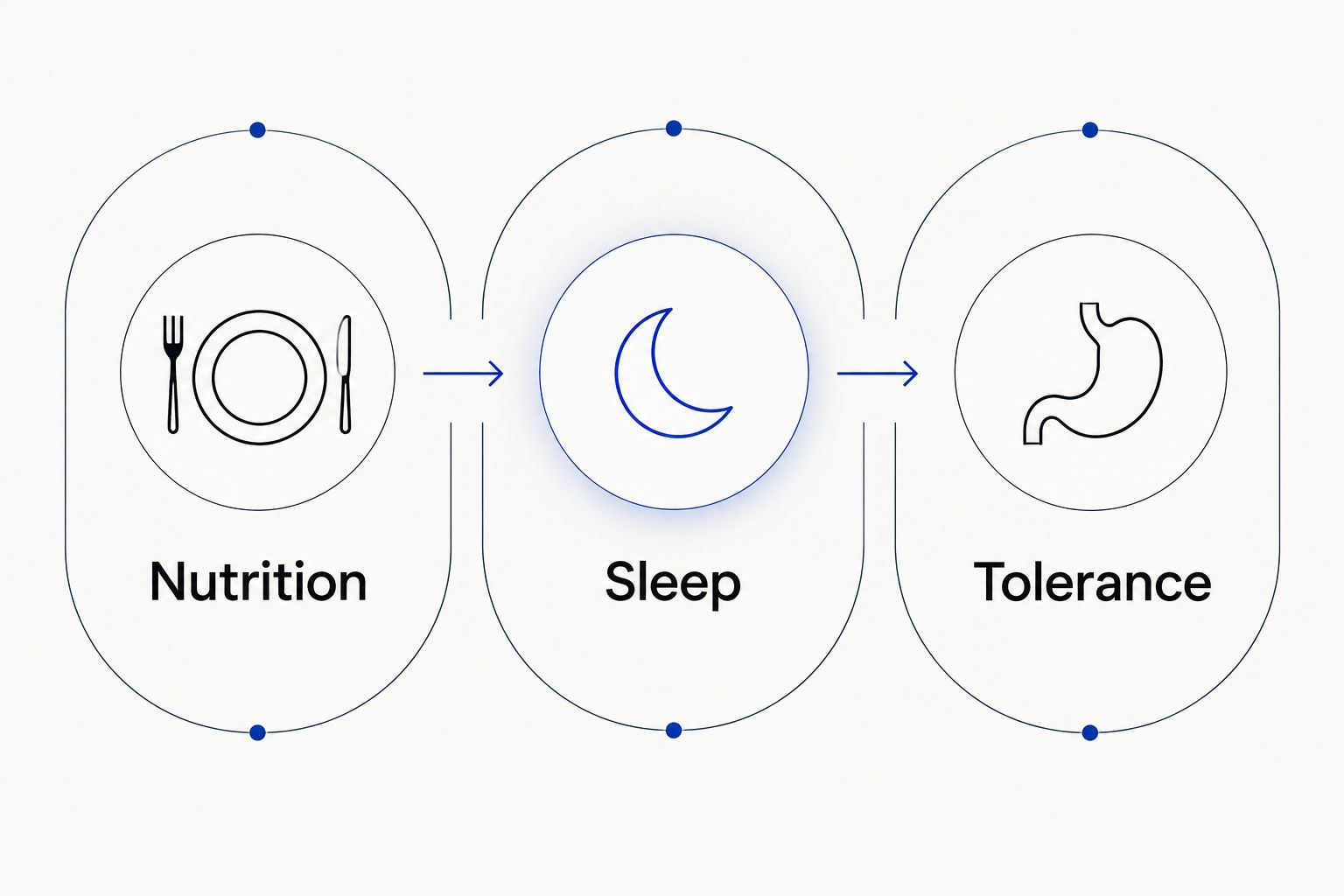
- Name your goal: nutrition, sleep, or tolerance.
- Note whether you struggle to fall asleep or get interrupted.
- Record skipped meals and your usual magnesium-containing foods.
- List symptoms you want to discuss with a clinician.
Check food intake before adding a supplement
The NIH Office of Dietary Supplements lists adult daily magnesium requirements of 310–320 mg for women and 400–420 mg for men, depending on age. These totals include magnesium from food, beverages, and supplements. They are not instructions to take that amount in capsule form.
Beans, nuts, seeds, whole grains, and leafy greens provide magnesium. Start with foods that fit your actual day: beans added to a meal, whole-grain toast, or nuts kept near your usual snack spot. Food also supplies nutrients that a magnesium-only capsule does not.
Breastfeeding adults have age-specific requirements; pregnancy uses a different intake table. If you are pregnant again, do not carry over a previous supplement plan without reviewing it.
- Add a magnesium-containing food to a meal you already eat.
- Choose convenient foods you can prepare consistently.
- Keep food intake separate from supplemental intake in your notes.
- Ask a dietitian for help if your eating pattern is restricted.
Read the full label before choosing a formula
Compare products manually by reading the Supplement Facts panel, serving size, directions, and warnings. The important quantity is elemental magnesium per serving, not simply the weight of the magnesium compound printed elsewhere on the package. Also check how many capsules make up a serving.
TruNutra is best for new parents exploring everyday wellness supplements, not treatment for persistent sleep problems. If you are considering Sleep Ease Duo, review its current label against your goal and existing routine. Do not assume a sleep-oriented name establishes magnesium content, breastfeeding suitability, or compatibility with medicines.
A product page makes the label easier to review; it does not replace a pharmacist's or clinician's assessment. Judge the complete formula rather than one familiar ingredient.
- Find the elemental magnesium amount, if magnesium is included.
- Check the serving size and directions together.
- Review every additional ingredient and warning.
- Verify testing or certification claims for that specific product.
- Bring the label to your pharmacist or clinician when needed.
Compare forms by tolerance and purpose
Magnesium glycinate, citrate, and oxide are different forms, not interchangeable promises of better sleep. The NIH Office of Dietary Supplements reports that citrate is generally absorbed more completely than oxide. That comparison does not prove that citrate will improve a particular parent's sleep.
Magnesium supplements can cause diarrhea, nausea, and abdominal cramping. A form marketed as gentle still needs an individual tolerance check. Glycinate's popularity in bedtime products is not proof that it is the best choice for every new parent.
Choose by the full label, your reason for taking it, and professional advice where appropriate. Do not increase the amount just because another form sounds less well absorbed.
- Compare elemental magnesium rather than capsule count alone.
- Separate absorption claims from sleep-benefit claims.
- Note your history of digestive sensitivity.
- Check whether the formula adds other active ingredients.
- Avoid choosing by the form name alone.
Review breastfeeding, health conditions, and medicines
A breastfeeding parent needs a whole-formula review, especially when a product combines magnesium with herbs or other sleep ingredients. A co-parent who is not breastfeeding still needs to check medicines, health conditions, and caregiving responsibilities. Neither person should assume that a supplement sold without a prescription is suitable for everyone.
Magnesium can interfere with the absorption of certain antibiotics and oral bisphosphonates. Timing instructions differ by medicine, so ask a pharmacist for the correct separation rather than using a universal schedule. Kidney disease also requires clinician guidance because it affects the body's ability to remove excess magnesium.
For your 2026 routine, keep one current list of everything you take. Include supplements and nonprescription products, not just prescriptions.
- Tell your clinician whether you are pregnant or breastfeeding.
- Include prenatal vitamins and combination wellness formulas.
- Mention kidney disease and other relevant health conditions.
- Ask about medicine-specific timing and interactions.
- Review any product that could affect overnight alertness.
Set a simple routine without stacking products
The NIH Office of Dietary Supplements sets the adult upper limit for magnesium from supplements and medications at 350 mg per day, unless a health professional recommends otherwise. Magnesium naturally present in food does not count toward this supplemental limit. The limit is not a target dose and does not guarantee that every lower amount suits you.
Count magnesium across all relevant products, including antacids or laxatives that contain it. A prenatal vitamin, a separate mineral supplement, and a bedtime blend can overlap without looking alike on the shelf.
Follow the label and professional advice rather than building your own high-dose plan. Keep supplements out of children's reach, and never use an adult product to help a baby sleep.
- Total supplemental magnesium across your daily routine.
- Check medications as well as supplement bottles.
- Follow the product's stated serving instructions.
- Avoid adding several new products at once.
- Store adult supplements away from children.
Review what changes and what does not
Use a simple note rather than relying on memory after a disrupted night. Record the product, serving, timing, digestive symptoms, and how often caregiving interrupted sleep. This helps separate tolerance from changes in your baby's routine.
A quieter night after starting magnesium does not prove the supplement caused it. Likewise, continued exhaustion does not mean you need more magnesium. If the product causes troublesome symptoms, stop and ask a qualified health professional for advice.
Keep your 2026 supplement plan small enough to explain clearly at an appointment. A useful routine is one you can account for, not one with the most bottles.
- Record the exact product and serving you took.
- Note bowel changes, nausea, or cramping.
- Separate sleep opportunity from difficulty falling asleep.
- Reassess whether the original goal still applies.
- Seek assessment for persistent or worsening symptoms.
Compare your options for 2026
The best starting point depends on whether you need better food intake, a specific magnesium supplement, or a broader formula review. This comparison separates those choices without treating them as equivalent sleep aids.
| Option | Best for | Main advantage | Key limitation |
|---|---|---|---|
| Magnesium-containing foods | Parents improving everyday nutrition | Supplies magnesium alongside other nutrients | Meal planning alone does not establish or assess deficiency |
| Magnesium glycinate | Parents comparing a magnesium-only label with bedtime-marketed options | Offers a distinct form to evaluate against your routine | The form name does not establish sleep benefit or digestive tolerance |
| Magnesium citrate | Parents prioritizing the published citrate-versus-oxide absorption comparison | Generally absorbed more completely than oxide, according to NIH | Supplemental magnesium can cause digestive side effects |
| Magnesium oxide | Parents reviewing a supplement they already use | Can be assessed through its elemental amount and directions | Generally less completely absorbed than citrate |
| TruNutra Sleep Ease Duo | Parents exploring a sleep-focused wellness formula | Provides a named option whose full label can be reviewed | Suitability depends on the complete formula; do not assume magnesium content |
Choose a magnesium-only option when magnesium is the specific nutritional need being addressed. Consider a broader formula only after checking every ingredient and deciding why each belongs in your routine. Neither approach replaces enough opportunity to sleep.
Common mistakes new parents make
Treating every tired day as a mineral problem
Interrupted sleep, irregular meals, and postpartum health concerns need different responses. Magnesium deficiency cannot be established from tiredness alone. Ask for an assessment when fatigue is persistent, severe, or accompanied by other symptoms instead of repeatedly changing supplements.
Confusing daily needs with a capsule dose
The recommended daily intake includes food; the supplemental upper limit does not. Using the daily requirement as a shopping instruction can lead you to add more than you intended. Read the food-intake guidance and supplement label as separate parts of the decision.
Checking only magnesium in a bedtime blend
A familiar mineral does not validate the rest of a formula. Breastfeeding, medicines, and overnight caregiving make the additional ingredients relevant. Read the entire panel before deciding that a product fits your household.
Borrowing another parent's routine
A friend's preferred form or serving does not account for your diet, medicines, kidney health, or feeding situation. Keep the useful question—what helped them compare options—but make your own decision from the label and qualified advice.
FAQ
What's the best magnesium supplement for new parents?
The best magnesium supplement for new parents is one that fits an identified nutritional need, the full label, and individual safety considerations. No magnesium form is automatically best for interrupted nights, and food intake is a sensible starting point.
Can I take magnesium while breastfeeding?
Ask a qualified health professional to review the specific magnesium product while you are breastfeeding. The elemental amount, additional ingredients, medicines, and your health history all matter; a magnesium-only product and a sleep blend require separate assessments.
Will magnesium help me sleep when my baby keeps waking?
Magnesium does not prevent a baby from waking or create more time to sleep. Evidence for magnesium as a sleep aid is limited, so focus first on rest opportunities and seek advice if you cannot sleep when you have the chance.
Is magnesium glycinate better than magnesium citrate for new parents?
Neither magnesium glycinate nor magnesium citrate is automatically better for new parents. Compare elemental magnesium, digestive tolerance, additional ingredients, and your reason for taking it rather than choosing by the form name alone.
How much supplemental magnesium can adults take?
The NIH Office of Dietary Supplements sets the adult upper limit at 350 mg per day from supplements and medications unless a health professional recommends otherwise. This excludes magnesium naturally present in food and is not a recommended target dose.
Can I take magnesium with my prenatal vitamin?
Review both labels before combining magnesium with a prenatal vitamin. Total the supplemental magnesium and ask a pharmacist or clinician to check overlapping ingredients, medicines, and whether another supplement is needed.
Does TruNutra Sleep Ease Duo contain the magnesium I need?
Check the current Sleep Ease Duo Supplement Facts panel to determine whether it contains magnesium and the amount per serving. A product name does not establish ingredients, dosage, or suitability for breastfeeding.
Should I take magnesium before an overnight caregiving shift?
Review the complete product and its warnings before using it during overnight caregiving. Magnesium-only supplements and formulas containing sleep-focused ingredients are different choices; ask a pharmacist or clinician about effects relevant to alertness.
One last thing
Before starting anything new, put every supplement and relevant medication label in one place. That simple step often answers the most important question: are you adding something you need, or duplicating something you already take?
For 2026, make that label review your first action—not the purchase. Bring the list to a pharmacist or clinician, especially if you are breastfeeding, taking medicines, or trying to address persistent exhaustion.