


Best Natural Sleep Aids Without Melatonin in 2026
Melatonin isn't the only path to a calmer bedtime, and it doesn't work the same way for everyone. Some people wake up groggy after taking it, some take medications that interact with hormone-based supplements, and some simply want a formula that supports relaxation without touching the body's own melatonin production. This guide ranks the natural sleep aids without melatonin worth trying in 2026, from single-ingredient staples to a combination formula built for a nightly routine.
- The most reliable natural sleep aids without melatonin in 2026 are magnesium glycinate, L-theanine, ashwagandha, glycine, and valerian root.
- TruNutra Sleep Ease Duo wins for a ready-made nightly routine that combines relaxation-support ingredients into one system.
- Magnesium glycinate is the most affordable single-ingredient starting point for physical tension at bedtime.
- Ashwagandha suits stress-driven sleeplessness better than a sleep-specific formula does.
- Always check the label ingredient list before assuming any product is melatonin-free.
Why this matters
Melatonin is the default recommendation for sleep trouble, but it isn't the only route to a calmer bedtime. If stress plays a bigger role in poor sleep than you've been treating it for, the ingredients on this list approach the problem from that angle instead of leaning on a hormone.
Natural sleep aids without melatonin generally work through one of three routes: calming the nervous system (L-theanine, ashwagandha), easing physical tension (magnesium glycinate, glycine), or working through traditional herbal pathways with less consistent research (valerian root). None of them sedate the way a sleep drug does. They support the wind-down instead of forcing it, which is a different job than melatonin does and worth knowing going into 2026 if you're choosing between the two.
What makes the best natural sleep aid without melatonin
- No melatonin or other hormone-based ingredients anywhere on the label
- Doses that match published research ranges, not fractional "fairy dusted" amounts
- A track record tied to relaxation, muscle tension, or stress rather than vague "energy" claims
- A stated quality or testing standard when a brand claims one, never assumed by default
- Fits into a repeatable evening routine instead of a one-off knockout dose
- Clear label information on ingredient form (magnesium glycinate versus magnesium oxide matters)
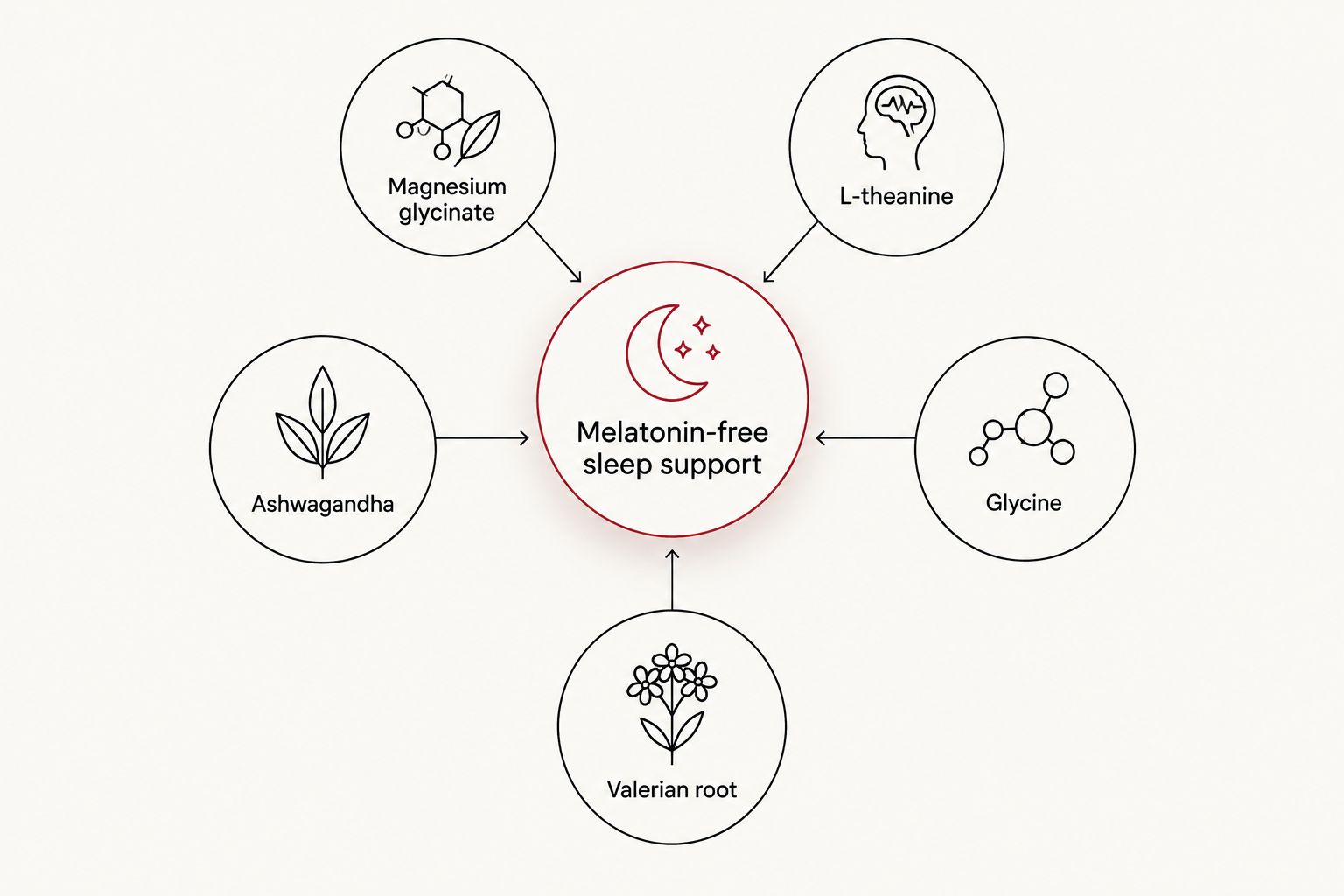
At a glance: natural sleep aids without melatonin
| Option | Best for | Standout feature | Key limitation |
|---|---|---|---|
| TruNutra Sleep Ease Duo | A ready-made nightly routine | Two complementary formulas built as one system | Full ingredient list isn't covered here, check the label |
| Magnesium glycinate | Physical tension at bedtime | A well-absorbed, bound form of magnesium | Takes daily consistency to notice a difference |
| L-theanine | A racing mind before bed | Amino acid from tea, studied for calm focus | Mild effect for significant insomnia |
| Ashwagandha | Stress-driven sleeplessness | Adaptogenic herb studied for lowering stress response | Builds over weeks, not fast-acting |
| Glycine | Slow sleep onset | Linked to the body's natural pre-sleep temperature drop | Modest effect on its own |
| Valerian root | A traditional herbal preference | Long history of herbal sleep use | Research results are mixed |
1. TruNutra Sleep Ease Duo: best natural sleep aid without melatonin for a ready-made nightly routine
TruNutra Sleep Ease Duo pairs two complementary formulas designed to support nighttime relaxation and restful sleep quality as part of a consistent evening routine, according to the product description. It's built for people who want a repeatable two-step habit instead of assembling single ingredients on their own.
TruNutra Sleep Ease Duo pros:
- Built around a repeatable two-formula evening routine
- Positioned for nighttime relaxation and sleep quality, not just knockout sedation
- One product to manage instead of stacking several separate supplements
TruNutra Sleep Ease Duo cons:
- The exact ingredient breakdown isn't detailed in this guide, check the label before buying if avoiding melatonin is a hard requirement for you
- A two-formula routine asks for more consistency than a single capsule
Best for: readers who want a structured, two-step nightly routine instead of assembling their own stack.
Verdict: Buy if a ready-made routine appeals to you, and confirm the label matches your melatonin preference before checkout.

2. Magnesium glycinate: best for physical tension at bedtime
Magnesium glycinate combines magnesium with the amino acid glycine, and it's one of the better-absorbed forms of magnesium compared with magnesium oxide or citrate. It suits people whose bedtime trouble comes from muscle tightness or restless legs rather than racing thoughts. Doses in commercial products commonly run 200 mg to 400 mg taken in the evening, though individual needs vary. For a closer look at how magnesium forms compare, TruNutra's magnesium glycinate supplement guide breaks down dosing and absorption in more detail.
Magnesium glycinate pros:
- Better absorbed than cheaper magnesium forms
- Doesn't carry the next-day grogginess sedatives can
- Doses are well documented across published research
Magnesium glycinate cons:
- Doesn't address a racing mind on its own
- Higher doses can cause loose stool in some people
Best for: readers whose sleep trouble is physical tension, not a busy mind.
Verdict: Buy as a starting point if muscle tension is the main complaint.
3. L-theanine: best for a racing mind before bed
L-theanine is an amino acid naturally found in tea leaves, studied for supporting calm, alert focus rather than sedation. It suits people whose main obstacle at bedtime is a mind that won't slow down. Common doses range from 100 mg to 200 mg, often taken 30 to 60 minutes before lights out.
L-theanine pros:
- Calming without heavy drowsiness
- Doesn't build the tolerance some sedatives do
- Pairs well alongside other ingredients on this list
L-theanine cons:
- Mild effect for people with significant insomnia
- Subtle on its own compared with a sedative
Best for: overthinkers whose brain won't switch off at night.
Verdict: Hold — worth adding if magnesium alone hasn't solved the problem, but rarely a standalone fix.
4. Ashwagandha: best for stress-driven sleeplessness
Ashwagandha is an adaptogenic herb studied for its role in lowering the body's stress response, and stress-related sleeplessness is one of its more common use cases. Standardized extracts in commercial products commonly run 300 mg to 600 mg daily, and the effect builds over weeks rather than working the night you take it. TruNutra's ashwagandha for anxiety guide covers extract types and dosing for stress-related sleep trouble in more depth.
Ashwagandha pros:
- Targets the stress cause behind the sleeplessness, not just the symptom
- Doesn't create dependence
- One of the more studied adaptogens on the market
Ashwagandha cons:
- Not fast-acting; needs weeks of consistent use
- Not the right pick for occasional, one-off restlessness
Best for: stress-driven sleeplessness rather than occasional bad nights.
Verdict: Buy for a stress-first strategy. Skip it if you need something for tonight specifically.
5. Glycine: best for slow sleep onset
Glycine is an amino acid linked in research to a drop in core body temperature that lines up with the body's natural pre-sleep signal. Doses in studies commonly sit around 3 grams taken shortly before bed. It's one of the milder options on this list.
Glycine pros:
- Reasonable research support for sleep onset
- Generally well tolerated
- Inexpensive as a standalone amino acid
Glycine cons:
- Subtle effect taken alone
- Easiest to notice when paired with a broader routine
Best for: people who fall asleep fine eventually but take a while to actually drift off.
Verdict: Hold — a reasonable add-on, not usually a standalone fix.
6. Valerian root: best for a traditional herbal preference
Valerian root has centuries of traditional use as an herbal sleep aid and remains one of the most recognized non-melatonin options on supplement shelves in 2026. Research on it is mixed: some studies show modest improvement in sleep quality, others show no meaningful difference. Typical doses range from 300 mg to 600 mg of extract before bed.
Valerian root pros:
- Long history of herbal use
- Widely available
- Not hormone-based
Valerian root cons:
- Research results are inconsistent
- Raw forms have a strong smell and taste some people dislike
- Effects vary widely from person to person
Best for: readers who prefer a traditional herbal approach and are comfortable with mixed evidence.
Verdict: Wait — reasonable to try, but don't expect guaranteed results.
How this list was ranked
Each entry above is measured against the criteria at the top: whether it avoids hormone-based ingredients, whether its dose matches published research ranges, and whether it fits a repeatable routine instead of a one-time fix. TruNutra Sleep Ease Duo ranks first because it's built as a complete routine; the single ingredients below it let you customize around your specific bedtime obstacle.
“Ashwagandha builds an effect over weeks rather than working the night you take it.”
Which natural sleep aid without melatonin should you choose?
If you want one product that handles the whole routine, TruNutra Sleep Ease Duo is the straightforward pick for 2026 — check the label to confirm the ingredients match what you're avoiding before buying. If you'd rather build your own stack, start with magnesium glycinate for physical tension, add L-theanine if your mind won't slow down, and reach for ashwagandha if stress is the real driver behind your sleep trouble. Glycine and valerian root make reasonable additions once the basics are in place, not the first thing to reach for. Talk to a healthcare professional before combining several supplements, especially if you take other medications.
FAQ
What is the best natural sleep aid without melatonin in 2026?
Magnesium glycinate, L-theanine, ashwagandha, glycine, and valerian root are the most established options, and TruNutra Sleep Ease Duo combines relaxation-support ingredients into one nightly routine. Which one is 'best' depends on whether your sleep trouble is physical tension, a busy mind, or stress.
Is magnesium glycinate better than melatonin for sleep?
Magnesium glycinate works differently than melatonin — it eases physical tension rather than signaling the body's sleep-wake cycle directly. It suits people whose sleep trouble is muscle tightness or restlessness rather than a racing mind.
How long does ashwagandha take to help with sleep?
Ashwagandha typically builds an effect over several weeks of consistent use rather than working the first night. It's better suited to ongoing stress-related sleeplessness than an occasional bad night.
Can you combine magnesium and L-theanine at night?
Yes, magnesium glycinate and L-theanine are commonly paired because they address different obstacles: physical tension and a busy mind. Check with a healthcare professional if you take other medications.
Is valerian root safe to take every night?
Valerian root is widely used as a nightly herbal sleep aid, but research on its effectiveness is mixed and results vary by person. Follow label dosing and check with a healthcare professional if you take other medications.
What is the best natural sleep aid for stress-related insomnia?
Ashwagandha is the strongest fit for stress-driven sleeplessness because it's studied for lowering the body's stress response rather than acting as a direct sedative. It needs weeks of consistent use to show its effect.
Does TruNutra Sleep Ease Duo contain melatonin?
The full ingredient breakdown for Sleep Ease Duo is listed on its product label; confirm it there directly if avoiding melatonin is a hard requirement for you.
How much glycine should you take before bed?
Studies commonly use around 3 grams of glycine taken shortly before bed. It's a mild option best paired with a broader wind-down routine rather than used alone.
One last thing
Most people don't pick just one ingredient off this list — they layer two or three. Magnesium glycinate for muscle tension plus L-theanine for a busy mind is one of the more common combinations for 2026, and it doesn't require touching melatonin at all. Start with whichever obstacle matches your actual nights, not the ingredient with the most hype.