


How long does it take for a daily multivitamin to work?
There is no single, reliable number of days for a daily multivitamin to work: the timing depends on whether you have a nutrient shortfall, what the formula contains, and how you define results. Correcting a deficiency is different from maintaining adequate nutrition, and you might not feel any change when your intake already meets your needs. In 2026, the practical answer is to judge a multivitamin by its purpose and your health professional’s guidance—not a promised countdown.
- How long does it take for a daily multivitamin to work? There is no universal timeline for noticeable results.
- A daily multivitamin can help fill nutrient gaps; it is not an instant energy boost.
- TruNutra supplement shoppers should compare labels with their nutritional needs, not expect every formula to function as a multivitamin.
- Persistent fatigue needs assessment rather than a larger supplement serving.
How long does it take for a daily multivitamin to work?
A multivitamin has no universal results deadline. Your body uses nutrients in normal processes, but swallowing a tablet, improving nutrient status, and noticing a benefit are different events. A change in how you feel does not establish that a deficiency has been corrected.
Start by identifying your reason for taking it. If you are reviewing the TruNutra supplement range, check the individual label rather than assuming a daily wellness product provides broad multivitamin coverage.
| Your starting point | What a multivitamin can contribute | Main limitation | Best for |
|---|---|---|---|
| Inconsistent nutrient intake | Additional amounts of the nutrients listed on its label | It does not replace varied meals | Adults addressing identified dietary gaps |
| An already adequate diet | Additional nutrient intake | You might not notice any benefit | Adults with a specific, reviewed nutritional reason |
| A confirmed deficiency | Some of the relevant nutrient, if included | The amount or form might not match the recommended treatment | Adults following an individualized care plan |
| Unexplained tiredness | Nutrients, not a diagnosis | Fatigue has causes a multivitamin cannot address | Adults arranging an assessment before choosing supplements |
These situations do not share a meaningful countdown. A general wellness routine and a clinician-directed plan to correct a deficiency need different measures of success.
Why this matters
A quiet result is not automatically a failed result. If your goal is to fill a dietary gap, you might not experience a noticeable lift after taking a multivitamin.
The opposite matters, too. Feeling better after starting a supplement does not prove the supplement caused the improvement; sleep, meals, activity, stress, and normal day-to-day variation also affect how you feel.
For your 2026 routine, define the goal before deciding whether the supplement works. Write down whether you want to address a dietary gap, follow a professional recommendation, or investigate a symptom. That distinction prevents an ordinary supplement from becoming a substitute for needed care.
If you are filling dietary gaps
A multivitamin can add nutrients that your meals do not consistently provide. Its usefulness depends on the actual gaps and the amounts on the label—not simply whether the bottle says daily wellness.
You do not need to feel a burst of energy for nutrient intake to have changed. Vitamins are not stimulants, and taking more does not create extra energy when your nutritional needs are already met.
Compare your usual eating pattern with the formula. A multivitamin does not provide everything food offers, including the same mix of protein, fiber, and other food components.
Best for: adults with a specific dietary gap who have checked that the formula fits. The benefit is added nutrient coverage; the limitation is that coverage alone does not promise a noticeable change.
If you have a confirmed deficiency
A diagnosed deficiency needs a plan suited to the nutrient, its severity, and its cause. A standard multivitamin is not automatically the right amount or form for that plan.
Your health professional can explain what to monitor and whether follow-up testing is appropriate. Symptoms and laboratory results answer different questions, so feeling better is not a reason to change a prescribed plan yourself.
Avoid borrowing someone else’s timeline. Differences in absorption, ongoing losses, dietary intake, and treatment make another person’s experience a poor deadline for your own progress.
Best for: adults following individualized guidance. The advantage is a defined goal and follow-up plan; the limitation is that an ordinary multivitamin might not meet the treatment need.
If you already get enough nutrients
You might never feel a difference from a daily multivitamin. That does not mean you need a stronger formula or a larger serving.
Adequate nutrition supports normal function, but extra nutrients do not reliably produce extra benefits. Some nutrients can cause harm in excessive amounts, especially when several supplements overlap.
Review the reason you started. If the goal was vague—such as feeling generally better—consider whether sleep, meal consistency, or a health assessment addresses the concern more directly.
Best for: adults with a clear reason to supplement despite an otherwise adequate diet. The practical advantage is convenience; the limitation is uncertain added benefit without an identified need.
Why the time to notice results varies
The main drivers are your starting point and the match between your needs and the formula. Keep these factors separate when reviewing progress:
- Nutrient status: A documented shortfall creates a different goal from maintaining an adequate intake.
- Formula contents: A multivitamin only supplies the nutrients and amounts listed on its label.
- Absorption: Digestive conditions, certain medicines, and previous gastrointestinal surgery can affect nutrient absorption.
- Consistency: Following the directions produces a more consistent intake than taking the supplement sporadically.
- Other health factors: Poor sleep, stress, illness, and medication effects can influence symptoms such as tiredness.
- Overlapping products: Combining formulas changes your total intake and can increase the risk of excessive amounts.
None of these factors supports a universal promise. If the product does not match your need, waiting longer is not necessarily the answer.
How should you track whether a multivitamin is helping?
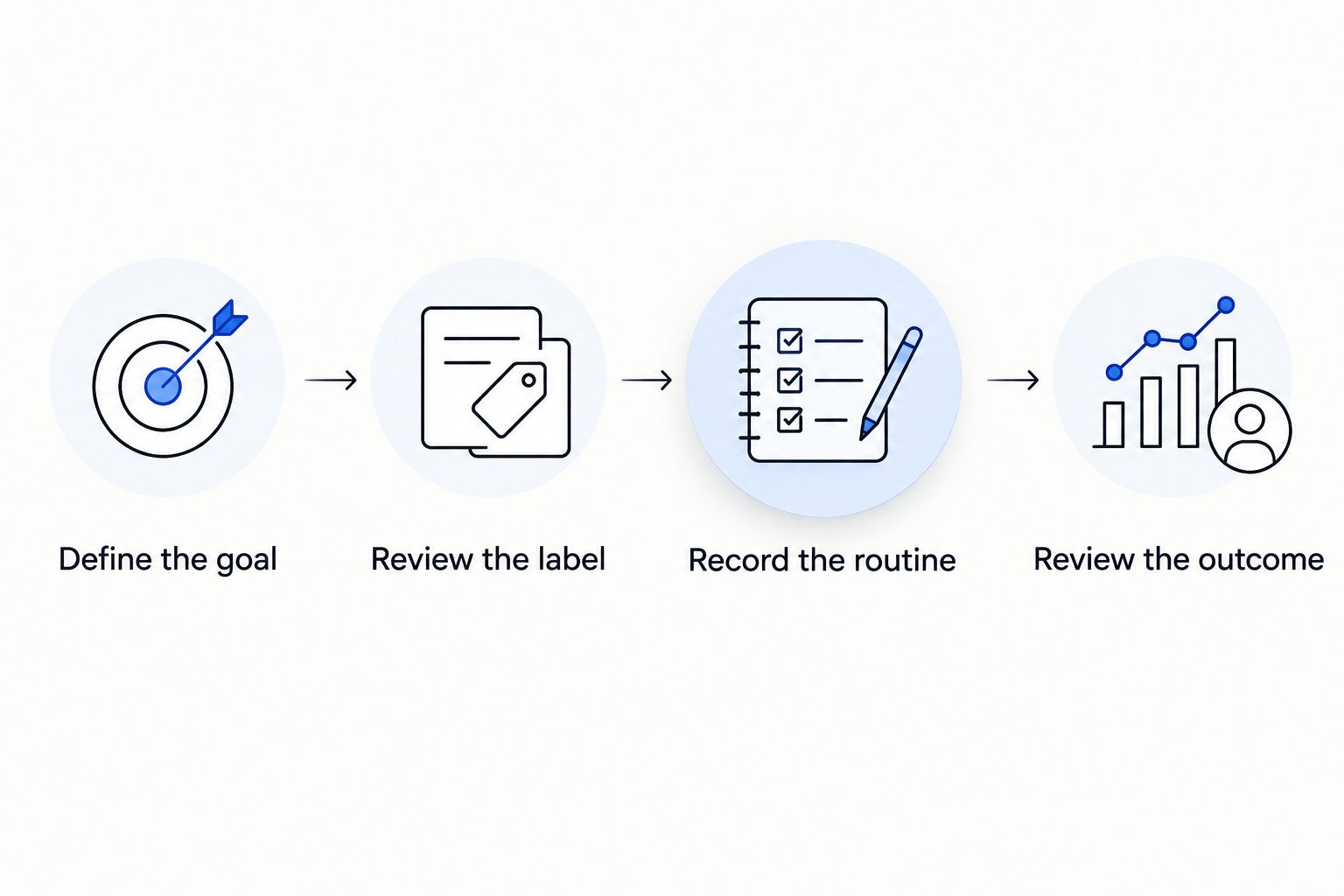
Use a simple process rather than checking for a different feeling after every serving. This 2026 review framework separates the purpose of the supplement from ordinary daily changes.
- Define the goal. Name the dietary gap or professional recommendation you are addressing. Avoid using a broad goal such as better health as your only measure.
- Review the label. Check ingredients, serving size, directions, warnings, and overlap with other products. Do not assume that every formula includes the same nutrients.
- Record the routine. Note whether you followed the directions and whether your meals, sleep, or medicines changed. Keep the record brief enough to maintain.
- Review the outcome. Use the measure that fits your goal, including professional assessment or testing when indicated. Do not increase the serving to force a result.
The record is context, not proof. A better afternoon after a good night’s sleep cannot establish that a multivitamin corrected a nutritional problem.
What should you check on the label in 2026?
Read the Supplement Facts panel before judging a product by its name. Check the serving size first, because the listed nutrient amounts refer to that serving—not necessarily a single capsule or tablet.
For label-reading context, the FDA Daily Values for adults and children aged four and older include 2.4 micrograms of vitamin B12, 20 micrograms of vitamin D, and 18 milligrams of iron. These are reference values used on labels, not personalized dosing instructions or predictions of how quickly a supplement works.
Your needs can differ with age, pregnancy, diet, and health status. A higher percentage of Daily Value is not a faster-results rating, and a formula does not need to contain every nutrient at the same percentage to serve a particular purpose.
Also check whether the nutrient you want is present at all. A botanical supplement, magnesium supplement, or other focused formula is not interchangeable with a multivitamin simply because you take it daily.
Do age, pregnancy, or hormone-related goals change the decision?
Your life stage can change which nutrients deserve attention, but it does not create a universal multivitamin timeline. Pregnancy, breastfeeding, restrictive diets, and some health conditions call for more specific guidance than a general wellness promise.
A label or article using the phrase hormone balance multivitamin still needs to be judged by its ingredients and intended use; the phrase alone does not establish that the formula changes hormone levels or explains your symptoms.
Bring the actual label to a qualified health professional when your goal involves persistent symptoms or a life-stage-specific need. Ask which nutrients matter, whether the amounts fit, and what follow-up makes sense.
Choose for the nutritional need, not the most appealing promise. A general multivitamin is not automatically a prenatal formula, and a wellness product name is not evidence of a particular health effect.
When should you ask a health professional instead of waiting?
Persistent or worsening fatigue deserves assessment rather than repeated supplement changes. The same applies when you have symptoms that interfere with ordinary activities or suspect a deficiency without knowing the cause.
Seek urgent care for symptoms such as chest pain, fainting, or severe shortness of breath. Do not wait for a multivitamin to work through those symptoms.
Ask a pharmacist or clinician about your full supplement list if you take prescription medicines. For example, vitamin K can affect warfarin management, and certain minerals can interfere with the absorption of some medicines.
A longer trial is not automatically a safer trial. If a supplement causes an unwanted reaction, seek advice about whether to stop it rather than treating discomfort as evidence that it is working.
Where does TruNutra fit into a daily wellness routine?
TruNutra is best suited to adults who want to review clearly described supplements for a simple daily routine. The choice still starts with the individual product label and your reason for taking it.
For a multivitamin goal, confirm that the formula actually supplies the range of vitamins and minerals you need. A focused nutritional or botanical supplement serves a different purpose, even when its directions describe daily use.
The practical advantage of a defined routine is consistency. Its limitation is equally clear: consistency cannot make the wrong formula match your needs, establish a diagnosis, or guarantee a noticeable benefit.
FAQ
How long does it take for a daily multivitamin to work?
There is no universal timeline for a daily multivitamin to produce noticeable results. Your starting nutrient status, the formula, absorption, and the outcome you are tracking all matter.
Will I feel more energy after my first multivitamin?
A multivitamin is not an instant energy booster. If tiredness relates to a nutrient deficiency, the right assessment and nutritional plan matter more than expecting a change after the first serving.
Does feeling no difference mean my multivitamin is not working?
Feeling no difference does not prove that a multivitamin is ineffective. Filling a dietary gap does not always create a noticeable sensation, particularly when the goal is maintaining adequate nutrition.
Should I take more multivitamins to get faster results?
Do not exceed the label directions to try to get faster results. Extra amounts can increase the risk of excessive nutrient intake without improving the outcome.
Can a multivitamin fix a vitamin deficiency?
A standard multivitamin is not automatically an appropriate treatment for a diagnosed deficiency. The nutrient, amount, form, cause of the deficiency, and follow-up plan need individual review.
Can I take a multivitamin with other supplements?
Combining a multivitamin with other supplements requires checking for overlapping ingredients and interactions. Review the complete labels with a pharmacist or qualified health professional, especially if you take medicines.
When should I switch multivitamins if I do not feel better?
Review your goal and the cause of your symptoms before switching multivitamins. Persistent fatigue or other ongoing symptoms need assessment rather than repeated product changes.
One last thing
Do not turn the date you finish a bottle into a medical deadline. Bottle size tells you about the package, not how long your body needs or whether the formula is appropriate.
For a useful 2026 checkpoint, ask whether you can explain why you take the supplement, what it contains, and how you will judge its value. If those answers remain unclear, review the plan before adding another product.