


Does magnesium glycinate cause next-day drowsiness?
Next-day drowsiness after taking magnesium glycinate does not prove the supplement caused it: a predictable morning hangover is not an established effect of magnesium glycinate. If you wake up unusually sleepy after starting it, review the dose, other ingredients, medicines, and your sleep schedule rather than assuming the feeling is normal or harmless.
- Does magnesium glycinate cause next day drowsiness? Timing alone does not establish the cause.
- Magnesium glycinate is not a proven insomnia treatment; better sleep and next-day alertness are separate outcomes.
- Review elemental magnesium, other sleep ingredients, and medicines before changing your routine.
- TruNutra offers everyday wellness supplements; check the relevant label before choosing a sleep-support formula.
Does magnesium glycinate cause next-day drowsiness?
Morning grogginess deserves attention, but it is not enough to identify magnesium glycinate as the cause. You need to distinguish an unwanted response to your particular supplement from insufficient sleep, another ingredient, or a medicine that affects alertness.
The National Institutes of Health Office of Dietary Supplements lists diarrhea, nausea, and abdominal cramping among the effects of excessive supplemental magnesium. Its magnesium fact sheet does not establish next-day drowsiness as a typical magnesium-glycinate effect. The National Center for Complementary and Integrative Health also describes the research on magnesium for insomnia as limited.
For a related explanation, read Can magnesium help with insomnia?. A supplement's possible role in sleep does not establish that it causes morning sedation—or that it reliably improves sleep.
| What you took | Best for | What it helps you assess | Main limitation |
|---|---|---|---|
| Single-ingredient magnesium glycinate | Adults reviewing a simpler ingredient list | Whether symptoms started after introducing one supplement ingredient | Timing still does not prove causation |
| A multi-ingredient sleep supplement | Adults comparing a formula's full label with a health professional | Whether another ingredient has a known drowsiness warning | You cannot attribute the response to magnesium alone |
| Magnesium alongside medicines or other supplements | Adults who need a pharmacist's interaction review | Overlapping ingredients, warnings, and medication interactions | Self-adjusting medicines is not a safe way to investigate symptoms |
These are label-review situations, not a ranking of sleep treatments. In 2026, the useful distinction remains the same: evaluate the whole routine, not just the word magnesium on the bottle.
Why this matters
Being relaxed before bed and being alert the next morning are different goals. A routine that leaves you struggling to concentrate, drive, or work safely needs review, even if you believe it helped you fall asleep.
You do not need to push through an unwanted effect to prove that a supplement works. Avoid driving or operating machinery while drowsy, and discuss persistent or recurring symptoms with a qualified health professional.
A better sleep score is not a reason to ignore how you feel. Your ability to function during the day matters more than a device's summary of the night.
What the magnesium amount on the label tells you
Use the elemental magnesium amount in Supplement Facts, not the weight of the magnesium-glycinate compound. Those are different measurements. A large number on the front of a bottle does not necessarily describe the magnesium your serving provides.
The NIH Office of Dietary Supplements gives an adult upper limit of 350 mg per day from supplements and medications, unless a health professional directs otherwise. That limit excludes magnesium naturally present in food and drinks. It is a safety reference, not a suggested bedtime dose or a threshold that predicts drowsiness.
For context, recommended total daily magnesium intake is 400–420 mg per day for adult men and 310–320 mg per day for nonpregnant adult women, depending on age. Those totals include food, drinks, supplements, and medications; they are not instructions to take that amount in capsules.
| Reference amount | What it includes | What it does not tell you |
|---|---|---|
| 350 mg per day adult upper limit | Magnesium from supplements and medications | Your personal sleep dose or likelihood of morning grogginess |
| 400–420 mg per day for adult men | Total magnesium intake from all sources | How much additional magnesium you need |
| 310–320 mg per day for nonpregnant adult women | Total magnesium intake from all sources | Whether magnesium glycinate will improve your sleep |
For this 2026 guide, the source and scope of these figures are the NIH Office of Dietary Supplements' magnesium fact sheet and its adult intake tables. They are general nutrition references, not product-specific instructions.
Check the serving size as well as the amount per serving. Then include any magnesium-containing antacids, laxatives, or other supplements in the review. Do not increase your dose to chase deeper sleep when the current routine already leaves you feeling unwell.
Why morning alertness varies
Several parts of your routine affect how useful the supplement timeline is. Review these factors before deciding that magnesium glycinate alone explains your morning symptoms:
- Elemental magnesium: Check the actual amount per serving and your total from supplements and medications. The front-label compound weight is not enough.
- Other ingredients: A formula containing melatonin or another sleep-related ingredient is not the same as single-ingredient magnesium glycinate. Read each ingredient's precautions.
- Medicines and alcohol: Some medicines and alcohol affect alertness. A pharmacist can assess the full combination rather than evaluating magnesium in isolation.
- Sleep opportunity: A late bedtime, early alarm, or changing work schedule can leave you sleepy regardless of what you took.
- Health conditions: Kidney disease requires particular caution with magnesium supplements because impaired kidney function increases the risk of magnesium toxicity.
These factors do not establish why you personally feel sleepy. They identify the information a health professional needs to give useful advice.
Do not assume that a familiar supplement is suitable for every health situation. A label cannot replace a review of kidney function, medication use, or persistent daytime sleepiness.
What should you do if you feel groggy the next morning?
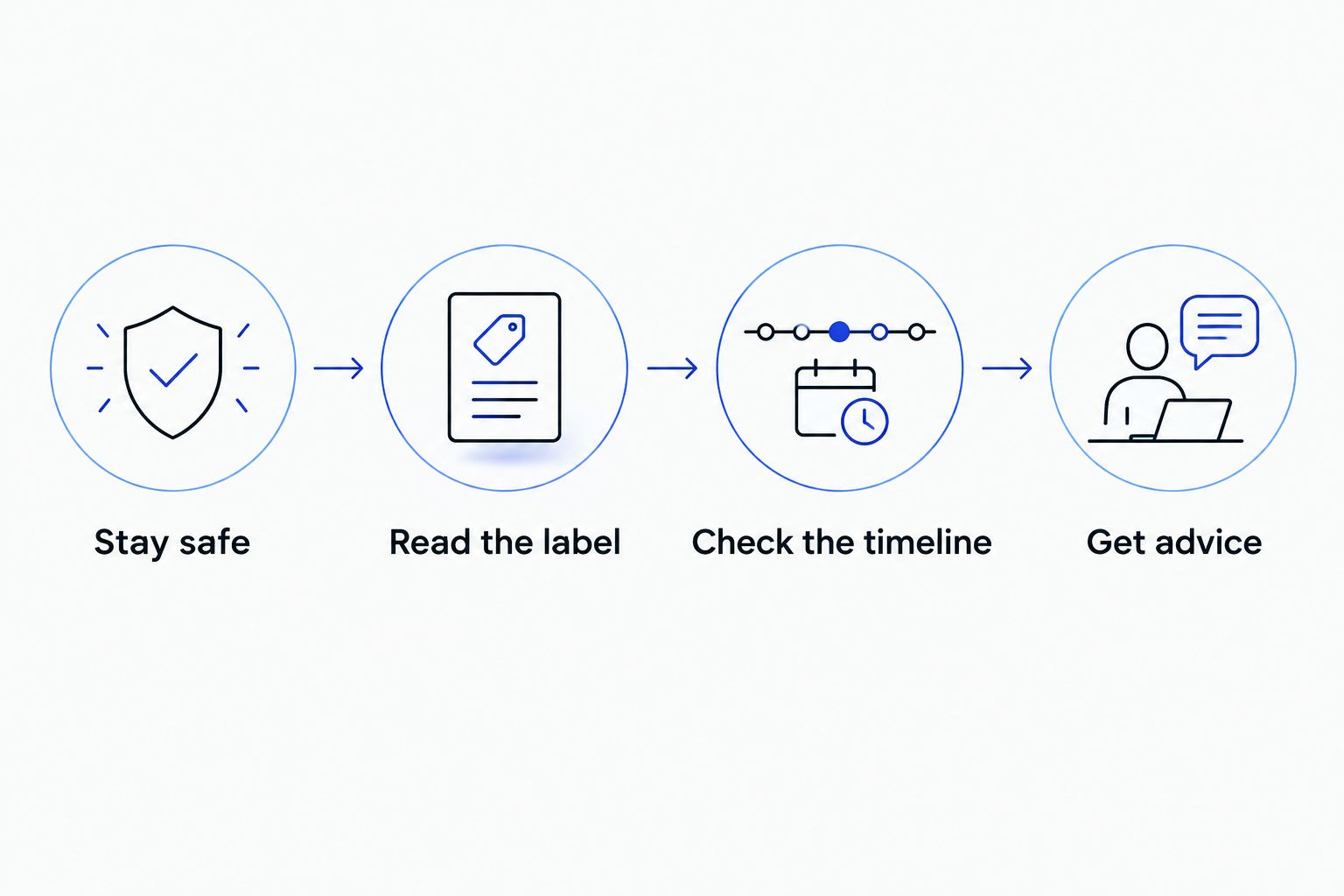
Start with safety, then review the label and the timeline. Changing several things at once makes it harder to understand what happened. For a 2026 supplement routine, a simple written record is more useful than guessing from memory.
- Stay safe. Do not drive or use machinery while drowsy. Marked weakness, difficulty breathing, fainting, or severe confusion needs urgent medical attention rather than a home supplement experiment.
- Read the label. Record the serving size, elemental magnesium amount, and every other active ingredient. Note whether you took more than the directions specify.
- Check the timeline. Write down when you took the supplement, when you went to bed, when you woke, and how you felt. Include any recent changes to medicines, alcohol use, or your schedule.
- Get advice. Ask a pharmacist or clinician whether the supplement should be paused, changed, or avoided. If magnesium was prescribed or recommended for a diagnosed deficiency, contact that professional before changing the plan.
Bring the bottle or a clear label photo to the conversation. Include prescription medicines, over-the-counter medicines, and other supplements—even products you do not think of as sleep aids.
If the supplement is nonessential and you suspect an unwanted effect, seek advice before taking another dose. Do not deliberately repeat a dose that caused significant symptoms simply to test whether the reaction happens again.
Would taking magnesium glycinate earlier prevent grogginess?
There is no established timing rule that guarantees magnesium glycinate will not leave you feeling sleepy the next morning. Moving a dose earlier does not resolve an unsuitable dose, another sedating ingredient, or an unrelated sleep problem.
Follow the product directions and any instructions from your health professional. If the label allows flexible timing, ask whether a timing change makes sense for your particular routine rather than assuming bedtime is necessary.
Magnesium also interacts with certain medicines, including some antibiotics and oral bisphosphonates, by affecting their absorption. A pharmacist should advise on the correct separation interval for your specific medicine; a general bedtime suggestion is not enough.
Is magnesium glycinate better than a sleep blend for avoiding drowsiness?
A single-ingredient product makes the ingredient review simpler; it does not guarantee a drowsiness-free morning. A sleep blend adds other ingredients to assess, so you need to read the full formula rather than transferring assumptions about magnesium to the whole product.
If you are comparing TruNutra's Sleep Ease Duo, use its current label to review ingredients, directions, and warnings. Do not assume it contains magnesium glycinate or excludes melatonin based on its name.
TruNutra is for adults seeking everyday wellness supplements, not a treatment for unexplained morning drowsiness. A measured recommendation is to consider a sleep-support product only after checking whether its actual label fits your needs and health circumstances. The limitation is straightforward: no brand name or sleep-focused product name guarantees next-day alertness.
In 2026, choose based on the current formula, not an old review or a general claim about an ingredient. If morning grogginess is already a problem, adding another sleep supplement is not the first step.
How can you tell whether the supplement is the problem?
A clear sequence helps your clinician assess the situation, but it is not proof. Symptoms that started after introducing a supplement are relevant; symptoms that also occur without it deserve equal attention.
Describe what you mean by groggy. Feeling sleepy, feeling dizzy, and feeling unusually weak are different experiences, and they need different assessment. Note whether the feeling interferes with ordinary tasks rather than relying only on words such as relaxed or tired.
Persistent daytime sleepiness can have causes unrelated to supplements. Loud snoring, breathing pauses reported by a partner, or repeatedly falling asleep unintentionally are reasons to seek medical assessment rather than repeatedly changing magnesium forms.
Do not use improvement after a routine change as a reason to ignore recurring symptoms. A health professional can decide whether further assessment is needed.
FAQ
Does magnesium glycinate cause next day drowsiness in everyone?
No predictable next-day drowsiness effect has been established for magnesium glycinate. If you feel unusually sleepy after taking it, review the full product, your medicines, and your sleep schedule with a health professional.
Is feeling groggy proof that magnesium glycinate worked?
No, morning grogginess is not proof that magnesium glycinate improved your sleep. Next-day alertness matters separately from how quickly you fell asleep.
How much supplemental magnesium is too much for adults?
The adult upper limit is 350 mg per day from supplements and medications unless a health professional directs otherwise. It excludes magnesium naturally present in food and drinks and is not a recommended sleep dose.
Should I take magnesium glycinate earlier in the evening?
Taking magnesium glycinate earlier is not a proven way to prevent next-day drowsiness. Follow the label and ask a pharmacist about timing if you use medicines or other sleep-related products.
Can I take magnesium glycinate with melatonin?
Do not assume magnesium glycinate and melatonin are a suitable combination for you. Melatonin can cause daytime drowsiness, so review the combination and your medicines with a qualified health professional.
Is magnesium glycinate safe if I have kidney disease?
Kidney disease requires professional advice before using magnesium supplements. Reduced kidney function increases the risk of magnesium toxicity because the body has more difficulty removing excess magnesium.
Should I stop a supplement if I wake up unusually sleepy?
Seek advice before taking another dose of a nonessential supplement you suspect is causing an unwanted effect. If magnesium is part of a prescribed treatment plan, contact your clinician before changing it; severe symptoms need urgent care.
One last thing
A smaller ingredient list makes a reaction easier to review, not automatically safer. The useful details are the amount you took, the complete formula, your other medicines, and what happened afterward.
Keep those details together before choosing another bottle. For your 2026 sleep routine, the goal is a workable night and an alert morning—not simply a stronger feeling at bedtime.