


Can supplements help reduce bloating after meals?
Yes, supplements can help reduce bloating after meals when they match a specific cause, such as difficulty digesting lactose, but there is no single supplement that works for everyone. Probiotics are not a reliable general fix, and persistent or worsening bloating needs medical attention rather than repeated supplement changes.
- Can supplements help reduce bloating after meals? Yes, when the supplement matches the cause; probiotics are not a general fix.
- Lactase suits lactose-related symptoms; alpha-galactosidase targets certain carbohydrates in foods such as beans.
- TruNutra Belly Bloom is a probiotic supplement, not a proven treatment for post-meal bloating.
- Get medical advice for persistent bloating, especially with pain, vomiting, bleeding, or unexplained weight loss.
Can supplements help reduce bloating after meals?
The cause of your bloating matters more than the word “digestive” on a bottle. An enzyme that helps digest a particular food has a different purpose from a probiotic, and neither addresses every reason your stomach feels full or tight after lunch.
For your 2026 supplement routine, use this comparison before adding anything from TruNutra or another brand. These are different approaches, not interchangeable choices.
| Option | Best for | What it does | Main limitation |
|---|---|---|---|
| Lactase | People with lactose intolerance eating lactose-containing foods | Helps break down lactose, the sugar in milk | Does not address milk allergy or unrelated bloating |
| Alpha-galactosidase | People whose gas follows beans or certain other plant foods | Helps break down particular gas-producing carbohydrates | Does not cover every carbohydrate or every cause of bloating |
| Probiotic supplements | People with a specific, professionally guided reason to use a particular strain | Supply live microorganisms | Benefits depend on the strain and use; some people develop more gas |
| Meal and symptom tracking | People with an unclear or inconsistent pattern | Helps identify connections worth discussing with a professional | Does not diagnose the cause or replace medical care |
The National Institute of Diabetes and Digestive and Kidney Diseases identifies lactase and alpha-galactosidase as options for specific food-related gas problems. The American Gastroenterological Association advises against using probiotics to treat abdominal bloating and distention. That distinction keeps a targeted digestive aid from being mistaken for an all-purpose remedy.
Why this matters
A tight waistband after dinner does not tell you which ingredient to buy. Bloating can accompany swallowed air, food fermentation, constipation, food intolerance, or another digestive problem, and those situations need different responses.
Your first decision in 2026 is therefore not which supplement sounds strongest. It is whether you recognize a repeatable food-related pattern or need help understanding symptoms that keep returning.
You also do not need to accept daily discomfort as normal. A useful routine starts with noticing what happens, checking for warning signs, and choosing the smallest sensible next step rather than adding several products at once.
Lactase: best for a clear lactose-related pattern
Lactase helps your body digest lactose. If milk, ice cream, or another lactose-containing food repeatedly brings on gas and bloating, a lactase product is a targeted option to discuss with a pharmacist or qualified health professional.
Timing matters because the enzyme needs to work on the lactose you eat. Follow the particular product’s directions rather than assuming that taking it long after symptoms start will have the same effect.
Lactase is a food-specific aid, not a general bloating supplement. It will not explain symptoms after meals without lactose, and it does not make a milk allergy safe. If dairy-related symptoms are new, frequent, or unclear, get help distinguishing the cause before changing your diet extensively.
A lactose-free version of a familiar food is another way to explore the pattern. Avoid cutting out an entire food group without considering how you will replace its nutrients.
Alpha-galactosidase: best for certain food-related gas
Alpha-galactosidase helps break down certain carbohydrates found in foods such as beans. Your digestive system otherwise passes some of these carbohydrates to gut bacteria, which can produce gas as they break them down.
This makes the enzyme a more specific choice than a broad “digestive support” label suggests. It does not digest lactose and should not be treated as protection against every food that leaves you uncomfortable.
Follow the product label for meal timing and use. Ask a pharmacist about suitability if you take medicines or manage a health condition, rather than assuming an over-the-counter enzyme is automatically right for you.
The limitation is straightforward: matching a food does not confirm a diagnosis. If symptoms continue despite a sensible, label-directed approach, reassess the cause instead of increasing the amount on your own.
Probiotics: not the default choice for bloating
Probiotics are often grouped together, but different strains are not interchangeable. A finding about one strain or combination does not establish that every probiotic will produce the same result.
For a 2026 decision, the practical point is simple: do not choose a probiotic solely because you feel bloated after meals. The American Gastroenterological Association’s advice against probiotics for abdominal bloating and distention is more useful here than a general promise about gut balance.
Some people also experience gas or other digestive discomfort when taking probiotics. More discomfort is not proof that a product is working, and you do not need to push through worsening symptoms to complete a self-chosen routine.
People who are seriously ill or have weakened immune systems should seek medical advice before using probiotics. If a clinician recommends a specific product for a separate reason, follow that guidance rather than substituting a different formula based on the category name alone.
Why results vary after meals
The same supplement can seem useful after one meal and irrelevant after another because the underlying trigger has changed. These factors help explain that variation:
- The food involved: Lactose and the carbohydrates in beans need different digestive enzymes. A mismatch leaves the main issue unaddressed.
- Swallowed air: Eating quickly, chewing gum, and drinking carbonated beverages can add to gas symptoms. A probiotic does not prevent you from swallowing air.
- Bowel habits: Constipation can accompany bloating. An enzyme aimed at a food does not resolve every bowel-related cause.
- The exact formula: Enzyme ingredients and probiotic strains differ. Products sharing a category name do not necessarily share the same purpose.
- How you use it: Meal timing and label directions matter for digestive enzymes. Taking extra is not a substitute for choosing appropriately.
- Other health factors: Medicines, supplements, and digestive conditions can affect symptoms. A professional review helps separate these possibilities.
These are reasons to make a more focused decision, not reasons to purchase a larger collection of digestive products.
A simple way to decide what to do next
You do not need an elaborate tracking system to have a useful conversation about bloating. A short note about the meal, symptoms, and bowel habits is more informative than a list of products you have tried without a clear plan.
Use this sequence when deciding whether a supplement belongs in your 2026 routine:
- Check symptoms. Notice whether the bloating is occasional and familiar or new, persistent, painful, or worsening. Warning signs take priority over trying a product.
- Notice patterns. Record what you ate and drank, when discomfort appeared, and whether constipation or diarrhea occurred. Look for a repeated connection rather than blaming one meal.
- Review labels. Check current supplements and medicines, including anything you recently started. Bring the actual labels to a pharmacist or clinician.
- Choose one change. If a targeted approach is appropriate, avoid starting several supplements and changing your whole diet together. Otherwise, you cannot tell which change mattered.
- Reassess symptoms. Follow the agreed plan and stop self-directed experimentation if symptoms worsen or keep returning. Ask what should happen next rather than automatically switching bottles.
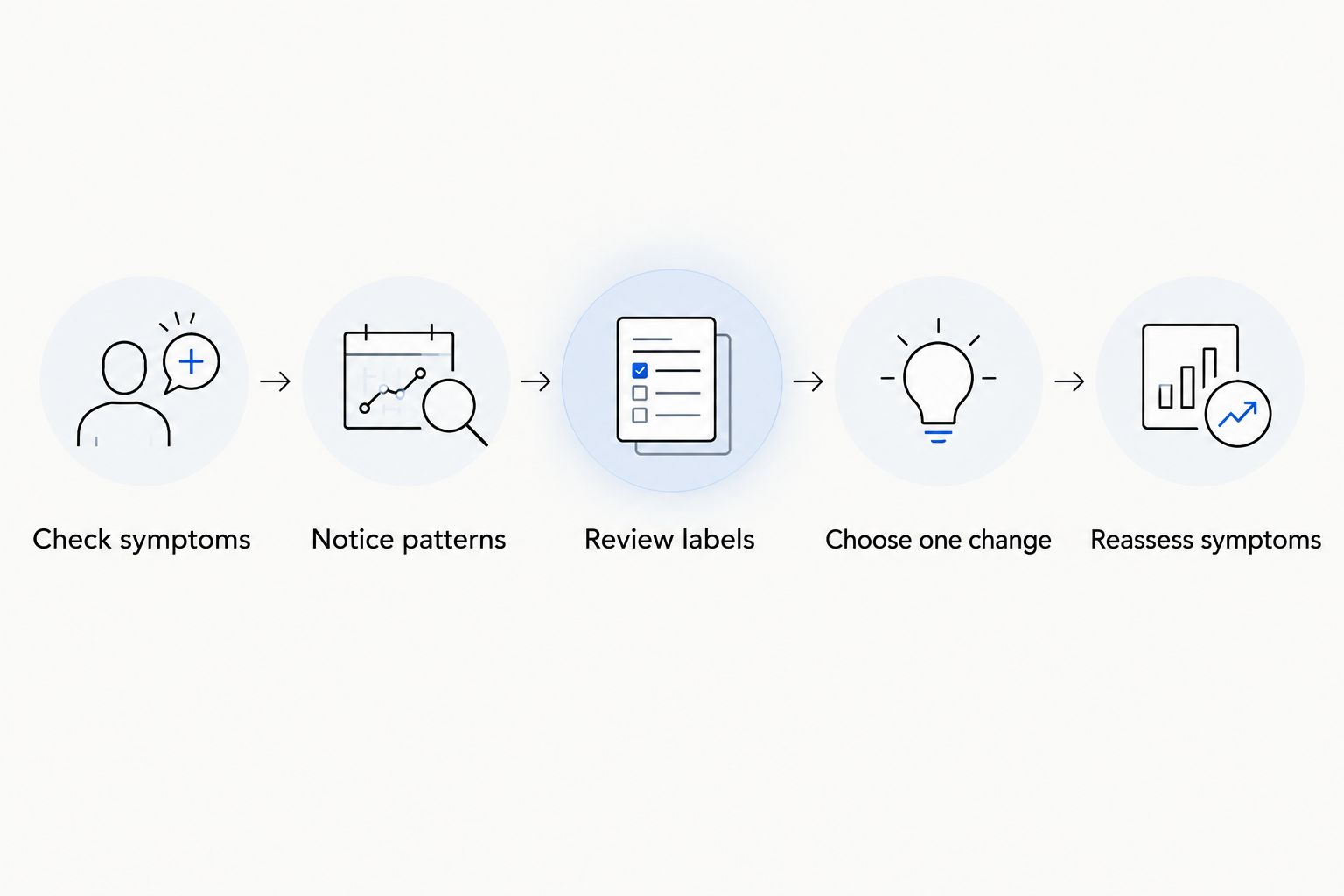
Keep the notes descriptive rather than diagnostic. Writing that discomfort followed a milkshake is useful; deciding that every dairy food is unsafe based on that experience is a different conclusion.
If you take prescriptions, include supplement use in the same conversation. This guide to whether supplements can interact with prescription medications explains why a medication review belongs before a new routine.
Where a TruNutra probiotic fits
TruNutra Belly Bloom is an option for adults comparing probiotic supplements, not a proven treatment for post-meal bloating. Its product description identifies it as a probiotic supplement for everyday nutrition; that description does not establish a benefit for this particular symptom.
The measured recommendation is to review the current label with a qualified health professional if you have a specific reason to consider a probiotic. Check the listed strains, directions, warnings, and suitability rather than choosing by the product name.
The benefit of this approach is a deliberate routine that matches your needs. The limitation remains important: a daily supplement cannot tell you why meals cause discomfort, and a probiotic is not the default answer to that question.
When should you get medical advice for bloating?
Arrange medical advice when bloating keeps returning, changes noticeably, interferes with eating or daily life, or occurs alongside persistent constipation or diarrhea. Do not keep extending a supplement experiment when the basic problem remains unexplained.
Seek prompt medical attention for bloating with severe or sudden abdominal pain, repeated vomiting, blood in the stool, black stools, or unexplained weight loss. A swollen abdomen with inability to pass stool or gas also needs urgent assessment.
A supplement trial should never delay care for warning signs. If you are pregnant, breastfeeding, preparing for surgery, or managing a significant health condition, ask a qualified professional before adding a digestive supplement.
Questions to ask before trying a supplement
Should I take a digestive supplement before or after eating?
Follow the specific product label because timing depends on the ingredient and purpose. Digestive enzymes need to act on the food they target; a universal “after every meal” rule is not appropriate.
Do not copy the timing of a friend’s product or assume that all capsules work alike. Ask a pharmacist when the instructions are unclear.
How long should I try a supplement for bloating?
There is no universal trial length for bloating supplements. A food-specific enzyme and a probiotic have different purposes, so a single deadline would be misleading.
For a 2026 routine, agree on what improvement would look like and when to reassess before you start. Persistent symptoms deserve a clearer explanation, not an indefinite succession of products.
Can supplements make bloating worse?
Yes, supplements can cause digestive discomfort, including gas or bloating. Probiotics and supplemental fiber are examples, and ingredients in a particular formula also matter.
If discomfort starts after a new product, review the label and speak with a pharmacist or clinician. Do not increase the dose to overcome a reaction, and do not stop a prescribed treatment without medical advice.
FAQ
What's the best supplement for bloating after meals?
There is no single best supplement for bloating after meals. Lactase can help with lactose digestion, while alpha-galactosidase targets certain carbohydrates; persistent or unclear symptoms need assessment rather than a general digestive blend.
Do probiotics help reduce bloating after eating?
Probiotics are not a reliable general treatment for bloating after eating. The American Gastroenterological Association advises against probiotics for abdominal bloating and distention, and some people experience more gas while taking them.
Can I take lactase after I already feel bloated?
Lactase is intended to help digest lactose in the food you eat, not to provide general relief after bloating starts. Follow the product's meal-timing directions rather than assuming a later dose will work the same way.
Is bloating after every meal normal?
Bloating after every meal deserves a discussion with a qualified health professional, especially if it is new, worsening, or affects your daily life. Seek prompt care if it comes with severe pain, vomiting, bleeding, or unexplained weight loss.
Does TruNutra Belly Bloom treat post-meal bloating?
TruNutra Belly Bloom is described as a probiotic supplement for everyday nutrition, not as a proven treatment for post-meal bloating. Review the current label with a qualified health professional before deciding whether it fits your needs.
Should I stop eating beans if they make me bloated?
You do not automatically need to stop eating beans because they cause gas. Review portions and preparation with a dietitian or clinician; alpha-galactosidase is a targeted option for certain carbohydrates, but it does not address every cause of discomfort.
Can I combine several digestive supplements?
Do not combine digestive supplements without checking their ingredients and suitability. Starting several products together makes it harder to identify what helps or causes side effects; a pharmacist can review the full list.
One last thing
Feeling bloated and having a visibly enlarged abdomen are not always the same experience. Tell your clinician whether you feel pressure, notice a change in size, or experience both; that detail makes your description more useful.
For your next uncomfortable meal, make a note before making a purchase. A repeatable pattern is a better starting point than a broad promise on a bottle.