


Best stress relief supplements for parents in 2026
Best starting point for a parent considering a botanical supplement: ashwagandha, after a safety review. Best for reviewing magnesium intake: a magnesium supplement. Best for an evening-focused routine: an evening formula. This 2026 guide compares those choices by purpose, label clarity, and fit with parenting responsibilities—not by promises of faster stress relief.
- The best stress relief supplement for parents fits your health history and caregiving responsibilities—not just your symptoms.
- TruNutra Ashwagandha is a botanical option to consider after reviewing the label and safety precautions.
- Magnesium and evening formulas serve different purposes; neither is an automatic answer to everyday stress.
- Pregnancy, breastfeeding, medications, and overnight caregiving should shape your decision before you buy.
Why this matters
A difficult school pickup and a night of interrupted sleep can both leave you feeling stretched. They do not necessarily call for the same supplement—or any supplement at all.
For parents, staying alert matters as much as winding down. A product that interferes with driving, work, or responding to a child is a poor fit, even if its name sounds reassuring.
Start with the broader stress relief supplement comparison if you are still deciding what type of product to consider. Here, the priority is narrower: choosing something that fits the responsibilities you cannot put on pause.
What makes the best stress relief supplement for parents?
The best choice in 2026 starts with these criteria, before brand names or product descriptions:
- A clear purpose: Decide whether you are considering a botanical, reviewing nutrient intake, or building an evening routine.
- Readable labeling: Look for ingredient amounts, serving directions, warnings, and other ingredients you need to avoid.
- Caregiving compatibility: Review drowsiness warnings and consider school runs, driving, and overnight responsibilities.
- Personal safety: Pregnancy, breastfeeding, medications, and existing health conditions change what is appropriate.
- Manageable complexity: Favor a routine you understand over several overlapping products.
- Realistic expectations: A supplement is not a substitute for sleep opportunities, practical support, or professional care.
A short ingredient list is not proof of safety. A longer formula is not proof of better results. The useful question is whether you can explain why you are taking each ingredient.
Options at a glance
This ranking separates different decisions rather than declaring one formula the strongest. The product examples illustrate each category; the ranking does not establish that the products produce equivalent benefits.
| Rank and option | Best for | Standout feature | Key limitation |
|---|---|---|---|
| 1. Ashwagandha | Parents considering an ashwagandha-based botanical routine | A defined botanical ingredient to discuss with a clinician | Requires particular attention to pregnancy, thyroid conditions, and medication interactions |
| 2. Magnesium | Parents reviewing magnesium intake with a health professional | A nutrient-focused choice rather than a botanical approach | Different forms and amounts are not interchangeable; extra intake is not automatically helpful |
| 3. Evening formulas, including Sleep Ease Duo | Parents whose decision centers on an evening routine | The product description identifies two complementary formulas | An evening product is not necessarily suitable for overnight caregiving |
None of these categories earns a blanket recommendation for every parent. Your health history and the actual label matter more than the position in this table.
1. Ashwagandha: best for considering a botanical routine
Ashwagandha is a botanical ingredient studied in relation to stress and sleep. The National Center for Complementary and Integrative Health distinguishes evidence about particular preparations from claims about every product containing the plant.
TruNutra Ashwagandha is described as a botanical supplement for a simple daily routine. That makes it a relevant product to review, but the description alone does not establish a particular dose, extract type, testing certification, or expected result.
Best for: Adults who specifically want to discuss ashwagandha with a qualified health professional before choosing a product.
Ashwagandha pros:
- Gives you a specific botanical ingredient to evaluate.
- Makes an ingredient-focused conversation possible.
- Has published research relevant to stress, without proving every formula works alike.
Ashwagandha cons:
- Is not appropriate during pregnancy.
- Needs additional review with thyroid conditions and certain medicines.
- Can cause side effects, including stomach upset or drowsiness.
For this 2026 comparison, the responsible recommendation is conditional. Review the actual label and your health history rather than treating the ingredient name as a guarantee.
Verdict: Hold until the label and safety review support your choice.
2. Magnesium: best for reviewing nutrient intake
Magnesium is an essential nutrient, not a universal stress remedy. Choosing a magnesium supplement should start with your diet, existing supplements, and the reason you are considering extra intake.
TruNutra Moonset Mellow is described as a magnesium supplement for a simple daily routine. Its name does not establish which magnesium form it contains, how much it provides, or whether it causes drowsiness; check the label for those details.
Best for: Parents reviewing magnesium intake with a clinician or pharmacist, rather than looking for guaranteed calming effects.
Magnesium pros:
- Offers a nutrient-focused alternative to botanicals.
- Lets you compare the stated magnesium amount with other supplements you take.
- Supports a discussion about nutrition rather than relying on a product name.
Magnesium cons:
- Supplemental magnesium can cause diarrhea, nausea, or abdominal cramping.
- Certain medicines require timing or interaction guidance.
- Kidney problems require professional advice before supplementation.
The NIH Office of Dietary Supplements’ magnesium fact sheet covers adult intake, supplement side effects, and interactions. That guidance supports careful label review—not the assumption that every tired parent needs magnesium.
Verdict: Hold unless there is a clear reason to supplement.
3. Evening formulas: best for an evening-focused decision
An evening formula belongs in a different decision category from a daytime stress product. Start by asking whether you need help with your bedtime routine, more opportunity to sleep, or professional advice about ongoing sleep difficulties.
TruNutra Sleep Ease Duo contains two complementary formulas for a simple evening routine, according to its product description. Review both labels; the description does not establish the ingredients, timing, or suitability for your circumstances.
Best for: Parents evaluating an evening routine who can first check the formula against overnight responsibilities.
Evening formula pros:
- Keeps the decision focused on the evening rather than all-day use.
- Provides a defined routine to evaluate.
- Allows you to review each formula separately before combining products.
Evening formula cons:
- A bedtime-oriented product does not create uninterrupted sleep.
- Multiple formulas require careful checking for overlapping ingredients.
- Drowsiness warnings matter when you must respond to a child overnight.
If you are the only available overnight caregiver, make alertness part of the decision. Do not assume a supplement is compatible with that responsibility because it is sold for an evening routine.
Verdict: Wait until ingredients, warnings, and overnight coverage are clear.
Product examples to review after choosing a category
These examples represent the botanical and magnesium categories above. They are alternatives to evaluate, not a recommendation to take both together. Read the current labels before deciding whether either belongs in your routine.


Make the choice fit your actual day
Before adding anything in 2026, work through three checks: Purpose, Safety, and Routine. Write down what you want to address, confirm whether the product is appropriate, and decide how its directions fit your day.
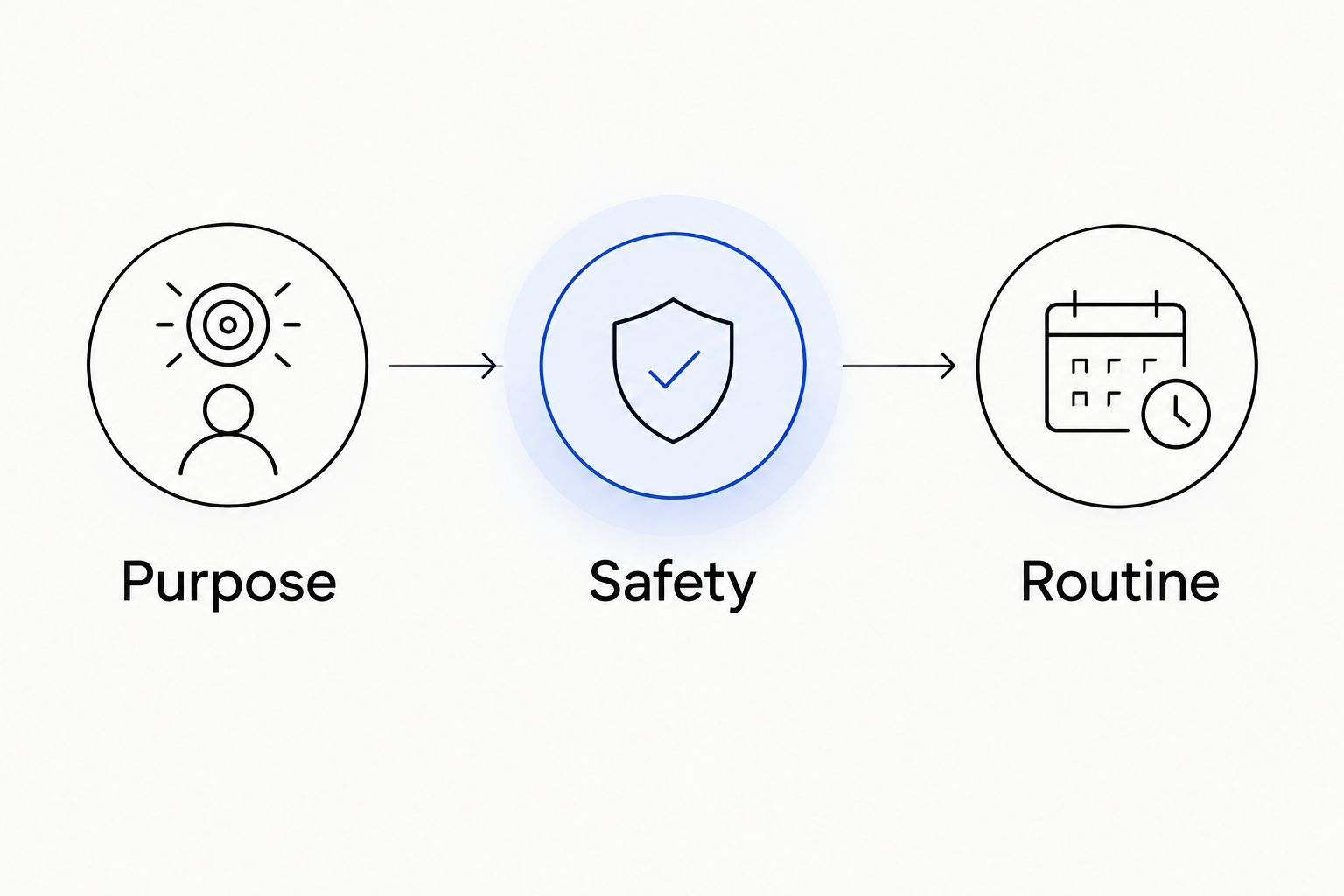
Purpose
Describe the difficult moment without turning it into a diagnosis. “I feel stretched during the after-school rush” is a clearer starting point than “I need a stronger supplement.” It also leaves room for solutions that are not products.
Separate feeling overwhelmed from feeling sleepy, hungry, or physically unwell. Persistent or unexplained symptoms belong in a conversation with a health professional, not an expanding supplement routine.
Safety
Bring the complete label and your medication list to a pharmacist or clinician. Include prescriptions, over-the-counter medicines, vitamins, botanicals, and anything you use occasionally for sleep.
Ask three questions: Is this appropriate for me? Does it overlap with anything I take? Could it affect alertness when I am responsible for my child? These questions are more useful than asking whether a product is generally considered natural.
Routine
Choose one routine change at a time when practical. Keep a brief note of what you took, when you took it, and anything you noticed. Follow the label rather than increasing the serving after a difficult day.
Planning tools and supplements address different needs. With coaching for stay-at-home parents, the relevant distinction is between organizing the day and evaluating an ingredient: use planning support for schedules and priorities, and qualified health advice for supplement decisions.
A supplement cannot redistribute household responsibilities. If the hardest moment is always dinner preparation while supervising homework, a clearer division of tasks deserves attention alongside any wellness purchase.
Safety comes before the ranking
The safety context in this 2026 guide draws on NCCIH’s ashwagandha fact sheet and the NIH Office of Dietary Supplements’ magnesium fact sheet. Those sources discuss ingredients; they do not verify the specific products shown here.
Pregnancy and breastfeeding: Do not use ashwagandha during pregnancy. During breastfeeding, seek professional guidance before starting a botanical or combination formula; limited safety information is not reassurance.
Medicines and existing conditions: Ask for an ingredient-by-ingredient review if you take prescriptions or have an ongoing health condition. Do not stop or change prescribed treatment to make room for a supplement.
Driving and caregiving: Follow drowsiness warnings. Avoid trying an unfamiliar product immediately before driving or when you are the sole caregiver without a safe backup plan.
Storage: Keep supplements in their original containers, secured out of children's sight and reach. A convenient countertop location is not appropriate if a child can access it.
If a product causes an unexpected reaction, stop taking it and seek appropriate medical advice. Severe symptoms need urgent medical attention rather than another supplement to offset the reaction.
How the options were ranked
This is a purpose-based buying guide, not a head-to-head clinical trial. Ashwagandha comes first for a botanical-focused decision, magnesium for a nutrient-focused decision, and evening formulas for a bedtime-focused decision.
The criteria are label clarity, safety, caregiving compatibility, routine complexity, and realistic expectations. Product descriptions identify examples; they do not establish comparative effectiveness. No recommendation here assumes unverified certification, testing, or a particular ingredient amount.
Which option should you choose?
For parents considering a botanical stress relief supplement, TruNutra Ashwagandha is a product to review—not an automatic recommendation to start. Check the label and personal safety questions first.
Choose the magnesium category when your question is about magnesium intake. Consider an evening formula only when its ingredients and warnings fit your nighttime responsibilities.
If you cannot clearly explain what you want the supplement to do, wait. The best purchase decision in 2026 can be deciding that you need a different kind of support first.
FAQ
What's the best stress relief supplement for parents?
There is no single best stress relief supplement for every parent. Ashwagandha, magnesium, and evening formulas address different decisions; choose only after reviewing the label, your health history, and caregiving responsibilities.
Is ashwagandha better than magnesium for stressed parents?
Ashwagandha and magnesium are not interchangeable. Ashwagandha is a botanical ingredient, while magnesium is an essential nutrient; the appropriate choice depends on your purpose and personal safety review.
Can I take a stress supplement while breastfeeding?
Ask a qualified health professional before starting a stress supplement while breastfeeding. Safety depends on the ingredients, and limited breastfeeding research does not establish that a product is safe.
Will a stress relief supplement make me sleepy during school pickup?
Some ingredients can cause drowsiness, so review the actual product label before driving. Do not assume that a product described as calming is compatible with school pickup or other alertness-dependent tasks.
Can I combine a stress supplement with a sleep formula?
Have a pharmacist or clinician review both complete labels before combining them. Ingredients can overlap or interact with medicines, and combining products can complicate your routine.
How quickly should a stress supplement work?
There is no reliable timeline that applies to every stress supplement. Ingredients, preparations, and individual circumstances differ; do not increase the serving because you have not noticed a change.
Can a supplement make up for interrupted sleep?
No supplement replaces an adequate opportunity to sleep. If a child's needs repeatedly interrupt your night, consider practical caregiving support and seek professional advice for persistent sleep concerns.
One last thing
Treat alertness as part of your wellness goal, not an afterthought. Before starting a new product, identify who can take over if you feel unexpectedly unwell or sleepy. For a parent, a manageable routine includes a plan for the responsibilities that continue after you take it.