


Is it safe to take supplements while breastfeeding?
Some supplements are appropriate while breastfeeding, but safety depends on the ingredients, dose, your health, and your baby’s age and health. A vitamin taken to meet a nutritional need is different from an herbal sleep or stress blend, so review the exact label with your clinician or pharmacist before starting something new.
- Is it safe to take supplements while breastfeeding? Some are appropriate; check each ingredient and dose with your clinician.
- Prenatal vitamins and targeted nutrients serve different needs; neither replaces a review of your diet and medications.
- Herbal sleep and stress blends need separate breastfeeding safety checks; natural does not mean safe.
- TruNutra wellness supplements require product-specific review, not a blanket recommendation for breastfeeding adults.
Is it safe to take supplements while breastfeeding?
Yes, some supplements can fit a breastfeeding routine, but there is no safety answer that covers every product. Start with the reason you need the supplement, then check whether the exact ingredients and amounts are suitable during lactation.
The same standard applies to TruNutra and other supplement brands: a general wellness purpose does not establish breastfeeding safety. For your 2026 routine, choose based on a specific nutritional need rather than a promise of better energy, calmer evenings, or deeper sleep.
| Option | Best for | Potential benefit | Limitation or safety check |
|---|---|---|---|
| Prenatal or postnatal multivitamin | Adults whose clinician recommends broad nutritional support | Helps fill several dietary gaps | Formulas differ; some nutrients can overlap with separate supplements |
| Targeted vitamin or mineral | Adults with an identified dietary gap or deficiency | Addresses a specific need | Requires an appropriate dose and a check for interactions |
| Herbal sleep or stress blend | No routine breastfeeding recommendation without ingredient review | Intended for a particular wellness goal | Lactation evidence can be limited, especially for combinations |
| Milk-supply supplement | Adults receiving individualized lactation care | Intended to support a feeding concern | Does not replace assessment of milk transfer, feeding frequency, or infant growth |
This table is a decision aid, not a list of approved products. A familiar ingredient can still be unsuitable at a particular dose or alongside your medication.
Why this matters
Breastfeeding changes some nutrient needs, but it does not make every supplement necessary. You also need to distinguish between supporting your nutrition and treating an ongoing symptom such as exhaustion, poor sleep, or persistent low mood.
The FDA does not approve dietary supplements for safety and effectiveness before they reach the market. A product’s presence on a store shelf therefore does not establish that it has been studied in breastfeeding adults or nursing infants.
Use supplements to address a defined need, not to explain away symptoms. If fatigue feels severe or your mood is affecting daily life, ask for an assessment rather than adding another capsule.
Prenatal and postnatal vitamins: check the full formula
Continuing a prenatal vitamin after delivery is not an automatic requirement for everyone. CDC guidance on maternal diet and breastfeeding explains that continuing a prenatal vitamin can exceed some breastfeeding adults’ iron and folic acid needs; individual circumstances still matter.
A clinician might recommend continued supplementation because of your diet, blood loss, laboratory results, or another health consideration. The right question is not simply whether the bottle says prenatal or postnatal, but whether its contents match your current needs.
For a 2026 label review, bring the Supplement Facts panel rather than only the front of the bottle. Include separate vitamins, drink powders, gummies, and fortified nutrition products so your clinician can identify overlapping nutrients.
A multivitamin has a practical advantage: it puts several nutrients into one routine. Its limitation is that it cannot adjust each nutrient independently, and it does not necessarily supply everything you need.
Iodine: 290 micrograms daily during breastfeeding
CDC maternal-diet guidance lists 290 micrograms of iodine daily during breastfeeding. This is a total daily intake goal from food and supplements combined, not an instruction to take that amount as a supplement.
Food sources include dairy foods, eggs, seafood, and iodized salt. Your usual diet matters, particularly if you avoid several of those foods or use salt that is not iodized.
Do not assume every multivitamin contains iodine. Check the label, then ask your clinician whether supplementation is appropriate, especially if you have a thyroid condition or take thyroid medication.
Best for: an individualized iodine review when your food choices leave likely gaps. The limitation is that more iodine is not automatically better, and a separate supplement can duplicate what is already in your multivitamin.
Choline: 550 milligrams daily during breastfeeding
CDC guidance lists 550 milligrams of choline daily during breastfeeding. As with iodine, that amount includes food and supplements rather than describing a supplement dose.
Eggs, meat, fish, dairy foods, beans, and some other foods contribute choline. A prenatal or postnatal label does not guarantee that a product supplies your daily requirement.
Start by reviewing what you regularly eat. If your diet excludes several sources, a clinician or registered dietitian can help you decide whether food changes or supplementation better fit your needs.
Best for: a diet-first review of choline intake. The limitation is that a general multivitamin can leave this need partly unmet, while adding a separate product without checking your diet can create unnecessary complexity.
Vitamin D: your baby’s needs are a separate decision
CDC guidance recommends 400 IU of vitamin D daily for breastfed and partially breastfed infants beginning in the first few days of life. Ask your baby’s clinician which product and dosing instructions to use.
Your own vitamin D supplement and your baby’s vitamin D plan are separate decisions. Do not assume that taking an ordinary adult supplement replaces an infant’s recommended supplementation.
For your 2026 feeding plan, confirm who receives the supplement, which bottle to use, and how the dose is measured. If you are considering a clinician-supervised maternal dosing approach instead, discuss it explicitly rather than adjusting your dose yourself.
Best for: a clear pediatric plan for the infant’s vitamin D needs. The limitation is that drops differ in concentration, so instructions for one bottle should not be transferred to another.
Why supplement safety varies while breastfeeding
A supplement’s name does not tell you enough about exposure or suitability. Your clinician needs details about both the product and the people involved.
- Ingredients: Vitamins, minerals, herbs, and stimulant-containing ingredients require different assessments.
- Dose and overlap: A multivitamin, bedtime powder, and separate mineral capsule can contain the same nutrient.
- Infant age and health: Prematurity and medical conditions can change the level of caution needed.
- Your health: Thyroid, kidney, and other conditions can affect which supplements are appropriate.
- Medications: Prescription medicines, nonprescription medicines, and supplements need to be reviewed together.
- Evidence: An ingredient studied in other adults does not automatically have adequate breastfeeding safety evidence.
These factors explain why a friend’s experience cannot settle your decision. Even when you use the same brand, your dose, medications, and baby’s circumstances can differ.
How do I check a supplement before taking it?
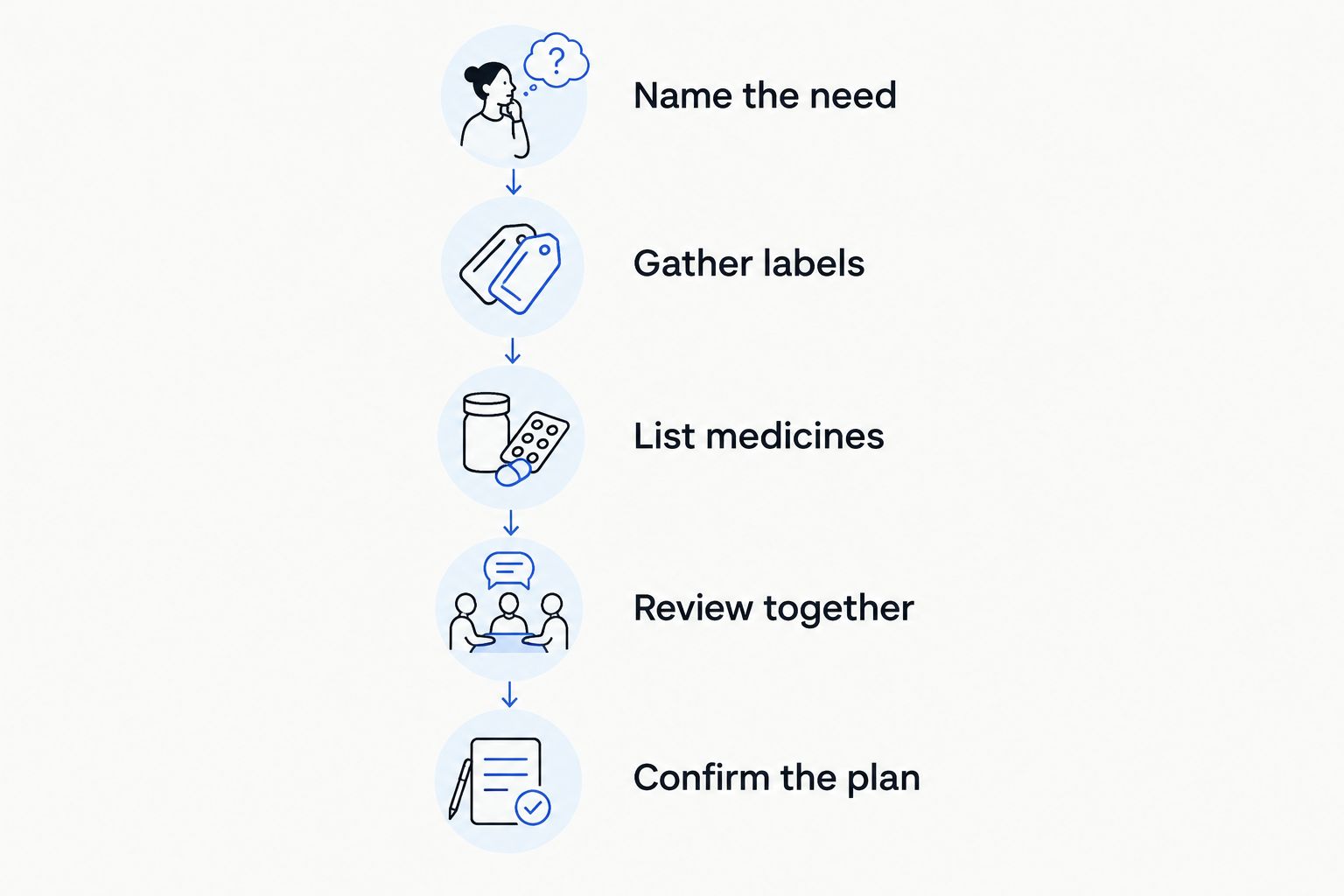
Use this process for a new product or when a familiar formula changes. Your 2026 supplement list should reflect what you actually take, including occasional products.
- Name the need. Explain whether you are addressing a dietary gap, a diagnosed deficiency, or a symptom that needs assessment.
- Gather labels. Photograph the Supplement Facts panel, other ingredients, directions, and breastfeeding warnings.
- List medicines. Include prescriptions, nonprescription medicines, teas, powders, and other supplements.
- Review together. Ask your clinician or pharmacist to assess the formula using breastfeeding-specific evidence.
- Confirm the plan. Clarify the dose, timing, reason for use, and circumstances that should prompt another review.
A pharmacist can help assess ingredient and medication questions; your own clinician and your baby’s clinician bring the relevant medical history. LactMed, maintained by the National Library of Medicine, provides ingredient-specific information about medicines and some supplements during breastfeeding.
If the label gives only a combined amount for a blend, point that out. An undisclosed amount makes it harder to assess the individual ingredients, and the absence of a breastfeeding warning is not proof of safety.
How do prenatal and postnatal formulas differ?
The names describe the intended life stage, but they do not establish a standard formula. Products can differ in nutrients, amounts, serving sizes, and additional ingredients.
When comparing prenatal and postnatal vitamins, the meaningful distinction is the actual formula and how it fits your diet, not the life-stage wording alone. A postnatal label does not establish that a product addresses every nutritional need during breastfeeding.
For a practical 2026 comparison, place the labels side by side and check the nutrients your clinician has identified as relevant. Also check how many capsules or gummies make up a serving; comparing amounts per capsule with amounts per full serving can be misleading.
Choose the formula that fits the agreed plan, not the one with the longest ingredient list. If you have been prescribed a nutrient for a specific reason, ask before replacing it with a multivitamin.
Can I take herbal sleep or stress supplements while breastfeeding?
Herbal sleep and stress supplements need an ingredient-by-ingredient review before use while breastfeeding. A calming purpose, plant origin, or familiar product name does not establish safety for a nursing infant.
For ashwagandha specifically, the National Center for Complementary and Integrative Health advises against use while breastfeeding. This is different from saying that every herbal ingredient has the same risk; each needs its own assessment.
Melatonin also deserves a separate discussion rather than being treated as an ordinary vitamin. LactMed describes limited evidence concerning supplemental melatonin during breastfeeding, so ask a clinician before using it, particularly when nursing a newborn or preterm infant.
Sleep disruption and stress are real needs, but a supplement is not the only response. Discuss practical feeding support, opportunities for rest, and persistent symptoms with your care team rather than choosing a blend based on its bedtime wording.
Are supplements that claim to increase milk supply a good first step?
Milk-supply supplements are not a substitute for assessing feeding and milk transfer. If you are worried about supply, a lactation professional and your baby’s clinician can help determine what is happening and what support is appropriate.
The Academy of Breastfeeding Medicine’s guidance on milk-supply medicines and herbs emphasizes assessing possible causes and improving milk removal before considering these products. Evidence and side effects differ by ingredient.
Bring the exact label if you are considering a lactation tea, capsule, or powder. Avoid assuming that a product marketed to breastfeeding parents is suitable for every parent and infant.
Where does TruNutra fit into a breastfeeding routine?
TruNutra sells dietary supplements for everyday wellness, including stress, sleep, and mobility support. Those general purposes do not establish that a particular formula is appropriate during breastfeeding.
TruNutra wellness supplements are an option to discuss for adults seeking daily support, not an automatic choice during breastfeeding. The next step is a product-specific label review, not a general brand recommendation.
If a TruNutra product interests you, bring its current label to your clinician or pharmacist. Ask whether it meets a defined need, whether its ingredients have suitable lactation evidence, and whether a simpler approach would be preferable.
FAQ
Can I keep taking my prenatal vitamin while breastfeeding?
You can continue a prenatal vitamin when it fits your clinician’s nutritional plan, but continuing it is not automatically necessary for everyone. Review the formula alongside your diet and any separate supplements.
Do breastfeeding adults need 290 micrograms of iodine from supplements?
The 290 micrograms daily recommendation is total iodine intake from food and supplements combined, not a supplement-only dose. Ask your clinician whether your diet and multivitamin meet your needs.
Does my prenatal vitamin provide all the choline I need?
A prenatal vitamin does not necessarily provide the 550 milligrams of choline recommended daily during breastfeeding. Check the label and include food sources when reviewing your total intake.
Does my vitamin D supplement replace my baby’s vitamin D drops?
An ordinary maternal vitamin D supplement does not automatically replace the infant recommendation of 400 IU daily. Discuss any alternative maternal dosing plan with your baby’s clinician before changing the infant’s routine.
Is ashwagandha safe while breastfeeding?
The National Center for Complementary and Integrative Health advises against ashwagandha use while breastfeeding. Do not assume that a stress-support purpose establishes lactation safety.
Does third-party testing mean a supplement is safe for breastfeeding?
Third-party testing does not establish breastfeeding safety. Testing can address particular quality measures, while lactation suitability still depends on ingredients, dose, evidence, and individual circumstances.
What should I do if I already took a supplement?
Contact your clinician, pharmacist, or your baby’s clinician with the product name, label, amount, and time taken. Do not automatically stop breastfeeding; get product-specific advice, and seek urgent care for serious symptoms such as breathing difficulty or an unresponsive infant.
One last thing
The serving size is part of the safety check. A nutrient amount listed on the label might refer to several capsules rather than a single capsule, and a liquid’s concentration can differ between bottles.
Before your next appointment, photograph every label and write down how much you actually take. That simple record makes it easier to spot duplication and agree on a routine that supports you without adding unnecessary products.