


Best sleep supplements in 2026
Best for a two-formula evening routine: TruNutra Sleep Ease Duo. Best for body-clock timing: melatonin; best for a magnesium intake gap: magnesium; best for exploring a stress-focused botanical: ashwagandha. This 2026 guide compares sleep supplements by purpose, label information, and safety—not by promises of deeper sleep.
- TruNutra Sleep Ease Duo is the best-fit sleep supplements option here for adults seeking a two-formula evening routine.
- Melatonin fits body-clock timing questions; magnesium fits nutritional needs. Neither is a universal sleep solution.
- Ashwagandha requires extra care with thyroid conditions, pregnancy, and medication use.
- Choose by the full label, avoid overlapping ingredients, and seek help for persistent sleep problems.
Why this matters
A restless evening, jet lag, and regularly waking exhausted are different problems. Buying the same supplement for all three skips the most useful question: what needs attention?
Start with your routine and your symptoms. If you want to compare an evening-focused product, Sleep Ease Duo contains two complementary formulas for a simple evening routine. That describes its format; it does not establish that it works better than another option.
No sleep supplement is the best choice for every adult. A useful recommendation matches a specific purpose, accounts for your medications, and leaves room for getting medical advice instead of adding another bottle.
What makes the best sleep supplements?
Use these criteria before comparing products in 2026. A familiar ingredient name alone does not tell you whether a formula suits your needs.
- Purpose match: Separate an evening routine from body-clock timing, nutritional intake, and everyday stress. Those are distinct reasons to consider a supplement.
- Label clarity: Look for ingredient names, amounts per serving, directions, warnings, and other ingredients. Read the complete label rather than relying on the front panel.
- Safety fit: Check prescription medicines, other supplements, pregnancy or breastfeeding, and relevant health conditions before starting.
- Evidence match: Research on one ingredient or preparation does not automatically establish benefits for every finished product containing it.
- Routine fit: Choose directions you can follow without changing the serving or adding extra products on difficult nights.
- Quality documentation: Check any testing or certification claim for the specific product. Do not assume a claim applies across an entire brand.
Sleep supplements at a glance
These are ranked by their usefulness for distinct buying decisions, not by proven differences in sleep outcomes. The first option is a named product; the remaining options are ingredient categories whose individual labels vary.
| Option | Best for | Standout feature | Key limitation |
|---|---|---|---|
| Sleep Ease Duo | Comparing a two-formula evening routine | Two complementary formulas described for evening use | Its format alone does not establish effectiveness or individual suitability |
| Melatonin | Discussing jet lag or body-clock timing | Relates to the body's sleep-wake timing signal | Timing matters; it is not a general answer to every sleep complaint |
| Magnesium | Addressing a dietary magnesium gap | An essential mineral with established nutritional needs | Sleep benefits are not assured, especially without an intake gap |
| Ashwagandha | Discussing a stress-focused botanical approach | A botanical studied for stress and sleep | Preparations differ, and important safety restrictions apply |
1. TruNutra Sleep Ease Duo: best for an evening-routine format
Sleep Ease Duo contains two complementary formulas for a simple evening routine. It is the most directly relevant product here for readers who want to examine an evening-focused format rather than begin with a single ingredient category.
TruNutra Sleep Ease Duo is best for adults comparing a two-formula evening routine, not for anyone seeking a guaranteed sleep result. Review both formulas together before deciding whether the product fits your needs.
Sleep Ease Duo pros:
- Its stated purpose connects directly to an evening routine.
- The two-formula format gives you a specific product structure to evaluate.
- Product guidance directs you to review ingredients, warnings, and directions.
Sleep Ease Duo cons:
- Two formulas require checking both labels for overlap with your existing supplements.
- The product description does not establish a particular sleep outcome.
- A two-formula format will not suit every preference or routine.
Best for: Adults who specifically prefer to compare a paired evening format and can review the complete labels before use.
Do not infer ingredients from the product name. In particular, do not assume the formulas contain melatonin, magnesium, or any botanical discussed elsewhere in this guide.
Verdict: Hold until you have checked both labels and confirmed suitability.
2. Melatonin: best for body-clock timing questions
Melatonin is a hormone involved in the body's sleep-wake timing. Supplemental melatonin has a clearer role in certain timing-related situations, including jet lag, than as a catch-all response to poor sleep.
That distinction matters when you are tired but sleeping at an unusual hour. A timing question calls for attention to light exposure, schedule, and the timing of any supplement—not simply a larger serving.
Melatonin pros:
- It has an established connection to sleep-wake timing.
- It is a relevant option to discuss when travel disrupts your schedule.
- A single-ingredient product makes the ingredient list easier to review than a blend.
Melatonin cons:
- It can cause daytime drowsiness, headache, or dizziness.
- Medication interactions and individual health circumstances require review.
- Long-term safety information is limited.
Best for: Adults discussing jet lag or another body-clock timing concern with a qualified health professional.
For persistent insomnia, melatonin should not displace evaluation or an established treatment plan. The National Center for Complementary and Integrative Health distinguishes potential uses for melatonin from the limited evidence supporting it for chronic insomnia.
Verdict: Hold until the purpose and timing are clear.
3. Magnesium: best for checking a nutritional gap
Magnesium is an essential mineral, not a guaranteed sleep aid. Consider it first through the lens of your diet, existing supplements, and health history rather than assuming that bedtime use makes it effective for sleep.
The NIH Office of Dietary Supplements lists a recommended daily allowance of 310–320 mg/day for nonpregnant adult women, depending on age. That amount includes food and supplements; it is not a recommended bedtime supplement serving.
Magnesium pros:
- It addresses an established nutritional need.
- You can assess intake from both food and supplements.
- The Supplement Facts panel identifies the amount of elemental magnesium per serving.
Magnesium cons:
- Evidence does not support treating magnesium as a universal sleep solution.
- Supplemental magnesium can cause diarrhea, nausea, and abdominal cramping.
- Kidney problems and certain medicines require particular care.
Best for: Adults reviewing a possible dietary magnesium gap with a clinician or registered dietitian.
For adults, the NIH supplemental upper limit is 350 mg/day from supplements and medications, unless a health professional directs otherwise. Magnesium naturally present in food does not count toward that limit. The limit is a safety boundary, not a sleep target.
Verdict: Hold unless magnesium fits an identified nutritional need.
4. Ashwagandha: best for a stress-focused discussion
Ashwagandha is a botanical studied in relation to stress and sleep. Some preparations have shown benefits in research, but results from a particular extract do not establish that every ashwagandha product performs the same way.
If your main concern is carrying the day's tension into the evening, discuss that pattern directly. It is more useful than choosing a botanical simply because a label or article associates it with relaxation.
Ashwagandha pros:
- It is relevant to a discussion about everyday stress and sleep.
- Research exists on specific preparations.
- A single-botanical option lets you examine that ingredient without a larger blend.
Ashwagandha cons:
- Extracts, ingredient amounts, and study methods vary.
- It can cause stomach upset or drowsiness; liver injury has also been reported.
- Pregnancy, breastfeeding, thyroid conditions, autoimmune conditions, and medication use raise safety concerns.
Best for: Adults seeking professional guidance about a stress-focused botanical, after screening for reasons to avoid it.
The National Center for Complementary and Integrative Health advises avoiding ashwagandha during pregnancy and breastfeeding. It also identifies thyroid and autoimmune disorders among circumstances where use is not recommended.
Verdict: Hold pending a safety review; skip during pregnancy or breastfeeding.
Compare the product types without assuming the ingredients
The two products below represent different formats: an evening duo and a magnesium supplement. They are not presented as equivalent formulas or as a recommendation to take both together.
In 2026, the useful comparison remains the full label. Check the ingredients and directions for each product independently, then decide whether either belongs in your routine.


How these options were ranked
This 2026 ranking prioritizes purpose match, label clarity, safety fit, and a manageable routine. It does not claim head-to-head testing or establish that one option produces better sleep than another.
Sleep Ease Duo comes first because its stated format directly addresses an evening routine. Melatonin, magnesium, and ashwagandha follow as separate decision paths—not interchangeable substitutes.
Which sleep supplements should you choose?
Choose the purpose before the product. If you are undecided, do not start a multi-product routine just to cover every possibility.
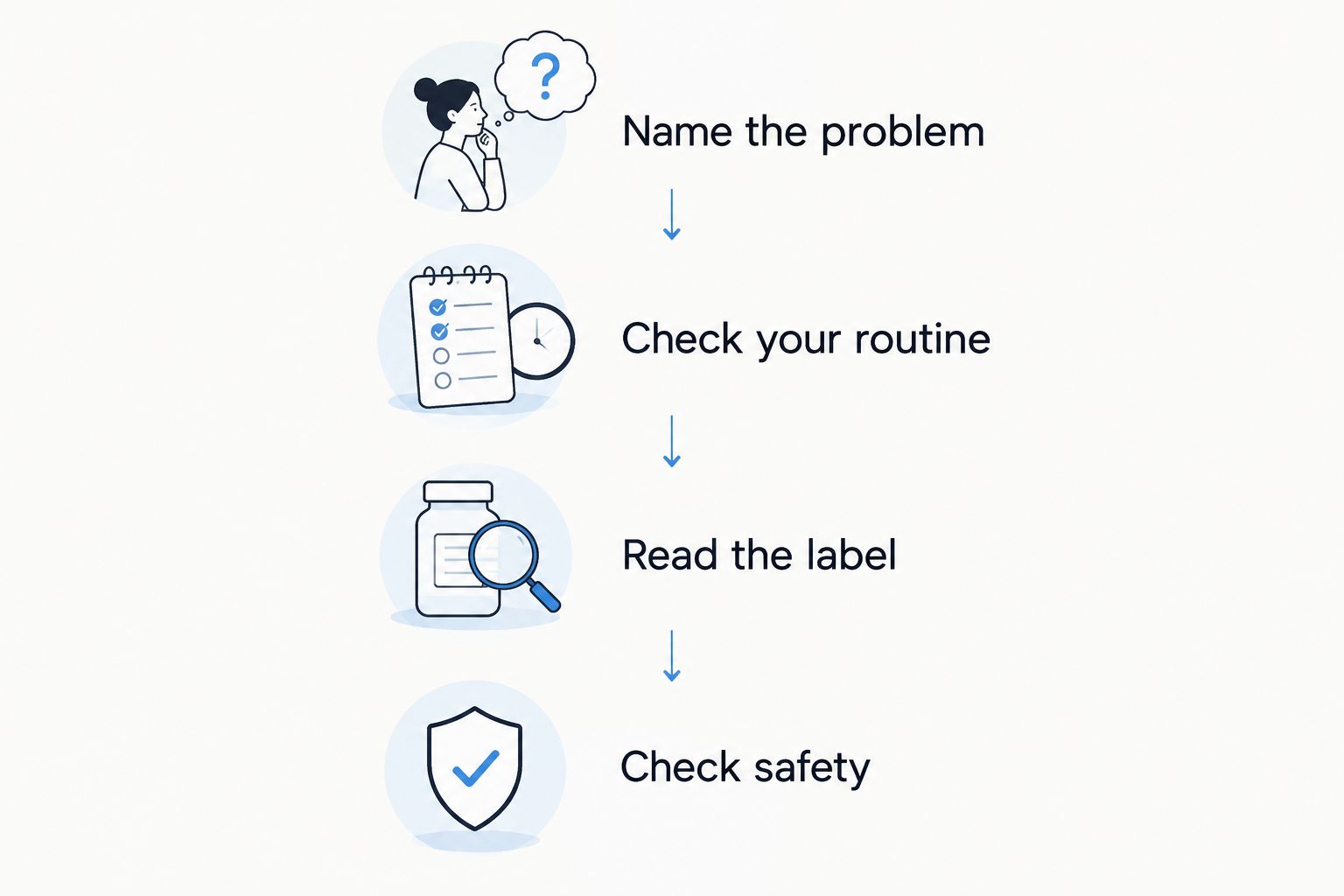
Use this sequence to make the decision smaller:
- Name the problem. Write down whether you struggle with schedule changes, winding down, waking repeatedly, or feeling unrefreshed.
- Check your routine. Review sleep opportunity, caffeine, alcohol, light exposure, and consistency before assuming a supplement is missing.
- Read the label. Compare ingredients, amounts per serving, directions, warnings, and overlaps with everything you already take.
- Check safety. Bring the actual labels and your medication list to a pharmacist or qualified health professional.
For most adults, regularly getting at least 7 hours of sleep per night is the general recommendation from the American Academy of Sleep Medicine and Sleep Research Society. A supplement cannot replace enough time set aside for sleep.
If you are considering combining categories, read about taking magnesium with melatonin before treating separate products as a ready-made routine. Check the complete labels with a pharmacist rather than relying on the ingredient names alone.
For a 2026 purchase, the default recommendation is modest: compare Sleep Ease Duo if you want its evening format, or choose professional guidance first if your main question concerns timing, nutritional needs, or persistent symptoms.
When a supplement is not the next step
Persistent trouble sleeping deserves attention, especially when it affects daily functioning. Loud snoring, gasping during sleep, or significant daytime sleepiness are reasons to seek medical evaluation rather than keep changing supplements.
For chronic insomnia, cognitive behavioral therapy for insomnia is a recommended first-line treatment. It addresses sleep-related behaviors and thought patterns; ordinary sleep tips are not the same treatment.
Seek advice before using sleep supplements if you take prescription medicines, are pregnant or breastfeeding, have kidney or liver disease, or are preparing for surgery. Do not combine products with alcohol or other sedating substances without professional guidance.
FAQ
What's the best sleep supplement in 2026?
There is no single best sleep supplement for every adult. Sleep Ease Duo fits a two-formula evening-format comparison, while melatonin, magnesium, and ashwagandha address different questions and need separate safety checks.
Is melatonin better than magnesium for sleep?
Melatonin and magnesium serve different purposes, so neither is universally better. Melatonin relates to sleep-wake timing, while magnesium is an essential nutrient; choose according to your needs rather than treating them as substitutes.
Can I take sleep supplements every night?
Nightly use requires a product-specific safety review. Follow the label, review medicines and other supplements with a qualified health professional, and seek evaluation for ongoing sleep problems.
How much magnesium should I take before bed?
There is no universal magnesium serving for sleep. The adult upper limit of 350 mg/day from supplements and medications is a safety boundary, not a bedtime target; follow individualized advice and the product label.
Does Sleep Ease Duo contain melatonin?
Check the current Sleep Ease Duo label to confirm its ingredients. The product description identifies two complementary formulas for an evening routine but does not establish whether melatonin is included.
Are natural sleep supplements always safe?
Natural does not mean safe for everyone. Botanicals and other supplements can cause side effects or interact with medicines, and pregnancy, breastfeeding, and health conditions can change their suitability.
How long should I wait before switching sleep supplements?
There is no single waiting period that applies to every ingredient and product. Follow the label and professional advice, and do not increase servings or add another formula because the first night disappoints.
One last thing
Before buying another sleep supplement, photograph the labels of everything you already take. Include daytime products: overlapping ingredients are not limited to bottles marketed for bedtime.
Bring those photos to a pharmacist or clinician. A clear view of your current routine is more useful than building a larger one by trial and error.