


Magnesium supplements for construction workers: 2026 verdict
Construction workers’ magnesium supplementation is the use of supplemental magnesium to help meet nutritional needs, with the aim of supporting normal muscle and nerve function. This 2026 guide explains how to choose magnesium supplements for construction workers without confusing everyday nutrition with heat protection, injury treatment, or a guaranteed sleep fix.
- Magnesium supplements for construction workers should fill a dietary gap, not replace hydration, meals, or jobsite heat precautions.
- TruNutra suits adults comparing everyday wellness supplements; confirm magnesium content on the individual product label.
- Use elemental magnesium to compare doses, and count magnesium across every supplement you take.
- Persistent cramps, weakness, or poor sleep need assessment, not an automatic increase in magnesium.
Why magnesium matters for construction workers
Magnesium helps your body carry out normal muscle and nerve function, energy production, and bone maintenance. Getting enough matters; taking extra does not automatically improve strength, stamina, or recovery.
Construction work makes the practical side of supplement selection important. Your routine needs to fit meal breaks, early starts, changing worksites, and access to a bathroom. A supplement that causes loose stools is a poor fit for a day spent on scaffolding or away from facilities.
TruNutra is best for adults comparing everyday wellness supplements, not for treating jobsite symptoms. You can explore TruNutra as part of that comparison, but judge each product by its actual label rather than assuming the brand name confirms magnesium content or suitability.
For your 2026 routine, separate three questions: are you meeting your nutritional needs, are your work conditions safe, and do your symptoms need medical attention? A capsule cannot answer all three. Heat precautions, adequate food, and appropriate evaluation remain separate priorities.
How to choose magnesium for your workday
1. Check your meals before adding a capsule
Start with a record of what you actually eat on workdays. Include breakfast, packed lunches, snacks, and dinner rather than judging your diet by what you intended to pack. A food-first approach helps you identify gaps without adding another supplement to manage.
The National Institutes of Health Office of Dietary Supplements identifies legumes, nuts, seeds, whole grains, and leafy green vegetables as magnesium sources. These foods also contribute other nutrients; a magnesium capsule supplies only what its label lists.
Think about access as well as preference. Shelf-stable nuts or seeds can fit a lunch bag, while beans and whole grains can become part of meals prepared at home. Choose foods you enjoy and can bring to work safely. Do not force a complicated meal plan that disappears when the jobsite changes.
- Record your usual workday meals and snacks.
- Add beans or lentils to a meal you already eat.
- Pack nuts or seeds if they suit your dietary needs.
- Choose whole grains where practical.
- Include leafy greens in meals at home.
2. Separate a nutritional gap from a symptom
Decide what you want magnesium to do before choosing a product. Meeting a dietary shortfall is a different goal from addressing persistent cramps, poor sleep, or unusual fatigue. Those symptoms do not establish magnesium deficiency on their own.
For this 2026 guide, the reference amounts come from the NIH Office of Dietary Supplements’ adult magnesium guidance. Men ages 19–30 need 400 mg daily, and men ages 31 and older need 420 mg. Women ages 19–30 need 310 mg daily, and women ages 31 and older need 320 mg; pregnancy changes requirements. These totals include food and supplements, not supplements alone.
Physical work does not create a separate standard magnesium dose for construction workers. Do not turn an adult intake target into a capsule dose or increase it just because your shift felt demanding. A qualified health professional can assess whether your symptoms or circumstances require a different approach.
- Define your goal as nutrition, sleep, or another specific concern.
- Compare your food intake with the appropriate adult reference amount.
- Tell your clinician about symptoms that persist or recur.
- Mention pregnancy, kidney problems, and current medications.
- Avoid treating cramps as proof of magnesium deficiency.
3. Compare labels using elemental magnesium
Read the Supplement Facts panel before the front of the bottle. The amount listed for magnesium represents elemental magnesium: the magnesium itself, not the total weight of the compound used to deliver it. That is the number to use when comparing products.
Serving size matters just as much. If a serving uses several capsules, the panel’s magnesium amount usually describes that full serving, not each capsule. Check the directions rather than assuming one capsule equals the listed dose.
When comparing TruNutra supplements in 2026, confirm whether the individual label actually lists magnesium. A sleep, stress, or bone-health name does not establish the mineral form, amount, testing, or certification. If sleep is your main concern, review the Sleep Ease Duo page as a separate product check—not as proof of magnesium content.
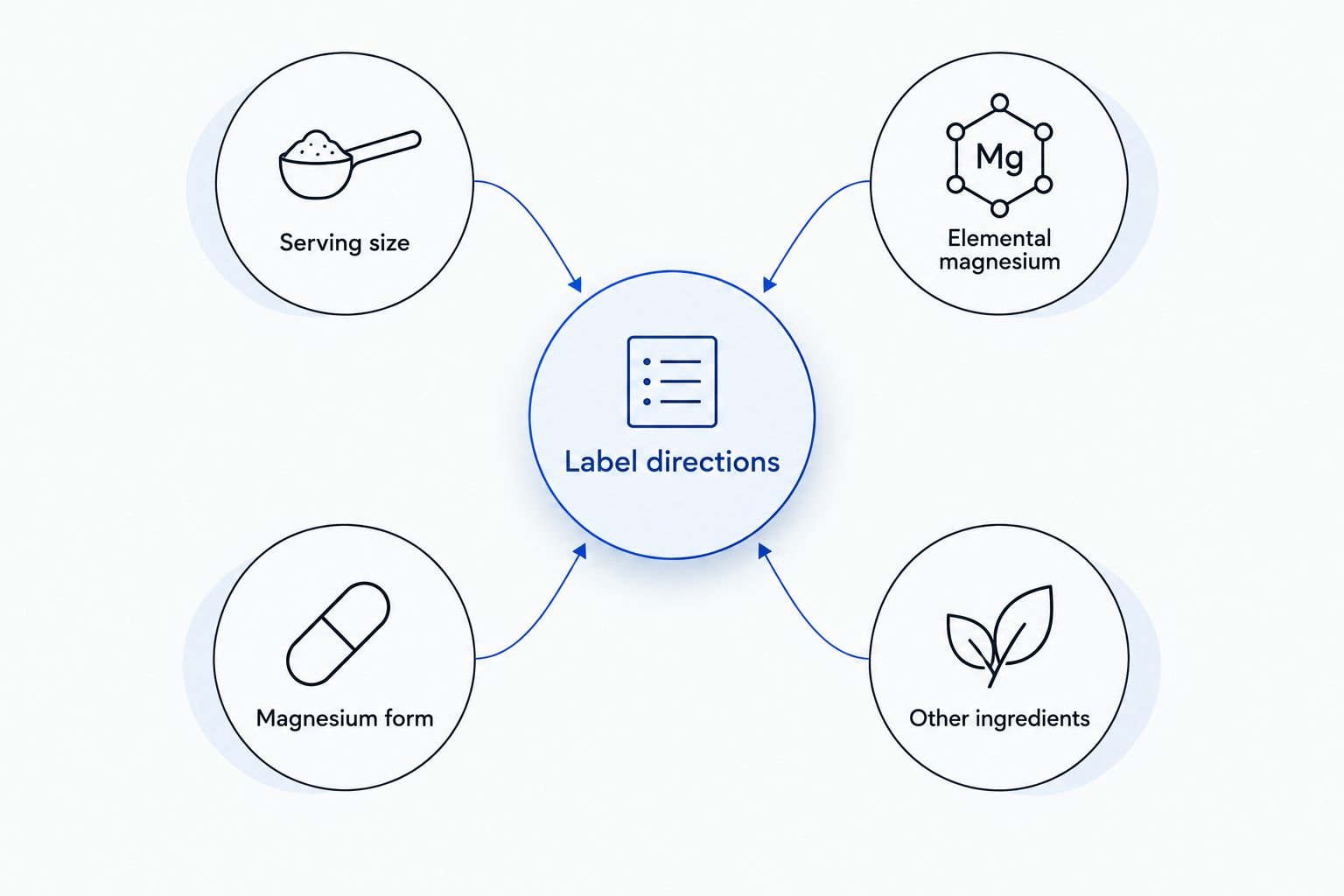
- Serving size: identify how many capsules make a serving.
- Elemental magnesium: compare the listed magnesium amount.
- Magnesium form: note the compound named on the label.
- Other ingredients: check for substances you already take.
- Label directions: follow the product’s stated instructions.
4. Match the form to your practical needs
There is no established best magnesium form specifically for construction workers. Choose according to your nutritional goal, tolerance, label, and professional advice—not an occupation-based claim about stronger muscles or faster recovery.
The NIH Office of Dietary Supplements reports that magnesium citrate, chloride, lactate, and aspartate are generally absorbed more completely than magnesium oxide and sulfate. That comparison does not prove that one form will improve your sleep or stop workday cramps.
Magnesium glycinate is another form you will encounter. Do not assume that the name alone guarantees better sleep or freedom from digestive effects. Your own tolerance matters, and the amount taken still counts.
Bathroom access is a real selection criterion. Diarrhea, nausea, or abdominal cramping after a supplement deserves attention, especially during outdoor work. A product that disrupts your shift is not a useful routine simply because it is popular.
- Choose a form for a clear nutritional purpose.
- Compare elemental amounts rather than compound weights.
- Treat absorption claims separately from benefit claims.
- Consider bathroom access when assessing digestive tolerance.
- Ask a pharmacist about a form that fits your medications.
5. Count magnesium across your whole routine
Check every supplement and relevant over-the-counter medicine you use, not just the new bottle. Multivitamins, mineral blends, and some antacids or laxatives contain magnesium. Taking products for different reasons does not prevent their magnesium amounts from adding together.
The NIH Office of Dietary Supplements sets the adult upper limit at 350 mg daily from supplements and medications. This limit does not include magnesium naturally present in food. A clinician can recommend a different amount for a specific reason, but that is not a reason to increase your dose independently.
This distinction explains why a total dietary requirement can exceed the supplemental upper limit. Food contributes toward your daily requirement without counting toward that particular limit. The safest comparison starts with the amount in your existing routine, not an empty checklist.
TruNutra supplements should undergo the same label review as any other brand. Professional-grade positioning does not replace checking serving size, overlapping ingredients, or medication interactions.
- List every supplement you take regularly or occasionally.
- Record magnesium per full serving.
- Check antacids and laxatives for magnesium ingredients.
- Add supplemental and medication amounts together.
- Review the total with a pharmacist when uncertain.
6. Fit the routine around work and medications
Use the timing instructions on the product label. Magnesium does not have a universal bedtime requirement, and taking it at night does not establish that it will improve sleep. Choose a routine that respects the label and any medication-separation instructions.
Magnesium can interfere with the absorption of certain antibiotics and osteoporosis medicines. The correct spacing depends on the medication, so ask your pharmacist rather than borrowing a schedule from someone else. Reduced kidney function also increases the risk of magnesium building up in the body.
For a 2026 workday routine, keep the directions accessible and avoid experimenting with several new supplements together. Starting multiple products makes it harder to identify what caused an unwanted effect. If a product contains other sleep-related ingredients, assess those separately before driving or operating equipment.
- Follow the label’s timing and food instructions.
- Ask a pharmacist about medication separation.
- Discuss kidney problems before starting magnesium.
- Change one supplement at a time.
- Avoid assuming a sleep blend is suitable before work.
7. Measure usefulness without ignoring warning signs
Keep a simple record of what you take, when you take it, and how you feel. Include digestive changes and your original goal. The point is to support a useful conversation with a clinician—not to diagnose yourself from a few good or bad shifts.
Review the routine when your meals, medications, or work schedule change. A supplement that once filled a gap does not automatically remain necessary. Likewise, a lack of obvious improvement is not permission to keep increasing the dose.
Stop treating persistent symptoms as a supplement-shopping problem. Recurrent cramps, weakness, or disrupted sleep need appropriate assessment. Confusion, collapse, or other signs of serious heat illness require urgent help and your workplace emergency response, not another capsule. Follow employer heat-safety procedures regardless of supplement use.
- Record the product, serving, and time taken.
- Note diarrhea, nausea, or abdominal discomfort.
- Review whether your original goal still applies.
- Seek assessment for persistent or worsening symptoms.
- Follow jobsite emergency procedures for heat illness.
Compare your magnesium options
The best option depends on the gap you are trying to fill. This comparison separates nutritional use from claims about sleep, cramps, or work performance; none of these choices replaces heat protection or medical assessment.
| Option | Best for | Practical advantage | Key limitation |
|---|---|---|---|
| Magnesium-rich foods | Workers building a regular meal routine | Supply magnesium alongside other nutrients | Require meal planning and do not establish whether symptoms reflect a deficiency |
| Magnesium citrate | Adults comparing a form with established absorption information | Generally absorbed more completely than magnesium oxide, according to NIH guidance | Can cause digestive effects; absorption does not guarantee symptom relief |
| Magnesium glycinate | Adults whose clinician or pharmacist recommends this form | Provides another label-defined magnesium option | The form alone does not establish better sleep or individual tolerance |
| Magnesium oxide | Adults reviewing an existing magnesium-containing product | Supplies magnesium in a commonly used form | Generally less completely absorbed than citrate; can cause digestive effects |
Do not select a supplement from the table alone. Read the actual serving size, magnesium amount, and directions, then check whether it duplicates something you already take. The form is one part of the decision, not the whole decision.
Common mistakes construction workers make
Treating sweat loss as a magnesium prescription
A hot shift calls for workplace heat precautions, rest, and appropriate fluid replacement. It does not establish a magnesium deficiency. Follow your employer’s heat plan and seek help for concerning symptoms instead of choosing a higher supplement dose.
Using bedtime magnesium to compensate for short sleep
A capsule cannot create time for sleep between a late finish and an early start. Protect your sleep opportunity and address persistent sleep problems. Do not use a sleep-support product as evidence that fatigue is safe around vehicles, ladders, or machinery.
Comparing bottles by the largest front-label number
The weight of a magnesium compound is not the same as elemental magnesium. Compare the Supplement Facts amount and serving size. A larger number does not establish better value for your needs, better absorption, or greater benefit.
Assuming every wellness formula contains magnesium
TruNutra sells everyday wellness supplements, but a product’s purpose does not confirm its ingredients. Read the individual label before adding it to your magnesium total. In 2026, use the current product information rather than a remembered description or another shopper’s routine.
FAQ
What's the best magnesium supplement for construction workers?
There is no established best magnesium supplement specifically for construction workers. Choose by elemental magnesium amount, label directions, digestive tolerance, medications, and the nutritional gap you need to address.
Do construction workers need more magnesium because they sweat?
Sweating does not establish a separate magnesium supplement dose for construction workers. Follow workplace heat precautions and ask a qualified health professional about your individual nutritional needs.
How much magnesium should a construction worker take each day?
A construction worker's magnesium supplement amount depends on dietary intake, age, health, and other products taken. NIH adult guidance sets an upper limit of 350 mg daily from supplements and medications, excluding magnesium naturally present in food, unless a clinician directs otherwise.
Is magnesium glycinate better than citrate for a workday?
Neither magnesium glycinate nor citrate is established as better specifically for a construction workday. Compare the label and your digestive tolerance, and ask a pharmacist which form fits your medications and purpose.
Will magnesium stop leg cramps after construction work?
Magnesium is not a guaranteed treatment for leg cramps after construction work. Recurrent or severe cramps need assessment rather than an assumption that you are magnesium deficient.
Can I take magnesium before driving to the jobsite?
Follow the product label and check every ingredient before taking a supplement ahead of driving. A combined sleep product needs a separate safety review; do not assume it is appropriate before driving or operating machinery.
Does TruNutra have a magnesium supplement for construction workers?
A magnesium formula specifically for construction workers is not established here. Check the current TruNutra product label for magnesium content, form, serving size, and directions before choosing a supplement.
One last thing
The useful number is not the biggest number on the bottle. It is the elemental magnesium amount in the serving you actually take, added to any magnesium in your other supplements and medications.
For your 2026 routine, photograph the Supplement Facts panels of the products you use and bring them to your pharmacist. One clear label review is more useful than adding another product without checking the total.