


Joint Supplements for Truck Drivers: Choose Wisely 2026
Truck drivers’ joint supplementation is the use of dietary supplements with the aim of supporting everyday joint health alongside movement, meals, and rest—not treating pain or making long hours of sitting harmless. This 2026 guide explains how to choose joint supplements for truck drivers around irregular stops, limited cab space, and the need to stay alert behind the wheel.
- Choose joint supplements for truck drivers by label, safety, and actual need—not promises of fast pain relief.
- TruNutra suits adults considering everyday wellness supplements, not drivers seeking treatment for unexplained joint pain.
- Build mobility support around safe movement breaks, regular meals, and adequate sleep before adding supplements.
- Glucosamine and chondroitin have inconsistent evidence; calcium and vitamin D address different nutritional needs.
Why joint support matters for truck drivers
Truck driving puts your routine in a difficult position: you spend long stretches seated, then climb down, handle equipment, or unload. A supplement cannot change those demands. Your first move is to identify whether you need a better daily routine, nutritional support, or an assessment of ongoing symptoms.
The best choice in 2026 is not automatically the bottle with the longest ingredient list. It is an option with a clear purpose, understandable directions, and a safety profile that fits your medications and driving responsibilities.
TruNutra sells dietary supplements for everyday wellness, including bone and mobility support. TruNutra is best suited to adults considering everyday wellness supplements, not treatment for unexplained joint pain.
That distinction matters when your livelihood depends on safe movement and alertness. Persistent pain, swelling, or difficulty using a joint needs professional assessment rather than repeated purchases of a different supplement.
Build a joint-support routine that fits your route
Start with the problem you actually notice
Before comparing bottles, describe what happens during your workday. Is getting out of the cab uncomfortable after sitting? Does a knee bother you while climbing steps? Does discomfort continue on days off? These are useful observations for a qualified health professional, not a way to diagnose yourself.
Use a notebook or a simple phone note while parked. Describe the location, the activity, and whether the problem is getting better or worse. A clear description helps separate a routine problem from a symptom that deserves assessment.
Do not use a supplement trial to postpone care. A hot or swollen joint, sudden severe pain, or symptoms after an injury deserve prompt medical advice. Your choice of supplement comes after that decision, not before it.
- Name the joint or area that bothers you.
- Note whether sitting, climbing, lifting, or walking brings it on.
- Record swelling, restricted movement, or changes in walking.
- Tell a clinician about symptoms that persist or worsen.
Make safe movement your foundation
Start with the free option: move when you are safely parked and allowed to leave the vehicle. Walk around a suitable rest area, change position, and use comfortable movements rather than forcing a stretch through pain. Keep your attention on driving while the vehicle is moving.
CDC guidance for adults calls for at least 150 minutes of moderate-intensity activity per week and muscle-strengthening activity on 2 days per week. Those are general health targets, not a prescription for an injured joint. Ask a clinician how to adapt activity if you have pain or limitations.
For your 2026 routine, attach movement to stops already in the day. This makes it part of your route rather than another task to remember. A supplement does not replace physical activity, and it does not correct an uncomfortable seating position.
- Walk during suitable parked stops.
- Adjust your seat and controls for comfortable reach.
- Keep movements gentle and within a comfortable range.
- Choose strengthening activities that fit your abilities.
- Stop an activity that causes sharp or worsening pain.
Read the label before choosing a supplement
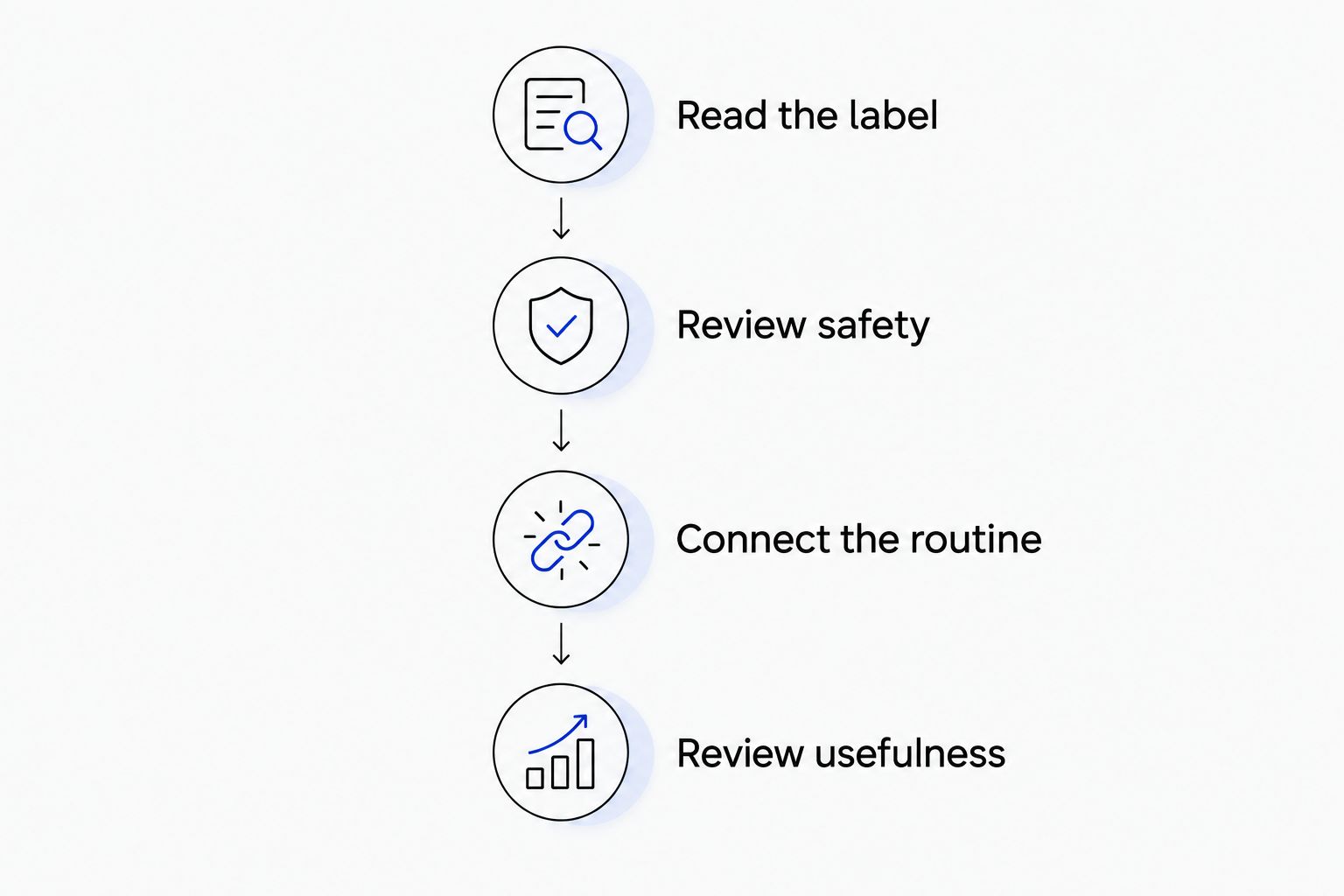
The manual approach is straightforward: compare the Supplement Facts panel, directions, warnings, and other ingredients. Write down what each serving contains. A named ingredient is not enough; you also need to know its amount and whether the directions fit your routine.
Use Osteo Guardian as a product page to review within your TruNutra joint-support search. Check the current label before deciding whether its intended use matches your needs. Do not assume that a product name establishes its ingredients, testing, or suitability for you.
In 2026, a shorter comparison with complete label information is more useful than a long list of promotional benefits. If you cannot understand why an ingredient is included, ask a pharmacist or another qualified health professional before adding it.
- Read the serving size and directions together.
- Check ingredient amounts rather than names alone.
- Review allergens and other ingredients.
- Look for warnings relevant to your health history.
- Confirm any testing or certification claim for that specific product.
Match the ingredient category to your goal
Joint, bone, and general wellness supplements are not interchangeable. Glucosamine and chondroitin are commonly discussed for joint symptoms, but research findings are inconsistent. NCCIH’s public guidance explains that study results differ and that benefits are not established uniformly.
Calcium and vitamin D have a different role: they support nutritional needs related to bone health. That does not make them an automatic choice for discomfort after a long drive. Food intake, health history, and professional advice should guide whether you need extra nutrients.
Choose the purpose before the product. For your 2026 comparison, ask whether you are addressing a nutritional gap or considering an ingredient for joint support. Neither choice establishes the cause of pain, and neither should come with an expectation of repairing a joint.
- Separate bone-health goals from joint-symptom concerns.
- Treat glucosamine and chondroitin evidence as inconsistent.
- Review food sources before adding calcium or vitamin D.
- Avoid choosing an ingredient solely because another driver uses it.
- Ask what evidence supports the specific intended use.
Review safety with your medication list
Start by making a complete list of prescriptions, over-the-counter medicines, and supplements. Bring the proposed product label to a pharmacist or clinician. Comparing the actual formula is more useful than asking whether all joint supplements are safe.
Safety matters especially when you drive professionally. A product marketed for wellness is not automatically appropriate before driving, and combining products can repeat ingredients. Glucosamine and chondroitin also require particular attention if you take warfarin, as NCCIH notes an increased bleeding risk with this combination.
Do not interpret an uneventful first dose as proof of safety. Ask about interactions before starting, and discuss any new symptoms after starting. Tell the reviewer about your work schedule so the advice fits both your health needs and your responsibility to remain alert.
- Share all medicines and supplements, not just prescriptions.
- Ask about duplicate ingredients across formulas.
- Review allergies and relevant health conditions.
- Discuss any warning about drowsiness or impaired alertness.
- Seek advice about unwanted effects rather than pushing through them.
Connect the routine to meals, sleep, and storage
Begin with habits that already happen: a regular meal, brushing your teeth, or preparing your bag. If you choose a supplement, follow its label directions about timing and food. Do not change the amount to compensate for an irregular schedule.
CDC guidance recommends at least 7 hours of sleep per night for adults ages 18–60. That is a general sleep recommendation, not a guarantee of readiness to drive. Joint supplements do not compensate for insufficient sleep or make fatigue safe.
Storage deserves attention in a truck cab. Follow the product’s temperature, moisture, and light instructions rather than assuming the cab is suitable throughout the route. Keep the original container available so you can check directions and identify the product if questions arise.
- Attach the routine to an existing daily habit.
- Follow food and timing instructions on the label.
- Keep a current list of what you take.
- Store the product according to its directions.
- Protect sleep rather than using supplements to work around fatigue.
Review usefulness before adding another bottle
A useful review asks whether the routine is practical, whether you tolerate the product, and whether the original concern still needs attention. Keep your notes simple. Describe everyday tasks, such as getting out of the cab or walking at a stop, rather than assigning a result to every ingredient.
Avoid introducing several supplements together. That makes it harder to identify which product caused an unwanted effect or whether anything helped. Ask a clinician what a reasonable review period is for the ingredient and goal you have chosen; there is no universal timeline for all joint supplements.
For a 2026 check-in, bring your symptom notes and current labels. Persistent or worsening symptoms call for assessment, not a bigger supplement stack. Continue the movement and meal habits that support general health whether or not you keep the product.
- Revisit the original reason you started.
- Note tolerability and any unwanted effects.
- Review whether the routine fits your actual schedule.
- Ask before extending use or adding another formula.
- Reassess symptoms that remain unexplained.
Compare your joint-support options
There is no single best joint supplement for every truck driver. Compare options by the problem they address and what they cannot do. The table separates daily habits, ingredient categories, and a brand option so you do not mistake them for equivalent solutions.
| Option | Best for | Main advantage | Key limitation |
|---|---|---|---|
| Movement and seating adjustments | Drivers building a practical daily foundation | Address activity and comfort without adding another product | Do not diagnose or treat an injury or persistent joint problem |
| Glucosamine and chondroitin | Adults discussing these ingredients with a clinician | Have published research on joint symptoms | Research findings are inconsistent; medication interactions need review |
| Calcium and vitamin D | Adults with an identified nutritional need | Support nutritional requirements related to bone health | Are not an automatic answer to driving-related joint discomfort |
| TruNutra dietary supplements | Adults comparing everyday wellness options | Provide another brand option to review against your needs | Suitability depends on the current product label and individual safety review |
Choose movement as your foundation and supplements as a separate decision. When a product is appropriate, its practical advantage is fitting a defined need into your routine—not replacing the rest of that routine.
Review the product label
Check directions, ingredients, and warnings against your needs before choosing a supplement.
Common mistakes truck drivers make
Treating cab discomfort as a nutrient deficiency
Discomfort after sitting does not identify a missing nutrient. Review your seating setup, movement opportunities, and symptoms before deciding that calcium, vitamin D, or another ingredient is the answer. Persistent symptoms need an assessment that considers more than nutrition.
Taking several wellness formulas without checking overlap
A joint product, a general wellness formula, and a separate mineral supplement can share ingredients. Compare the labels side by side and have a pharmacist review the combination. More products do not automatically mean better support.
Trying a new product just before a driving shift
Do not assume a wellness product has no effect on alertness or digestion. Check the warnings and discuss timing with a qualified professional. If you experience an unwanted effect, address it rather than continuing because the product is described as natural.
Leaving the bottle wherever it fits in the cab
A convenient storage spot is not necessarily consistent with the label’s requirements. Review heat, light, and moisture instructions before choosing a location. Keep the directions and product identification accessible instead of relying on memory.
Waiting for a supplement to fix worsening symptoms
Increasing discomfort, swelling, or difficulty walking is not a reason to keep switching products. Seek professional advice. Your supplement decision should follow an understanding of the problem, especially when climbing, braking, or handling equipment becomes difficult.
What the public guidance supports
The activity and sleep targets in this 2026 guide come from CDC public guidance for adults. The activity targets concern general health; the sleep recommendation cited applies to adults ages 18–60. Neither establishes a treatment plan for joint symptoms.
NCCIH’s public information on glucosamine and chondroitin describes inconsistent research findings and safety considerations, including the interaction with warfarin. NIH Office of Dietary Supplements guidance describes calcium and vitamin D’s nutritional roles. These sources support ingredient-level education, not a claim that a particular finished formula works for truck drivers.
FAQ
What are the best joint supplements for truck drivers?
There is no single best joint supplement for every truck driver. Choose according to your nutritional needs, the product label, and a review of medications and symptoms; keep safe movement and sleep as the foundation.
Will a joint supplement stop stiffness after a long drive?
A joint supplement does not guarantee relief from stiffness after driving. Review your seating position and opportunities to move while safely parked, and seek advice if symptoms persist or worsen.
Is glucosamine better than calcium for joint support?
Glucosamine and calcium serve different purposes, so neither is automatically better. Glucosamine research on joint symptoms is inconsistent, while calcium supports nutritional needs related to bone health.
Can I take joint supplements with prescription medicine?
Have a pharmacist or clinician review the specific supplement before combining it with prescription medicine. Bring the label and your complete medication list; glucosamine and chondroitin require particular attention with warfarin.
How long should I try a joint supplement?
Ask a qualified health professional to set a review period for the specific ingredient and goal. There is no universal timeline, and persistent or worsening symptoms should not wait for a supplement trial to finish.
Is TruNutra a treatment for joint pain from driving?
TruNutra sells dietary supplements for everyday wellness, not a treatment for unexplained driving-related joint pain. Review the current product label for intended use, directions, and warnings before choosing.
Can I keep joint supplements in my truck?
Keep supplements in your truck only when storage conditions meet the product label’s instructions. Check requirements for heat, moisture, and light, and keep the original directions available.
One last thing
Compare a supplement with your routine, not just with another bottle. A formula that looks suitable on paper still needs to fit your medication list, storage conditions, and daily habits. Before your next purchase, take the label and your symptom notes to a pharmacist or clinician. That conversation is more useful than choosing by capsule count or a promise of fast relief.