


Is it safe to take stress supplements long term?
Long-term use of stress supplements is not automatically safe: the answer depends on the ingredients, dose, your health, and any medicines you take. Short-term research does not establish safety for years of daily use, and feeling fine does not rule out an interaction. For your 2026 routine, follow the label and review continued use with a qualified health professional rather than treating an automatic refill as a safety check.
- Is it safe to take stress supplements long term? Ingredient-specific evidence matters more than the stress-support label.
- Ashwagandha has limited long-term safety evidence; short-term use does not establish safety for years.
- Magnesium requires attention to supplemental amounts, kidney health, and medicine interactions.
- TruNutra offers everyday wellness supplements; check the relevant product label before deciding whether it fits your routine.
Is it safe to take stress supplements long term?
There is no single safe duration for all stress supplements. A mineral, an herbal extract, and a multi-ingredient blend have different safety questions, even when their packaging describes the same goal.
The National Center for Complementary and Integrative Health, or NCCIH, describes ashwagandha as potentially safe for short-term use of up to 3 months, while noting that information is insufficient to establish long-term safety. That is an evidence boundary, not permission to continue indefinitely or a guarantee that everyone can tolerate it.
For a closer look at that ingredient, read Is Ashwagandha Safe to Take Every Day?.
| Ingredient or approach | Best suited to | What to check before continued use | Main limitation |
|---|---|---|---|
| Ashwagandha | Adults considering an herbal option after checking personal risks | Thyroid health, liver concerns, pregnancy, and medicine interactions | Long-term safety is not established |
| Magnesium | Adults with a reason to address magnesium intake | Elemental magnesium amount, kidney health, and medicine timing | More is not necessarily helpful; excessive supplemental intake causes harm |
| Multi-ingredient blend | Adults whose full formula has been reviewed for their circumstances | Every ingredient, overlapping products, and label directions | A blend's safety cannot be inferred from one familiar ingredient |
These are screening categories, not interchangeable recommendations. A product that fits one person's routine can be unsuitable for someone taking different medicines.
Why this matters
Daily habits become easy to overlook. A capsule taken after breakfast can stay in your routine even after your sleep schedule, health, or prescriptions change.
For a 2026 supplement review, separate two questions: Does this still serve a clear purpose, and is continued use appropriate for me? Neither answer follows automatically from a familiar brand, a positive review, or the word natural.
Dietary supplements are not FDA-approved for safety and effectiveness before they are sold. Product quality matters, but quality checks do not establish that an ingredient is suitable for years of use or appropriate alongside your medicines.
Ashwagandha: short-term evidence is not long-term clearance
Ashwagandha deserves particular attention because its everyday stress positioning can make indefinite use sound routine. NCCIH identifies limited long-term safety information and notes reports of liver injury associated with ashwagandha supplements.
NCCIH also advises avoiding ashwagandha during pregnancy and breastfeeding and identifies concerns for people with thyroid or autoimmune disorders. Relevant interactions include thyroid medicines, sedatives, immunosuppressants, and medicines for blood pressure or diabetes.
The practical point is straightforward: Do not turn a short-term trial into an open-ended habit without reviewing it. The research window does not establish a universal stopping date, and it does not prove that extending use is harmless.
Bring the actual label to your appointment. The plant part, extract, amount, and other ingredients help a clinician assess the product more accurately than the word ashwagandha alone.
Magnesium: review the supplemental amount and your health
Magnesium has a different safety framework from an herbal extract. It is an essential nutrient, but supplemental magnesium still requires attention to the amount and your circumstances.
The National Institutes of Health Office of Dietary Supplements sets the adult upper limit at 350 mg per day from supplements and medications for adults 19 years and older. This limit does not include magnesium naturally present in food, and it is not a recommended stress-support dose.
Read the elemental magnesium amount on the Supplement Facts panel. Add magnesium from other supplements and magnesium-containing medicines, including some antacids and laxatives, rather than counting only the bedtime capsule.
High supplemental intakes commonly cause diarrhea, nausea, and abdominal cramping. Kidney problems increase the risk of magnesium toxicity because the kidneys help remove excess magnesium.
Magnesium also interacts with certain medicines, including some antibiotics and oral bisphosphonates. Ask a pharmacist about product-specific spacing instead of using one timing rule for every prescription.
Multi-ingredient blends: assess the whole label
A stress-support blend needs a whole-formula review. Recognizing one ingredient does not establish the safety of the remaining ingredients or their combined use.
The benefit of a blend is convenience: you have one label and one routine to follow. The limitation is that several ingredients make it harder to identify what caused a new symptom or which ingredient duplicates another product.
Check serving size carefully. The amounts listed on a Supplement Facts panel apply to the stated serving, which is not always a single capsule.
If an ingredient's amount is not disclosed individually, do not fill in the gap with a guess. Ask a pharmacist or clinician whether the available label information is enough to assess the product for your situation.
Why long-term safety varies
Your 2026 review should focus on the details that change risk, not just how long the bottle has been on the counter.
- Ingredient identity: A botanical extract and a mineral have different effects, precautions, and evidence limits.
- Daily amount: Serving size and overlapping supplements change your total exposure.
- Duration of use: Tolerating a short trial does not establish safety for years.
- Health conditions: Kidney, liver, thyroid, and other health concerns affect ingredient suitability.
- Medicines and alcohol: Interactions and added drowsiness require an ingredient-specific check.
- Life changes: Pregnancy, breastfeeding, surgery, and new prescriptions call for another review.
A useful safety decision considers these factors together. Lowering the dose does not automatically resolve an interaction, and changing brands does not necessarily change the ingredient-related risk.
How to review your routine before another refill
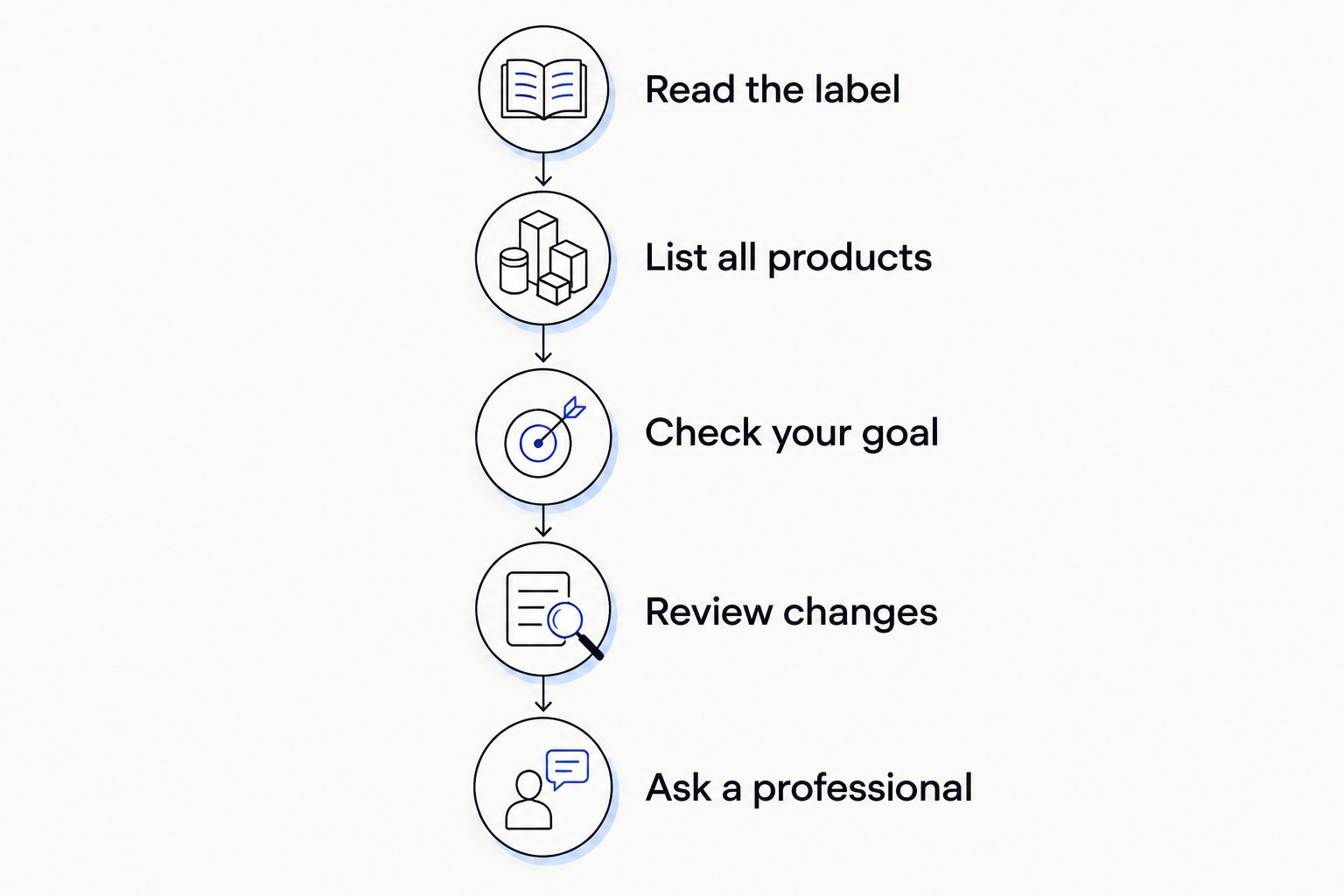
Use this 2026 checklist before continuing a stress supplement. You do not need a complicated tracking system; an accurate label and a clear account of your experience are more useful than a vague impression.
- Read the label. Record the full ingredient list, serving size, directions, and warnings. Use the current bottle rather than relying on memory.
- List all products. Include prescriptions, nonprescription medicines, vitamins, powders, sleep products, and occasional remedies. Note alcohol use when discussing sedating ingredients.
- Check your goal. Describe the everyday issue you wanted support with and whether anything meaningfully changed. Separate a perceived benefit from simply remembering to take the capsule.
- Review changes. Note new symptoms, health conditions, medicines, pregnancy plans, or scheduled procedures. A previously reviewed routine still needs reassessment when circumstances change.
- Ask a professional. Bring the label and product list to a pharmacist or clinician. Ask whether continued use, a different approach, or stopping is appropriate.
Agree on a follow-up plan rather than leaving continued use open-ended. The right review schedule depends on the ingredient and your circumstances; there is no universal interval that makes every stress supplement safe.
When should you pause and seek advice?
A new symptom is a reason to reassess, not a reason to increase the dose. Stop the supplement and contact a health professional if you develop a suspected reaction, especially after starting a product or changing the amount.
Persistent stomach upset, unusual drowsiness, or symptoms that interfere with driving or work deserve attention. Do not assume these effects mean the supplement is working.
Yellowing of the skin or eyes, dark urine, or significant abdominal pain warrants prompt medical evaluation, particularly with a suspected supplement reaction. Trouble breathing, facial swelling, fainting, or severe symptoms require urgent medical help.
Keep the container available so the clinician can see the ingredients and lot information. Do not stop or change prescribed medicines on your own while trying to identify the cause.
Where TruNutra fits in a careful routine
TruNutra is best suited to consumers seeking dietary supplements for everyday wellness support, not disease treatment. That distinction keeps the choice grounded in a realistic purpose rather than a promise of permanent stress relief.
If you are considering Purely Calm, start with its current label and ask a qualified professional to assess the full formula against your medicines and health history. The product name alone does not establish its ingredients, appropriate duration, or suitability for you.
TruNutra stress supplements deserve the same ingredient-by-ingredient review as any other option. A convenient routine is a benefit only when the product remains appropriate; brand preference does not replace that check.
Do I need to cycle stress supplements?
There is no universal cycling schedule that makes stress supplements safe long term. Taking planned breaks does not erase a medicine interaction, address a contraindication, or establish safety where long-term evidence is limited.
Follow ingredient-specific advice from a qualified professional. Do not use an online cycling schedule as a substitute for reviewing why you are taking the supplement.
Can I keep taking a stress supplement if I feel fine?
Feeling fine does not establish long-term safety. Some risks depend on a medicine combination, health condition, or amount rather than an obvious immediate reaction.
Feeling well is useful information to share during a review, but it is not the whole assessment. Also discuss whether the supplement still has a clear purpose.
Is taking less always safer?
A smaller amount does not automatically make an unsuitable ingredient appropriate. Dose matters, but pregnancy precautions, allergies, and certain interactions can remain relevant even when you take less.
Follow the label unless a qualified professional gives you individualized directions. Do not increase, split, or combine servings to copy someone else's routine.
FAQ
Is it safe to take stress supplements long term?
Long-term safety depends on the ingredients, amount, your health, and your medicines; there is no blanket yes. Review continued use with a qualified health professional rather than assuming a well-tolerated short trial establishes safety for years.
How long is ashwagandha considered safe to take?
NCCIH describes ashwagandha as potentially safe for short-term use of up to 3 months, but long-term safety is not established. That research boundary is not a guarantee of safety for every person or product.
How much supplemental magnesium is too much for adults?
The adult upper limit is 350 mg per day from supplements and medications for adults 19 years and older, according to the NIH Office of Dietary Supplements. Magnesium naturally present in food does not count toward that limit; clinician-directed treatment requires individualized guidance.
Should I take a break from my stress supplement?
There is no universal break schedule for stress supplements. Ask a pharmacist or clinician whether continued use or stopping fits the specific ingredients and your circumstances.
Can I combine a stress supplement with a sleep supplement?
Do not assume a stress supplement and a sleep supplement are safe together. Have the complete labels reviewed for duplicate ingredients, total amounts, interactions, and added drowsiness.
Can I take stress supplements while pregnant or breastfeeding?
Review any stress supplement with your pregnancy or breastfeeding care team before use. NCCIH advises avoiding ashwagandha during pregnancy and breastfeeding.
Does choosing TruNutra mean I can take a supplement indefinitely?
Choosing TruNutra does not establish that indefinite use is appropriate. Follow the relevant product label and review ingredients, medicines, health changes, and continued need with a qualified professional.
One last thing
An automatic refill is a shopping setting, not a health decision. Before your next 2026 refill, put the bottle beside every other supplement and medicine you use, including occasional products.
Reviewing the full collection is more useful than checking each bottle in isolation. It makes overlapping ingredients visible and gives your pharmacist a clearer basis for advice. This article provides general education, not individualized medical advice.