


Can energy supplements cause jitters or anxiety?
Yes, energy supplements can cause jitters or feelings of anxiety, especially when they contain caffeine or other stimulants. Your reaction depends on the ingredients, serving size, other caffeine you consume, and your sensitivity. If a supplement leaves you shaky, unusually nervous, or aware of a racing heartbeat, stop taking it and seek medical advice rather than adding another supplement to counteract it.
- Can energy supplements cause jitters or anxiety? Yes—caffeine and other stimulants can trigger both, even below general intake limits.
- The FDA cites 400 mg of caffeine daily as generally tolerated by most adults, not a target or personal guarantee.
- Check every caffeine source, including coffee, pre-workout powders, energy drinks, and botanical ingredients.
- TruNutra supplements require the same label-first review: choose by ingredients and warnings, not an energy-related product name.
Can energy supplements cause jitters or anxiety?
Energy supplements containing stimulants can cause trembling, nervousness, a faster heartbeat, and difficulty sleeping. These sensations can feel similar to anxiety. They do not, by themselves, establish that you have an anxiety disorder.
Caffeine is a common ingredient to check first. Botanical ingredients such as guarana also contain caffeine, so a plant-based label does not necessarily mean a stimulant-free formula. If you also take a calming product, review the guidance on mixing stress-relief supplements with caffeine rather than assuming the combination balances itself out.
For your 2026 label review, separate the product's stated purpose from what its ingredients actually do:
| Type of energy product | What it offers | Best for | Main limitation |
|---|---|---|---|
| Caffeine-containing supplement | Stimulation that increases alertness | Adults who tolerate caffeine and understand their total intake | Can cause jitters, nervousness, palpitations, and sleep disruption |
| Vitamin-only supplement | Nutrients involved in normal body functions | People with an identified nutritional need | Does not act like caffeine or reliably resolve unexplained fatigue |
| Electrolyte drink mix | Minerals involved in fluid balance | People replacing fluids and electrolytes lost through sweating | Is not a general solution for low energy or anxiety |
| Multi-ingredient energy blend | A combination that depends on the label | People whose full formula has been reviewed for suitability | Multiple ingredients make it harder to identify the cause of a reaction |
These categories are not interchangeable. A vitamin formula without stimulants has a different risk profile from a caffeine-containing pre-workout, but neither deserves an automatic assumption of safety.
Why this matters
You do not need to push through shaking or nervousness for an energy supplement to work. Feeling overstimulated is a reason to reassess the product, not evidence that it is effective. Taking more because you still feel tired can increase your exposure without addressing why you are tired.
It also helps to separate alertness from recovery. Caffeine can make you feel more awake, but it does not replace sleep, regular meals, or evaluation of persistent fatigue. A supplement that interferes with bedtime can complicate the very routine you hoped to improve.
If you already experience anxiety, discuss stimulant-containing supplements with a qualified health professional before using them. The same applies if you have a heart condition, take prescription medicines, or have previously reacted badly to caffeine.
Caffeine-containing supplements: check your total intake
The FDA states that 400 mg of caffeine per day is an amount not generally associated with negative effects for most adults. That figure covers total daily caffeine, not just the amount in a supplement. It is not a recommendation to consume that much, and it does not guarantee that you will feel comfortable below it.
The FDA also lists 113–247 mg of caffeine in a 12-fluid-ounce brewed coffee. That range illustrates why counting cups alone is unreliable: preparation and product choice affect how much caffeine you consume.
For a 2026 caffeine check, write down the amount listed on each product you actually use. Include coffee, tea, energy drinks, pre-workout products, caffeine tablets, and medicines that contain caffeine. If an amount is unclear, do not assume it is negligible.
Check whether the supplement's listed amount applies to a capsule, scoop, or full serving. Those are different measurements. Taking several units without checking the serving size can lead you to consume more than you intended.
The practical rule is simple: your symptoms matter more than staying below a general reference amount. If caffeine makes you shaky or anxious, a population-level limit does not make that reaction acceptable.
Caffeine-free supplements: not an automatic fix
A caffeine-free product avoids caffeine exposure, but the rest of its ingredient list still matters. Other ingredients can have side effects or interact with medicines. Read the complete label rather than using a front-of-package claim as your whole safety check.
Vitamins help support normal body functions, including energy metabolism. That does not mean extra vitamins provide an immediate lift when your nutritional needs are already met. An identified deficiency calls for a different approach from a late afternoon slump after poor sleep.
Electrolytes also have a specific role. They support fluid balance, but an electrolyte product is not a general treatment for fatigue, nervousness, or anxiety. Choose it for an appropriate hydration need, not simply because the packaging mentions active days.
If low energy keeps returning, look beyond a different supplement category. A health professional can review sleep, nutrition, medicines, and possible medical causes without asking you to keep experimenting with increasingly complicated formulas.
Why your reaction to an energy supplement varies
The same product does not affect everyone in the same way. These factors help explain why your experience differs from someone else's:
- Total stimulant exposure: A supplement adds to caffeine from drinks, foods, and some medicines. Check the whole day, not just the newest bottle.
- Personal sensitivity: Some people experience nervousness or sleep disruption at amounts that others tolerate. A friend's comfortable serving is not your personal benchmark.
- Serving size: The number of capsules or scoops you take determines your exposure. Check both the directions and Supplement Facts panel.
- Timing: Caffeine taken later in your waking day can interfere with sleep. Your planned bedtime matters more than whether a label describes the product as a daytime formula.
- Medicines and health conditions: These can change whether an ingredient is appropriate for you. Ask a pharmacist to review the complete combination.
- Other ingredients: Botanical stimulants and multi-ingredient blends require individual review. The word natural does not establish safety.
Do not treat these factors as a formula for calculating a guaranteed safe dose. They are reasons to review your situation and avoid copying another person's routine.
What should you do if an energy supplement makes you jittery?
Stop the suspected energy supplement and avoid additional stimulants while you arrange appropriate advice. Do not change prescribed medicines on your own. The next step depends on how you feel, what you took, and whether symptoms are worsening.
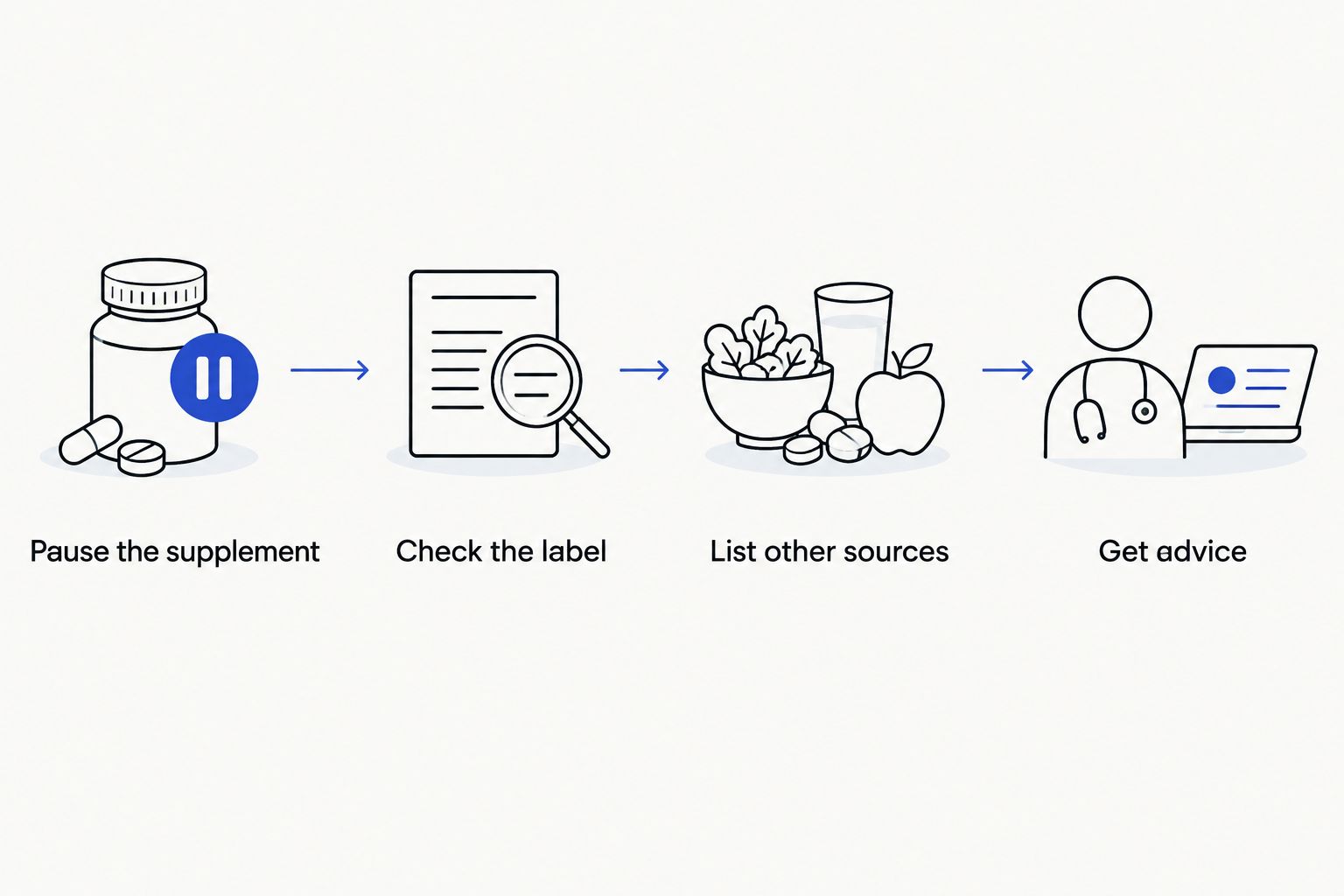
Use this 2026 safety checklist to organize the information a pharmacist or clinician needs:
- Pause the supplement. Do not take another serving to test whether the reaction happens again. Keep the container and label available.
- Check the label. Note the ingredients, amount per serving, directions, and how much you actually took. Include the product name and lot information if available.
- List other sources. Record caffeine-containing drinks, other supplements, and medicines used around the same time. Include when you took each item.
- Get advice. Describe the symptoms and their timing to a pharmacist or clinician. Ask what to do before considering the product again.
A simple record is enough. You do not need a wearable, a spreadsheet, or a perfect explanation before asking for help.
Do not try to cancel out a stimulant with a sleep aid, alcohol, or a calming supplement. Adding products makes the situation harder to assess and can introduce additional risks. Drinking excessive water is not a reliable way to remove caffeine faster.
When should you seek urgent help?
Seek emergency medical care for chest pain, fainting, trouble breathing, a seizure, or a severe or persistent racing or irregular heartbeat. Do not assume these symptoms are simply anxiety or wait for a supplement to wear off.
If you took more than directed or are unsure how much you consumed, contact Poison Control promptly for individualized guidance. Keep the packaging with you. Even when symptoms seem mild, advice based on the actual ingredients is more useful than guessing from the product category.
How can you choose a supplement without chasing a buzz?
Start with the reason you want support. Difficulty staying awake after inadequate sleep, poor fluid intake during exercise, and an identified nutritional deficiency are different situations. A single energy claim does not make a formula suitable for all of them.
For your 2026 supplement review, use these questions before adding anything to your routine:
- What specific need am I trying to address?
- Does the label identify every ingredient and the serving instructions clearly?
- Does the formula contain caffeine or another stimulant?
- Am I already taking any of the same ingredients elsewhere?
- Have I checked warnings and possible medicine interactions?
- Is persistent fatigue a reason to seek an evaluation instead?
TruNutra is best suited to adults seeking everyday wellness supplements, not treatment for anxiety or unexplained fatigue. If you are considering TruNutra, apply the same label-first approach to every formula. A product name alone does not establish caffeine content, suitability, or an expected effect.
TruNutra offers dietary supplements for everyday wellness routines, but a different supplement is not the answer to an active adverse reaction. Review the relevant product's ingredients, warnings, and directions with a qualified health professional before making a choice.
Can energy supplements cause anxiety even if you follow the label?
Yes, energy supplements can cause anxiety-like symptoms even when you follow the directions. Label instructions do not eliminate individual sensitivity, and your total stimulant intake includes sources outside the supplement.
Following the label is necessary, but your reaction still matters. Stop the suspected product and ask for advice if you develop shaking, unusual nervousness, or palpitations.
Are jitters a sign that an energy supplement is working?
No, jitters are not a useful measure of whether an energy supplement is working. They can signal an unwanted stimulant effect rather than a benefit you should try to maintain.
A useful routine should support your needs without making you feel unwell. Do not increase a serving because the initial stimulating sensation becomes less noticeable.
Should you switch to a calming supplement after feeling anxious?
No, do not add a calming supplement simply to counteract an energy supplement. Pause the suspected product and have the ingredients reviewed first.
A new formula does not identify the cause of the reaction. It can also add interactions or side effects, especially when you take medicines or several supplements together.
FAQ
Can energy supplements cause jitters or anxiety without caffeine?
Yes, a caffeine-free energy supplement can still cause unwanted effects, depending on its other ingredients. Check the complete formula and discuss new symptoms with a pharmacist or clinician.
How much caffeine is too much if I get anxious easily?
There is no single caffeine amount that guarantees comfort for someone who gets anxious easily. The FDA's 400 mg daily reference applies to most adults generally; symptoms can occur below that amount.
Does natural caffeine cause fewer jitters than other caffeine?
Natural caffeine can still cause jitters because caffeine remains a stimulant regardless of its source. Check total exposure rather than assuming a botanical source is gentler.
Will eating before an energy supplement prevent anxiety?
Eating before an energy supplement does not guarantee that you will avoid anxiety or jitters. Follow food-related label directions, but do not use a meal as a reason to retry a product that caused a reaction.
How long will energy supplement jitters last?
There is no fixed duration for energy supplement jitters because ingredients, amounts, and individual responses differ. Seek advice for persistent or worsening symptoms, and urgent care for chest pain, fainting, or trouble breathing.
Should I take more energy supplements if I still feel tired?
No, feeling tired is not a reason to exceed the label or add more stimulants. Persistent fatigue deserves a review of sleep, nutrition, medicines, and possible medical causes.
Can I take a sleep supplement to cancel out caffeine?
Do not use a sleep supplement to cancel out caffeine. Avoid adding products to manage a reaction and ask a pharmacist or clinician to review what you have taken.
One last thing
Before choosing another energy supplement in 2026, take a photo of the label on the product that made you feel unwell. Record what else you consumed and when the symptoms started. That information helps a health professional assess the reaction more directly than a general description such as an energy capsule.
The next useful step is understanding the reaction—not finding a stronger boost or a second product to quiet it.